








Cornell Sexual Assault Case Hits Close to Home for Scarsdale
- Category: On Our Radar
- Published: Monday, 05 October 2026 14:45
- Joanne Wallenstein
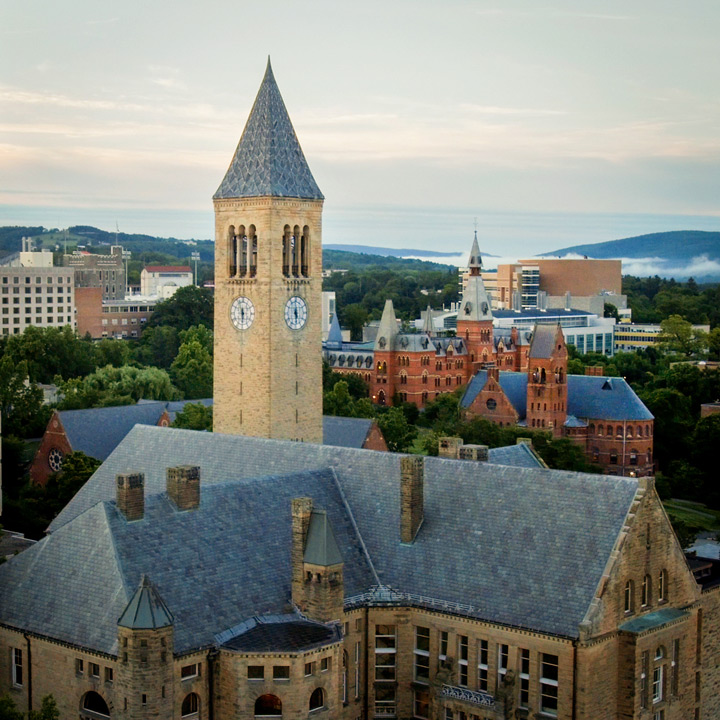 With so many Cornell alumni and parents living in Scarsdale, the news of a Cornell sophomore’s allegations that she was drugged, sexually assaulted and gang raped at a fraternity house in 2024 has resonated locally.
The case has an especially strong Scarsdale connection because several of the people now weighing in on the investigation and the laws surrounding sexual assault live or work here.
Representing “Jane Doe” is Scarsdale’s Associate Village Justice, Thomas Giuffra, a partner at Reingold Giuffra Ruffo Plotkin and Hellman LLP, whose practice includes representing survivors of sexual abuse and sex trafficking. Giuffra has represented survivors of abuse involving Harvey Weinstein and Sean “Diddy” Combs, as well as victims of lead paint poisoning.
Scarsdale residents may also recognize Giuffra from discussions surrounding the renovation of Greenacres Elementary School, when he raised concerns about keeping children inside the school while construction was underway.
The civil lawsuit filed on behalf of Jane Doe accuses the Chi Phi chapter, Chi Phi National, the Alpha Beta chapter of Tri Delta, Tri Delta National, Cornell University and Moonies Bar & Nightclub of negligence. The defendants have not been found liable, and the allegations in the lawsuit remain to be adjudicated.
Meanwhile, the criminal investigation into the allegations is being reopened. New York Governor Kathy Hochul has appointed Attorney General Letitia James as special prosecutor to review the case.
Appearing on CNN, Giuffra said Jane Doe feels that she was not heard and is seeking accountability. He said that significant evidence was not properly examined during the original investigation and that the new team will review the evidence and determine what happened.
Speaking with Jake Tapper, Giuffra said, “I’m not even sure we have everybody who participated in this assault because my client was blacked out during periods of time, and that’s reported in these statements. We don’t even know the people we have are the people we definitively know.”
He also said that after the alleged assault in 2024, Jane Doe asked Cornell to refund her tuition so she could return home to heal, but that the university denied her request.
Scarsdale is also home to another prominent voice on the case: Mimi Rocah, the former Westchester County District Attorney and a former federal prosecutor.
In an interview with The New York Times, Rocah explained that a victim’s initial statement may be contradictory, confusing or incomplete for many reasons, particularly when the person has experienced trauma.
“It could be wandering and all over the place because they suffered a trauma, and they don’t know or can’t process or express it,” Rocah said. She added that prosecutors cannot simply sit down with a victim and say, “All right, tell me what happened.”
District attorney’s offices, she said, must have the training and sensitivity necessary to investigate sexual assault cases. “This is like 101 of trauma-informed interviewing,” Rocah told the Times. “And clearly here that did not happen.”
Rocah also wrote an opinion piece for MS NOW titled, “I’m a former prosecutor. The Cornell 7 rape case was set up for failure.” In it, she argued that the Tompkins County District Attorney’s Office appeared to have failed to follow standard practices for investigating sexual assault allegations when the initial complaint was made in 2024.
Rocah has also highlighted a provision in New York State law that can make prosecution difficult when someone becomes intoxicated voluntarily. Under current law, a person who becomes intoxicated by their own actions generally cannot be considered “mentally incapacitated” for purposes of determining consent unless they can establish that they were physically helpless.
That distinction could be significant in Jane Doe’s case, in which she alleges that she was heavily drugged.
Legislation intended to close this loophole has been pending in Albany for years. A bill sponsored by Assemblymember Jeffrey Dinowitz and supported by Assemblymember Amy Paulin would provide greater protection to people who are too intoxicated to consent, regardless of how they became intoxicated.
On October 5, Paulin, who represents Scarsdale in the State Assembly, issued a statement about the Cornell case and the proposed legislation.
“The allegations in the Cornell case are harrowing, and the questions about how Jane Doe was failed by the system are deeply troubling,” Paulin said. “She deserves answers and she deserves justice.”
Paulin thanked Governor Hochul for appointing James as special prosecutor and specifically recognized Rocah for highlighting what she described as failures in the original investigation.
“This case also exposes a gap in our law that we have the power to close,” Paulin said. “As a cosponsor of Assemblymember Jeffrey Dinowitz’s bill, A.101/S.10632, I believe that someone who is too intoxicated to consent should be protected, regardless of how they became intoxicated.”
“Justice shouldn’t depend on whether a survivor had a drink,” Paulin said. “It should ask whether the evidence proves beyond a reasonable doubt that someone preyed on her.”
Paulin said she was recently appointed by Assembly Speaker Carl Heastie to a working group examining New York’s sexual assault laws and intends to work toward closing the loophole.
The Cornell case has also prompted a response from Cornell President Michael Kotlikoff.
On October 4, Kotlikoff released a video statement to the Cornell community outlining steps the university plans to take to investigate the allegations and address concerns surrounding the handling of the case.
“We don’t have all the answers, but we are committed to investigating,” Kotlikoff said. “I believe we must do better.”
For a case that began more than two years ago in Ithaca, the latest developments have brought the story surprisingly close to home for Scarsdale residents. A Scarsdale attorney is representing the alleged survivor, a former Westchester district attorney is challenging the handling of the original investigation, and a Scarsdale state legislator is working to change the law that could affect the outcome of cases like this one.
The renewed investigation will now determine what evidence exists, what may have been missed and whether criminal charges should ultimately be pursued.