







Navigating Tariff Uncertainty: Why Coaching Matters for Small Businesses
- Wednesday, 04 March 2026 23:12
- Last Updated: Thursday, 05 March 2026 09:52
- Published: Wednesday, 04 March 2026 23:12
- Joanne Wallenstein
- Hits: 1011
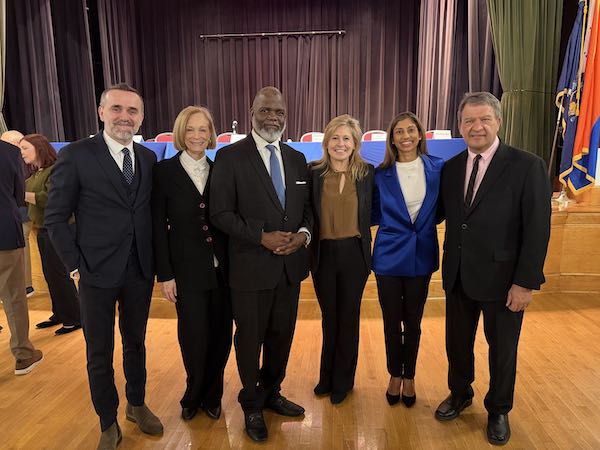 Valon Nikci, Elaine Handrickx, Mark McLean, Jane Veron, Meena Thever, George LatimerSubmitted by Jane Veron, Co-Founder and CEO, The Acceleration Project
Small business owners have already weathered extraordinary disruption in recent years, most notably during COVID. Yet the current trade environment has introduced a new form of volatility that many entrepreneurs have little experience navigating.
I recently co-chaired and served as a panelist for a roundtable “The Impact of Tariffs on Small Businesses” hosted by Congressman George Latimer in Westchester County, where business owners, legal experts, and policymakers discussed the real world impact of tariff policy. The message was consistent and deeply concerning: tariffs are not just a policy issue. They are a day-to-day operational risk.
In a recent interview with the Washington Examiner, I shared what I am hearing every day from entrepreneurs across the country. “Small business owners are scrappy,” I said. “But this uncertainty is challenging to navigate; not knowing is what is stalling decision-making.” That uncertainty is not theoretical. It is affecting hiring decisions, pricing strategies, inventory planning, and growth investments in real time.
Across TAP’s recent tariff-focused webinars with small business owners, participants reported the same challenges I described at the roundtable and in the Washington Examiner interview. Seventy percent of the businesses we support have already been affected by increased costs related to tariffs. Another twenty percent expect their costs to rise in the coming months.
When asked how tariffs make them feel, business owners use words like terrified, confused, nervous, angry, and devastated. One word rises above the rest: uncertain.
 Task Force members
The Real Cost of Uncertainty
As covered in the Hudson Independent article, for many small businesses, tariffs do not show up as a single, visible line item. They appear as higher ingredient costs, disrupted supplier relationships, delayed decisions, and shrinking margins.
At the roundtable, Ellen Sledge, founder of Penny Lick Ice Cream, described paying $90 for a shipment of chocolate in late 2024, only to see that same order cost $220 just months later. While her receipts clearly show rising costs, they rarely explain what is driving them. Tariffs can appear in unexpected places across the supply chain. Even the ink used on packaging may be subject to new tariffs, making it nearly impossible for small business owners to trace the source of price increases or plan accordingly.
Other business owners echoed similar concerns. Restaurant operators spoke about the compounding effects on staffing and continuity. Specialty food retailers warned that small international suppliers may exit the market entirely, with no guarantee they will return. Legal experts noted that even if tariffs are later challenged, the path to reimbursement could take years, time that most small businesses simply do not have.
The result is a business environment where uncertainty stalls growth, as owners hesitate to invest, hire, or expand without clearer signals about future costs.
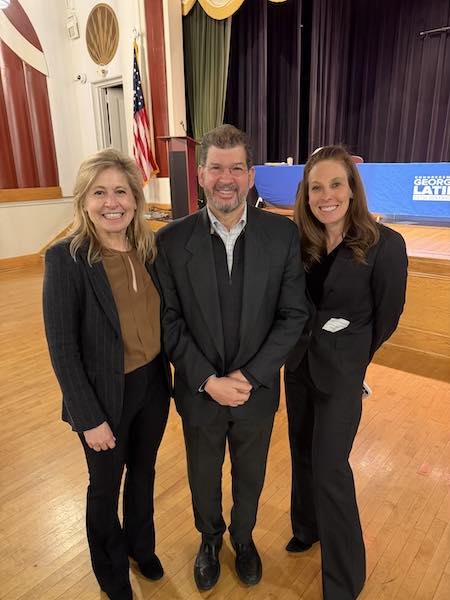 Jane Veron, Peter Herrero (NY Hospitality), Samantha Reemer.
Why Coaching Matters Right Now
In moments like this, the instinct for many entrepreneurs is to pull back, delay decisions, or try to manage the complexity alone. But uncertainty is precisely when structured, expert guidance becomes most valuable.
Coaching does not eliminate tariffs. It does not change federal trade policy. What it does is help business owners regain control over the variables they can influence.
Through one-on-one coaching and structured advisory engagements, TAP works with small business owners to:
Understand how external shocks like tariffs flow through their specific cost structures and cash cycles
Scenario plan for multiple outcomes rather than betting on a single forecast
Reassess pricing strategies, supplier relationships, and margin thresholds with data and discipline, while guiding supply chain negotiations and partnership decisions
Strengthen financial visibility so decisions are grounded in real numbers, not fear or guesswork
Build operational resilience that allows businesses to adapt as conditions shift
When policy feels unpredictable, clarity becomes a competitive advantage.
From Reaction to Strategy
Running a small business is already an exercise in constant problem solving. Owners spend much of their time responding to day to day operational challenges, managing cash flow, staffing, customer demands, and supplier relationships. When trade policy uncertainty and tariffs are layered on top of these existing pressures, the complexity rises dramatically. What was already difficult becomes even harder, pushing many businesses into a cycle of triage and making it nearly impossible to plan confidently for growth.
Coaching helps shift that posture.
At TAP, coaching engagements are designed to meet business owners where they are, whether they are managing slim margins, growing carefully, or trying to stabilize after a series of shocks. The goal is not perfection. It is informed decision-making. Our role is to help business owners move from paralysis to informed action. Coaching provides a structured way to process complexity, evaluate options, and make disciplined decisions even when the external environment remains unstable.
Practical Guidance for Business Owners
Recognizing how confusing and fast-moving tariff policy has become, TAP recently published a Tariff Update FAQ for Small Businesses to help owners cut through the noise and focus on what actually matters for their operations.
The FAQ breaks down key developments following the February 20, 2026 Supreme Court ruling, explains what changed and what did not, and outlines how multiple tariff authorities can stack on top of one another. It also addresses common questions business owners are asking right now, including refund eligibility, impacts for businesses buying through wholesalers, and what may happen after the temporary Section 122 period ends.
Most importantly, the FAQ translates policy into action. It outlines immediate, practical steps small business owners can take now, such as confirming tariff exposure with suppliers, clarifying landed costs, modeling multiple pricing and cash flow scenarios, negotiating payment terms, and evaluating alternative sourcing strategies. These are the same issues TAP coaches work through directly with business owners every day.
You can read the full Tariff Update FAQ for Small Businesses on TAP’s website to better understand the current landscape and the decisions it may require.
Navigating What Comes Next
There is no clear timeline for when tariff-related uncertainty will ease. Policy shifts, legal challenges, and global supply dynamics may take months or years to resolve. In the meantime, small business owners are being asked to operate in a climate that rewards adaptability, financial discipline, and strategic clarity.
That is why coaching is not a luxury. It is a stabilizing force.
By pairing experienced advisors with under-resourced entrepreneurs, TAP helps small businesses navigate uncertainty with confidence, resilience, and a clearer sense of direction. When external conditions are volatile, the ability to think clearly, plan thoughtfully, and act decisively can make the difference between survival and sustained success.
For small business owners facing the unknown, support matters. And in uncertain times, the right guidance can turn disruption into a path forward.
For organizations, institutions, and individuals interested in working alongside TAP to strengthen small businesses during this period of economic volatility, we invite you to explore partnership opportunities by completing our partner application form. Small business owners seeking customized consulting and coaching support are encouraged to apply for TAP services. Professionals interested in sharing their expertise as volunteer consultants are invited to apply to join TAP’s national consultant network.