










Your Letters In Support of Candidates for Village Trustee and Village Justice
- Details
- Written by: Joanne Wallenstein
- Hits: 2978
 The Village election will be held on Wednesday March 18. On the ballot are candidates for Village Trustee and Village Justice. This week we received many letters in support of the candidates. See below for letters from SCNP Campaign Chairs Dara Gruenberg and Jon Mark as well as Madelaine Eppenstein, Jeremy Gans, Dan Hochvert, Jackie Irwin and Jill Spieler, David Kroenlein, Eric Lichtenstein, Eli and Elaine Mattioli, Ed Morgan, Jill Spielberg, Bill Stern and Peri Zelig.
Dara Gruenberg and Jon Mark
Dear Scarsdale: We ask for your vote for Trustee Candidates Justin Arest, Lena Crandall and Randall Whitestone and Village Justice Candidate Joaquin Alemany.
Scarsdale needs steady and consistent leadership. With the many challenges, old and new, we face -- from the federal limitation of the SALT deduction, to state mandated payments that annually pressure our budget, to today’s threat from the Covid-19, to name just three -- it is imperative that our municipal government bring us together as a community with strong leadership.
Trustees Arest and Crandall have already served two years working with the team of municipal professionals empowered to ensure our health, safety and well-being. They have working relationships with the Village Manager and professional staff; the police and fire departments; the emergency responders; the county government; and the school district leadership. Randy Whitestone, a 25-year resident and communications professional with an MBA degree, was thoroughly vetted by the Citizens’ Nominating Committee (CNC). He has extensive experience in Scarsdale civic matters and has examined and understands Village governance in part through his analysis of Village budgets as a member and chair of the Scarsdale Forum’s Fiscal Affairs Committee. He is ready to serve as an informed team player.
In our interactions throughout the community, we hear some confusion about how the process by which we select our Village government works. Scarsdale’s 100 plus year-old approach to vetting and electing members of our Village Board of Trustees is a non-partisan system that works well to identify the best candidates with the least rancor and needless expenditure of resources. The CNC welcomes any resident of Scarsdale Village who is a U.S. citizen. Potential candidates for Village elective offices are thoroughly and respectfully vetted by 30, publicly elected, voting members of the CNC. Resumes are reviewed, presentations are heard and discussed, and myriad references are discreetly checked. Deliberations are lengthy, probing and respectful. The process is transparent but the work is confidential. By offering candidates a private evaluative process, the non-partisan system fosters greater resident participation. Names of candidates who are not nominated are not made public and they are welcome to be vetted again when offices become open if they so choose.
Arest, Crandall and Whitestone have been examined in this process by your elected representatives for their character, temperament, extensive civic activities in Scarsdale, and their commitment to public service. They are open-minded, responsive, and prepared to work hard for all of us.
As campaign co-chairs supporting the Scarsdale Citizens’ Non-Partisan Party’s slate, we have had to ask our community for the resources to address an opposing slate. We thank everyone who has responded and who believes the non-partisan system works well for our community. We appreciate the time and energy expended by this year’s campaign committee.
For experience and proven commitment, please vote for Arest, Crandall, Whitestone and Alemany -- Row B -- on Wednesday, March 18th at Scarsdale Congregational Church, 1 Heathcote Road.
Respectfully,
Dara Gruenberg and Jon Mark,
Co-Chairs, SCNP Campaign Committee
Madelaine Eppenstein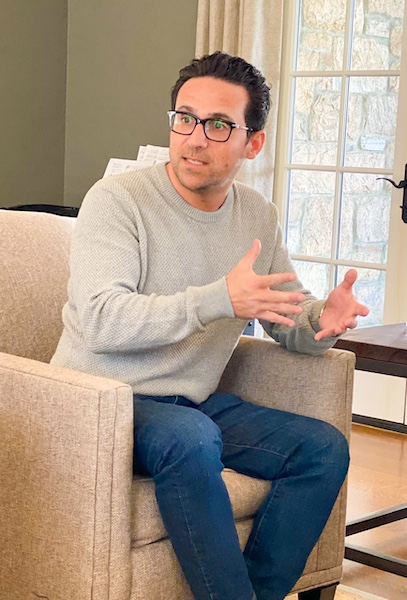 Justin Arest
To the Editor: Let’s set the record straight: There’s a very good reason Scarsdale voters have historically supported outstanding nonpartisan candidates who are nominated by their neighbors for village office. That’s because Scarsdale consistently chooses leaders of impeccable integrity, experience and character to govern the village and protect the interests of the entire community. In two recent contested elections, voters rejected the opposition party’s polarizing rhetoric and agenda-driven tactics, which sought to impugn the qualifications of nonpartisan candidates and the democratic process that nominated them. Instead, Scarsdale voters astutely embraced the candidates who were fully vetted and nominated in a fundamentally impartial and fair process, and who met the above criteria expected of village leadership. Voters should support once again the nonpartisan candidates in the upcoming election on March 18 across Row B: Trustees Justin Arest and Lena Crandall, Trustee candidate Randall (Randy) Whitestone, and Village Justice Joaquin Alemany.
Through our nonpartisan framework, in which I’ve personally served, we have consistently nominated and elected highly qualified leaders who don’t resort to slick, uncivil politicking and disinformation. Scarsdale’s nonpartisan tradition is popular because its time-tested. Guiding principles established the precept that candidates may not seek office for personal or party advantage; emphasized the duties of the office, so candidates understand the arduous responsibilities of government and are willing to serve without remuneration; resulted in an exceptionally high quality of village services; contributed to the integrity of government and fiscal health of the village, which currently enjoys an Aaa credit rating; and attracted exceptional civic-minded individuals to public service.
Let’s not be misled by misinformation: Our inclusive grassroots governance process is open to broad civic participation. Hundreds of residents have served on advisory village boards and councils. Residents have many opportunities to speak publicly with, interact with, and receive requested information from the Village Board and the professional staff. The neighbors you elect to serve on the 30-member nonpartisan nominating committee participate in a neutral deliberative process to select candidates from among residents of every neighborhood. The nominating committee’s membership is refreshed annually as one-third complete their terms and a new class is publicly elected to replace them. Once nominated, their candidates customarily choose to run together on a nonpartisan slate, as permitted under state election law.
The result is impressive: Village Board members elected by the voters every March have overseen village management for decades with distinction, transparency and commitment to competent, accountable, and fiscally responsible governance. For decades they’ve skillfully upheld our community’s values, priorities and quality of life. Our nonpartisan democracy endures because it works.
So support our highly qualified neighbors for their demonstrated integrity, professional and volunteer experience, and for their belief in those guiding values of the nonpartisan system: Trustee incumbents Arest and Crandall for a second term; civically-engaged, first-time Trustee candidate Whitestone; and our distinguished Judge Alemany for a second term. I encourage you to vote for all of them on Row B on March 18th at the Scarsdale Congregational Church, 1 Heathcote Road, from 6am-9pm.
Madelaine Eppenstein
Autenrieth Road
Jeremy Gans
To the Editor: March 18 is a day of decision in Scarsdale. The decision is whether to continue the excellence of our nonpartisan system of government or to open Scarsdale up to the type of divisive politics engulfing much of the country.
For 90 years, Scarsdale’s citizens have embraced our unique way of selecting our Mayor and Trustees, through nonpartisan and (usually) uncontested elections. Historically, candidates in Scarsdale do not seek to run for office. Rather, our democratically-elected nominating committee, comprised of an equal number of residents from each of our elementary school districts, finds, and vets, those people who are best suited to serve as Trustee and Mayor and nominates them for office. This system guarantees that we have Trustees committed to serving the entire Village, rather than a specific political party or special interest group.
This year, Scarsdale faces a contested election, brought about by a small group of residents intent on bringing divisiveness and Washington-style politics to Scarsdale. These candidates offer no solutions or thoughtfulness on any of the issues facing the Village. They attempt to play to emotions by making unsubstantiated and outlandish claims about our Trustees and Village professionals. It is unclear what standards, if any, were used when selecting these candidates. In addition, it is unclear whether these candidates will serve the Village or only the special interest group that nominated them.
By contrast, the Scarsdale Citizens Non-Partisan Party has nominated a slate of candidates who deserve your vote. As Trustees, Justin Arest and Lena Crandall have demonstrated an unwavering commitment to serving all of Scarsdale. Their open-mindedness when evaluating issues and their ability to engage with all of our residents show that they are clearly deserving of second terms. Randall Whitestone has lived in Scarsdale for 25 years and has spent much of his time volunteering to serve the Village in various capacities. His years of commitment to serving our community gives me total confidence that he will be an outstanding Trustee.
Our nonpartisan system of government plays a vital role in making Scarsdale such a wonderful place to live. The Village has not been plagued by local partisan politics that divide so many of our neighboring communities. It is important to continue to support the tradition that has served Scarsdale well for nearly a century. On March 18, vote Arest, Crandall and Whitestone for Trustee.
Jeremy Gans
45 Harvest Drive
Dan Hochvert
To the Editor: Justin Arest and I served together on the Village Board. Based on my experience working with him, I don’t know anyone more committed to serving as Village Trustee. The dedication he has shown during his first term as trustee has been exemplary. Time and again he has been willing to spend considerable time and effort to thoroughly think through the issues, and to weigh the alternatives that are commonly presented by matters that come before the Board. He diligently researches information that helps to understand matters before the Board, and he is generous in sharing what he learns with his colleagues. He listens carefully to his fellow Board members in an effort to understand their points of view, which may differ from his own on a particular matter. On more than one occasion, his in-depth approach to analyzing an issue impressed his colleagues enough to cause them to agree with his proposed resolution and course of action. There have also been occasions in which he has been persuaded by his colleagues to change his original position on an issue when they have explained the reasons for their position.
As Chair of the Board’s Personnel Committee, Justin educated himself on the mission of the Village boards and councils for which volunteers were sought. He then carefully reviewed applications for those positions and reached out to other Board members for their opinions on applicants that they knew. This experience has given him invaluable knowledge about both the needs of the boards and councils that provide recommendations to the Village Board and the qualities of volunteers that would be most useful in fulfilling the mission of those bodies. Justin also became a student of the Village Code, asking questions to clarify his understanding of its provisions and thus deepening his understanding of the workings of our Village government.
In short, on every relevant level, the qualities Justin brings to his role as a trustee has served the residents of Scarsdale well. Voters are urged to vote for Justin on March 18th, and the other candidates on Row B who also share Justin’s commitment to serving the residents of the Village of Scarsdale.
Sincerely,
Dan Hochvert
62 Woods Lane
Jackie Irwin and Jill Spieler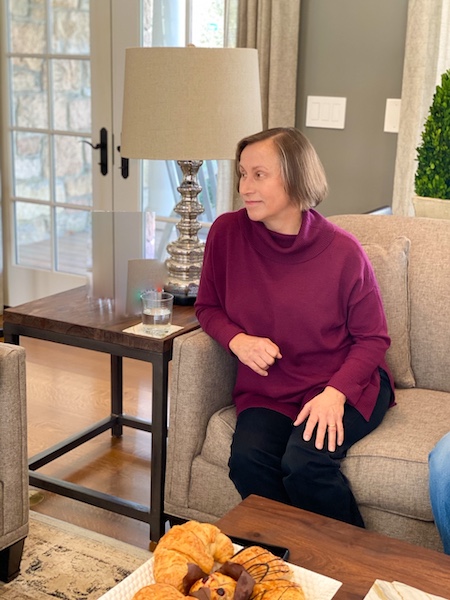 Lena Crandall
To the Editor: Randall (Randy) Whitestone is an outstanding candidate for Village Trustee. He has been an advocate for the importance of civic involvement in the life of a vibrant community and has demonstrated that commitment through his volunteer activities.
We worked with him in the Scarsdale Forum when we both held leadership roles. He served as an officer and member of the Forum’s Board of Directors and Executive Committee. He also co-chaired the Forum’s Village Fiscal Affairs Committee and served as a member of the Consolidated Fiscal Affairs, Strategic Planning, County Fiscal Affairs, Education and Audit Committees. He was also treasurer of the Procedure Committee. During our tenure, Randy contributed to the effort to reincorporate the Forum. He worked closely with us to help revitalize the Forum as part of planning for its Centennial Celebration.
Randy’s contributions to the community have extended beyond the Forum. He was a member of the Scarsdale Foundation Bowl Committee, the Citizens Nominating Committee and the Arthur Manor Neighborhood Association Board of Directors, and was an instructor at the Scarsdale Young Writers’ Workshop.
Randy is articulate, personable, open-minded, conscientious and trustworthy. Working with him, we were impressed with how he took on numerous responsibilities and fulfilled them in a most professional manner. He has lived in Scarsdale for 25 years, knows the community well and shares its most important values. In addition, Randy’s long professional experience as a financial journalist and director of corporate communications will bring unique and beneficial expertise to the Village Board.
We strongly endorse Randy Whitestone for Village Trustee. Vote Row B for Randy and the other members of the non-partisan party.
Jackie Irwin, Drake Road
Jill Spieler, Claremont Roadd
David Kroenlein
To the Editor: I am writing to express my support for the candidacy of Lena Crandall in the upcoming election for Village Trustees. She has worked effectively for the betterment of our community for two decades and deserves our support for continuing as a Trustee.
I first became acquainted with Lena when I was mayor from 2001 to 2003 when she was a proponent, in Village Hall and in conversations, for important environmental issues, including protection of our trees and parks. Her intelligent, effective enthusiasm carried forward in leadership and hands-on roles with the Friends of Scarsdale Parks where I watched her as a resident and as the spouse of another enthusiastic FOSP member. Lena was much more than an advocate; she got her hands dirty on many occasions in FOSP projects and made sure that others worked in unison. She had a practical sense of what could be done as well as an advocate’s approach for what should be done, creating a solid basis for the continuing good works of the Friends of Scarsdale Parks.
More recently, I have worked with Lena when she was the Village Board’s liaison to Scarsdale’s SAFE Coalition: Children, Families, Community (previously the Scarsdale Coalition on Healthy Relationships). Once again, Lena was an active participant in our activities and brought intelligent judgment and ideas to our deliberations and planning.
Lena Crandall combines intelligence, enthusiasm and persuasiveness in the pursuit of the values of our community and should be reelected as a Trustee.
Very truly yours,
David Kroenlein
Eric Lichtenstein
To the Editor:I am a Scarsdale Village resident writing in strong and proud support of Justin Arest, one of the Scarsdale Citizens’ Non-Partisan Party’s candidates for election as Village Trustee on March 18, 2020. I was a member of this year’s Citizens’ Nominating Committee.
Justin is extremely committed to the Scarsdale community. His service for the past two years as Trustee has proven that he is dedicated and willing to put in the time for the benefit of the community at large. I have seen his commitment to serve as a Trustee and the countless hours he spends at board meetings, village events and researching the issues at hand.
Justin is rational, thoughtful, and conscientious. He can debate the issues with fairness and keep an open-mind to all sides of an issue. He exercises mature judgment, and he is not afraid to take an unpopular position if he believes it is the right thing for the long-term. Justin brings a new and fresh perspective to the Village which in the current economic environment is a huge plus. We need to encourage more millennials and young people to want to move to Scarsdale and raise their families here. Justin sets an inspiring example of civic volunteerism for others in his generation.
I can’t think of a better candidate to entrust with the position of Scarsdale Village Trustee. I know that Justin will have the community’s best interests in mind and that residents will respect his values, judgments and overall character. I strongly urge all eligible Scarsdale residents to vote for Justin on March 18th at the Scarsdale Congregational Church.
Eric Lichtenstein
15A Richbell Road
Scarsdale, New York
Eli and Elaine Mattioli
Dear Friends and Neighbors: We have been blessed to reside in Scarsdale for nearly forty years and believe that our very special community is one of the best governed in the entire nation.
On Wednesday, March 18th, all eligible Scarsdale voters will have the opportunity to continue Scarsdale’s outstanding and much-admired tradition of good government by voting Row B to elect Justin Arest, Lena Crandall, and Randy Whitestone as Village Trustees.
Justin, Lena and Randy are well known to Scarsdale residents as knowledgeable, experienced, collegial and dedicated village volunteers. With outstanding records of prior civic volunteer work, Justin and Lena were elected as Trustees in 2018. Their service in that capacity has been exemplary. They have proven themselves as highly talented team players, and their re-election on March 18th will greatly benefit all Scarsdale residents.
Randy similarly has a long and impressive record of civic volunteer work in Scarsdale. As with Lena and Justin, Randy’s work covers a broad range of important civic activities and projects. Randy’s prior experience in Scarsdale civic affairs promises that his election as Trustee will strengthen the Village Board’s ability to address critical issues facing our community over the next two years.
We are grateful that Justin, Lena and Randy are ready and willing to serve on our Village Board of Trustees, and we urge every eligible Scarsdale resident to join us in voting for these outstanding candidates on March 18th at the polling place, Scarsdale Congregational Church at 1 Heathcote Road.
Eli and Elaine Mattioli
Drake Road
Edward Morgan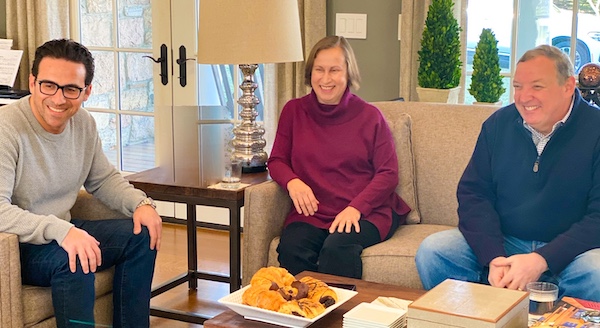 Justin Arest, Lena Crandall and Randy Whitestone
To the Editor: There are some who would shift Scarsdale toward a more combative campaigning style, often making promises before getting either the full facts or an in depth understanding of community values in addressing our local concerns. Most residents have thought otherwise over the years. Scarsdale has benefited greatly from highly talented people whose basic promise has been to get the facts first, then listen to everyone in the community with an open mind, and only after that, come to well informed conclusions seeking solutions which are the best for everyone.
Each of the three individuals in this year’s strong Citizens’ Non-Partisan Party slate is an excellent example of that Scarsdale tradition. With community service to prove it, each has earned our support when we step into the polling place on March 18th to choose Village Trustees.
Justin Arest, with business and legal education, and real estate experience, has been indefatigable in reaching out widely for facts and perspectives around the community, whether addressing library improvements, Village Center revitalization, the ongoing Freightway explorations or some other issue, large or small.
Lena Crandall, legally trained and environmentally sensitive, has brought thoughtfulness and calm leadership to numerous community roles, in the schools, in the parks and more broadly as President of the Scarsdale Forum, in addition to Village Board roles emphasizing sustainability and balance in addressing community issues.
Randy Whitestone, with a strong communications and finance background, has melded the two areas in both private sector and public affairs. He has been a journalist and then a communications professional in the private sector, most recently with D.E. Shaw Group. His varied Village roles have included serving as chair of the Scarsdale Forum’s village Fiscal Affairs Committee and as an instructor for the Scarsdale Young Writers’ Workshop.
This strong non-partisan slate deserves your support. I urge you to Vote Row B on March 18th.
Edward A. Morgan
8 Tunstall Road
March 11, 2020
Jill Spielberg
Dear Scarsdale Friends and Neighbors: I urge you to grab your friends and go to the Scarsdale Congregational Church on Wednesday March 18th to vote Row B for Justin Arest, Lena Crandall, and Randall Whitestone as Trustee and Joaquin Alemany as Village Justice.
As a member of the 30-person elected Citizens Nominating Committee, I can attest to the rigorous process that our committee employed to ensure the selection of Arest, Crandall, and Whitestone as the best and most qualified candidates for the office of Trustee.
We, as a community, need to be proactive in protecting our wonderful Village from those who seek to gaslight, misinform and divide us; from those who seek to arouse suspicion and mistrust of our neighbors and volunteer leaders; and from those who seek office for the sake of their own agenda and not to do what is best for our community. The qualities necessary to be a good Trustee include an ability to listen, set aside personal agendas and have a willingness to work with others to find the best solutions to our Village’s challenges. The work of a “Trustee” is imbedded in the name itself. A Trustee must earn the respect and trust of the community.
After countless hours of service on the Citizens Nominating Committee including due diligence, discussion and healthy debate, I can say with confidence that the Row B candidates for Trustee – Arest, Crandall and Whitestone -- will put the best interests of our community first and will utilize their tremendous skills, work ethic and talents to act as stewards of our community. Vote Row B on March 18, 2020 at the Scarsdale Congregational Church.
Respectfully submitted,
Jill Spielberg
Ogden Road
Bill Stern
To the Editor: The Scarsdale Inquirer recently ran an editorial which traced the history of Scarsdale’s non-partisan election system and how it was developed to avoid a paralyzing dispute between political parties in Village trustee and mayoral elections. The non-partisan system has been under constant attack by the Voters’ Choice Party, claiming it is undemocratic, non-transparent and non-representative. The truth is that the nonpartisan Citizens Nominating Committee consists of elected representatives of each neighborhood who work tirelessly and objectively to select the best candidates for the elective positions in Village government. The CNC itself is body reflective of the community and its make-up changes annually. Each year one-third of the CNC membership is comprised of new members who are elected by voters in their Scarsdale neighborhoods. Each CNC nominated candidate is vetted. His or her past history, involvement in Village activities, personal interaction with people, temperament and skills are extensively checked by their peers and neighbors on the CNC.
Contrast that to the current candidates of the VCP. Their selection is reminiscent of Tammany Hall-style tactics, and by their own admission there is no vetting. When asked about vetting their spokesperson said: “The Village electorate will vet them.” The approach to governance of one of their candidates for trustee, Bob Berg, was revealed in this quote in The New York Times (in 2015): “Mr. Berg, of Scarsdale’s assessment review board, said older mansions like those on Heathcote were hit hardest because they had not been assessed in decades. ‘They deserve to be hammered,’ he said. ‘The lesser-valued property owners were subsidizing the rich ones.’” Hammered? Is it proper for a Village trustee candidate to wish that on his constituents?
In a recent election, Mr. Berg peppered our landscape with campaign signs which read: “VOTE FOR A LEADER, NOT A LEMMING.” Lemmings are short-tailed furry arctic rodents! Mr. Berg’s demeanor during past public comment segments of Board meetings often includes insulting verbal attacks on various members of the Village staff as well as the mayor and trustees.
Is this someone we want to be involved in Village government? By choosing Mr. Berg as their candidate the VCP has shown their failure in the ability to choose qualified candidates.
This election comes down to preserving a system that provides stability, excellent governance, and maintains the quality of life in Scarsdale for current and future generations.
On Wednesday March 18th, at the Congregational Church, One Heathcote Road, please vote for the two incumbent trustees Justin Arest and Lena Crandall, and the trustee nominee Randy Whitestone. Also please vote to return Judge Joaquin Alemany to the bench as Village Justice. Your vote for the CNC non-partisan slate will be a vote to ensure fair mindedness and fiscal responsibility in Scarsdale, and will continue to keep Scarsdale the Village that we all love.
William Stern
Rural Drive
Peri Zelig
To the Editor: When my family moved to Scarsdale three years ago, I was intrigued by the Village’s unique non-partisan system and its commendable objectives of attracting exceptional civic-minded individuals to public service while removing politics and politicking from our electoral process. I decided to run for a position on the Citizens’ Nominating Committee (CNC) to learn more about local affairs, and to do my part to recruit and put forward the best candidates possible for Village-wide offices.
Having finished my first year on the CNC, I am proud of the residents we selected to represent the Scarsdale Citizen’s Non-Partisan Party, and of the selection process itself. The CNC is comprised of both long-time and new residents, representing diverse views and backgrounds, each elected by our neighbors for the purpose of selecting exemplary candidates with the ability to represent all Scarsdale residents. I, and the other 29 CNC volunteers took, and will continue to take, that responsibility seriously during our three-year terms. We engaged in a rigorous and inclusive recruitment effort to seek a qualified group of candidates with accomplished records of civic and professional experience; we diligently and thoughtfully vetted all candidates, including hearing from the candidates and speaking with numerous references; and we engaged in respectful debate and discussion among each other to select our slate of candidates.
Trustee candidates Justin Arest, Lena Crandall, and Randall Whitestone are each dedicated to making the Village better for all residents. They have years of relevant professional and civic volunteer experience and are well-regarded within the community. Each exemplifies qualities the CNC seeks, and Scarsdale needs, in its Trustees — integrity, professionalism, intellectual curiosity, a willingness to listen respectfully to different views, and a demonstrated ability to work collaboratively with their neighbors, Village staff, and other Trustees.
My vote on March 18 will be for the CNC nominated SCNPP slate of accomplished public servants, and it will also be a vote in support of our Non-Partisan system. When our national news is increasingly dominated by partisan rancor and divisiveness, I am proud to be a part of Scarsdale’s cooperative, deliberative, and open non-partisan system which has served the Village well for decades. I encourage you to Vote Row B.
Peri Zelig, Lakin Road
As Confirmed Cases Rise, So Do Closings and Cancellations
- Details
- Written by: Joanne Wallenstein
- Hits: 6086
 With the number of confirmed cases spiraling upward on a daily basis, the list of schools and institutions announcing closings and cancellations is also climbing. On Sunday morning March 8, Governor Cuomo announced that there are 105 confirmed cases of COVID-19 in New York State, with 82 of those in Westchester.
Here is a summary of cancellations in our area:
The Scarsdale Schools cancelled the regional Science Olympiad competition at Scarsdale Middle School scheduled for Saturday, March 7 fearing that the anticipated 1,000 people would increase the risk to attendees and the larger community.
On Sunday March 8 the district announced that players on the Scarsdale Youth Hockey Association middle school team will be quarantined for 14 days. A New Rochelle student who attends Westchester Day School and plays on that same team tested positive. On Friday March 6 the district said that these students were not subject to quarantine but changed their directive on Sunday. About these students’ families, the school district memo says, “The Department of Health has given the families specific guidance as to how to implement these quarantines and how the rest of the family should travel and participate in day-to-day activities.”
On Sunday, Quaker Ridge Elementary School parents learned that the PTA Gala scheduled for March 13 and the school play, scheduled for March 20 have both been postponed.
On Sunday night March 8, the district sent an email saying that the Scarsdale Schools would be closed until March 18 after a teacher at the Scarsdale Middle School was diagnosed with the virus. More information to come.
In Mamaroneck, a parent with children at Chatsworth Avenue Elementary School and Mamaroneck High School has been diagnosed with the virus. An update sent on March 7, 2020 from Superintendent Robert Shaps says, “The parent has not been on school grounds and self-quarantined prior to receiving a lab confirmed diagnosis of COVID-19. The DOH has indicated that family members were directed to quarantine, pending the parent's lab results. These family members are not showing any symptoms and will remain under quarantine in accordance with the DOH guidelines until March 17th. The DOH does not test children unless they are showing symptoms.” After cleaning this weekend, schools will remain open.
Keio Academy a Japanese school in Purchase will close for the rest of the school year
to protect its international student body from the virus.
Westchester Reform Temple was closed this weekend to conduct a deep cleaning. This decision was made after the temple learned that one of their part-time B’nei Mitzvah tutors attended a neighborhood synagogue (not WRT) function that also was attended by people who have since tested positive for Coronavirus. The tutor is asymptomatic and feeling well and chosen to self-quarantine voluntarily. The synagogue contacted all students who interacted with the tutor this past week.
The synagogue will hold a Purim celebration on Monday night March 9 at 7 pm.
According to the Maple Medical Group website, they have closed their offices at 30 Davis Avenue and 143 Maple Avenue in White Plains for sanitizing. A physician who works at the group had contact with Lawrence Garbuz an attorney from New Rochelle who contracted the virus. Two physicians and a nurse practictioner at the practice have all tested positivie. The medical practice sent employees home and are testing the staff who were in contact with the physician. They are also notifying all patients. Their offices at 170 Maple Avenue remain open.
For those concerned in Scardsale, a joint meeting was planned for Monday night at 6:15 pm with the Scarsdale School Board and the Scarsdale Village Board. That meeting has now been cancelled.
However, as of Monday morning a work session of the Scarsdale Village Board on COVID-19 in Rutherford Hall at Village Hall is still on for Tuesday March 10 at 5 pm.
Scarsdale Historical Society Documentaries Now on Website
- Details
- Written by: Joanne Wallenstein
- Hits: 2810
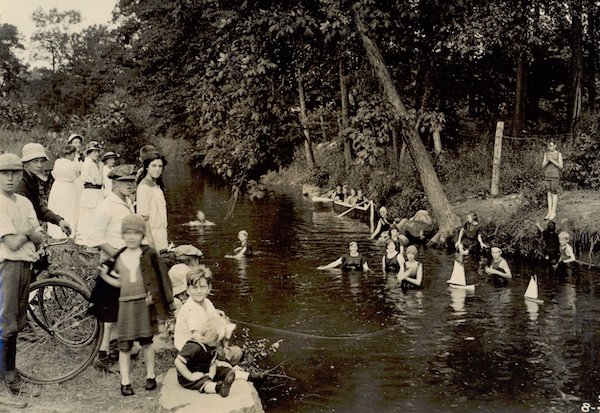 The Scarsdale Historical Society is thrilled to announce that its two most recent documentaries are now available to the public on the Scarsdale Historical Society website.
THE LIFE AND ART OF ANNA RICHARDS BREWSTER is a short (9 minute), poignant film that rediscovers the magnificent work of Anna Richards Brewster (1870-1952), a Scarsdale resident, who in her day was recognized as one of America’s finest Impressionist painters. Her work was widely exhibited in Europe and America, and she painted many familiar stunning landscapes of Scarsdale.
A RIVER RETURNS: A HISTORY OF THE BRONX RIVER is a 40 minute film that provides a historical journey down the Bronx River and a tale of how it was rescued from severe pollution to become a model for restoring natural resources nationwide. The Bronx River may be a small river but it played a large role in shaping the towns and lives of people in Westchester County, including Scarsdale.
These documentaries were professionally produced and directed by Scarsdale native Lesley Topping with Barbara Shay MacDonald, Vice President and Historian of the Scarsdale Historical Society. Ms. Topping is an independent filmmaker, producer and film editor whose work includes dramatic films, documentaries, and television programs. She has edited award-winning films for the Cousteau Society, CBS, PBS, and A&E, and worked on many feature films. She also produces multimedia content for businesses and not for profits.
These films join the two previous documentaries that the Society produced and which are also available for viewing on the website: SCARSDALE IN THE 18TH AND 19TH CENTURIES: FROM HARDSCRABBLE FARMS TO GRACIOUS ESTATES and A TOUR OF THE CUDNER-HYATT HOUSE MUSEUM. Additional content relating to each of the Society’s films can be found under the Articles tab of the website.
About the Scarsdale Historical Society
The Scarsdale Historical Society exists to discover, preserve, and disseminate historical information as well as inspire others to learn about and contribute to the history of Scarsdale and the Central mid-Westchester region.
Scarsdale Welcomes New Village Assessor Victoria Sirota
- Details
- Written by: Joanne Wallenstein
- Hits: 4247
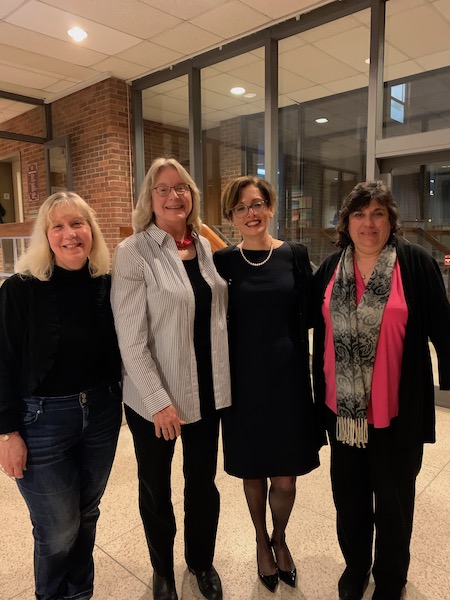 Theresa Diamond, Jane Lawrence, Victoria Sirota and Margaret SmoyverScarsdale has a new Village Assessor. Victoria Sirota, who served as assessor in North Castle has accepted the job and was officially appointed at the February 25 meeting of the Scarsdale Village Board of Trustees. Here are comments from Trustee Justin Arest, welcoming Sirota and thanking those who filled the void while the Village undertook their search.
As many are aware, former Assessor, Nanette Albanese unexpectedly resigned from her position on Friday, March 1, 2019. The Village wasted no time setting up a plan and I am very proud that the hard work of many has led us to the appointment before us tonight, just less than one year later. I would be remiss if I did not make a few comments of appreciation before proceeding. I am a huge advocate of process and ensuring that the proper steps are taken by the right people in order to promote the best decisions and hopefully the best outcomes. But, regardless of how impressive of a plan could be implemented in terms of a search, without stability in our Assessor’s office over the past year, none of it would have been possible. We are all very grateful for the hard work and substantial time put in by our Village Manager to ensure our incredible professionals had the resources they needed, including the important addition of Edye McCarthy as a consultant. Thank you to Edye for her assistance. I need to extend a big thanks to Ms. Jane Lawrence who I imagine would never have believed anyone had they told her she would have served as Acting Assessor for a year. She continued to say yes when Scarsdale needed her and for that we should all be grateful. To say that her service was integral would still be an understatement.
Finally, quick thanks in the interest of time, to all of the participants of our search committee, the outside professionals that aided us and at times educated us, former HR Director Adil Tahir and current HR Director Angela Sapienza-Martin who did most of the leg work and helped us stay organized, and former Mayor Dan Hochvert, current Mayor Samwick and Village Manager for their leadership and unwillingness to ever panic.
Over the course of this process we received over 30 resumes from interested applicants. Of those, over a dozen candidates were seriously considered and many of them were interviewed multiple times by the search committee as well as the Board of Trustees. The road to get here might have been a little longer than anticipated but, I could not be more pleased to introduce Scarsdale to Victoria Sirota.
Victoria comes to Scarsdale from the Town of North Castle where she has served as its Assessor for 8 years. She holds a BS in Accounting and a BA in Russian from Rutgers University where she graduated Phi Beta Kappa. Victoria is a CPA and spent fifteen years in the accounting and taxation fields until deciding to take a step back and spend more time with her family.
Victoria’s career in municipal assessments began in 2012 when she was appointed to be the sole assessor for the Town of North Castle. Victoria, along with the assistance of her professional staff in North Castle prepares, maintains and defends an assessment roll of approximately 4,800 properties for the purposes of taxation for the Town (that includes the hamlets of North White Plains, Armonk and Bedford-Banksville), five school districts, Westchester County and various special districts. Victoria is a member of the Institute of Assessing Officers. Otherwise known as the IAO, it is chartered by the New York State Board of Regents. An assessor with an "IAO" designation, such as Victoria, is recognized as one who has achieved the highest level of professional competence in his or her field. Additionally, Victoria is a member of the NYS Assessors Association where she plays a valuable role on its Legislative Committee, and, an Executive member and also Past President of the Westchester County Assessor's Association.
Victoria is looking forward to working with our community and encourages residents to call and/or stop by the Assessor's office with any questions related to exemptions, assessments or even just to introduce yourself.
Why Scarsdale's Mimi Rocah is Running for Westchester County District Attorney
- Details
- Written by: Joanne Wallenstein
- Hits: 5477
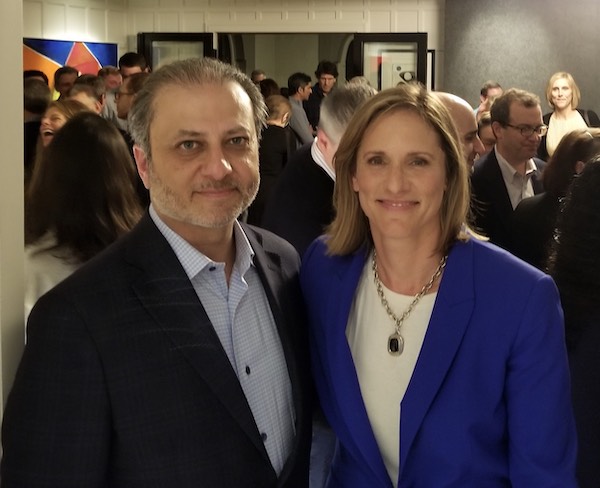 Preet Bharara and Mimi RocahFormer Assistant U.S. Attorney, legal analyst and Scarsdale resident Mimi Rocah is running for Westchester District Attorney. During her 16 years in the U.S. Attorney’s office she was involved in the prosecution of organized crime, gun traffickers, corrupt public officials, narcotics dealers and sex traffickers. Before joining the U.S. Attorney’s office she clerked for the Honorable John Gleeson in U.S. District Court for the Eastern District and the Honorable Chester Straub in the U.S. Court of Appeals. She has an undergraduate degree from Harvard and a law degree from NYU.
At the Westchester County Convention in January 2020 she came extremely close to winning the delegates’ vote taking a 48.4% share. Commenting on her performance she said, “For all of my supporters who are fighting for the kinds of reforms we need, this is a win. For all the women who have had enough of the old boy's network and are demanding an equal seat at the table, this is a win. For everyone who knows that we need a DA office free from politics and conflicts and that prioritizes modern day threats like human trafficking and hate crimes, this is a win… We went from zero to 48% in less than two months, and in five months, we're going to finish what we started by winning the primary in June."
We asked Rocah a few questions and here is what she shared:
Are candidates for District Attorney endorsed by political parties? Are you running on a party line?
I am running in the Democratic primary to earn the Democratic party line for the General Election. Local Democratic organizations can endorse, but it’s ultimately up to the voters on June 23rd. I would not accept the endorsement of other parties such as the Conservative Party as my opponent did in 2016.
Now that you are running, will you still appear on MSNBC?
My contract with MSNBC as a legal analyst ended when I announced my campaign. I can still appear on shows to discuss significant issues like impeachment as a Legal Expert when the campaign schedule allows.
If elected, what would you like to see changed in Westchester?
I will be an energetic and proactive District Attorney who will ensure that we are: first, doing all we can to make Westchester safer by getting guns out of the hands of violent people, effectively addressing hate crimes, and the opioid epidemic, and creating a Human Trafficking Unit and, second that we are making our justice system more fair through a Conviction Integrity Unit, greater transparency in the administration of the office and ethical standards that keep politics out of the DA’s Office.
Please comment on the recent spate of hate crimes against the Jewish community. How do you think law enforcement should act to deter anti-semitism and hate crimes in general?
The rise in crimes motivated by anti-semitism is deeply personal for me. My father and his family fled the Nazis in 1939 and some in his family did not escape. We cannot look at crimes against the Jewish community in isolation. We must do more at every level to address all bigotry and keep our communities safe for everyone. We need to use every tool of the DA’s office at our disposal to combat this hate, and I will use prosecution, community partnerships and outreach, educational campaigns, to work to prevent hate crimes, investigate when one occurs, and hold the perpetrators accountable. As DA, I will:
-Allocate more resources to the Hate Crimes Unit so that they can quickly and thoroughly investigate all hate-motivated incidents and hate groups in the area;
-Direct the Westchester Intel Center to categorize hate crimes as an offense for easier sharing of information, intel, and resources immediately with other law enforcement agencies to give them the attention they deserve;
-And partner with schools across the county to educate our youth to ensure our young people are better informed about this issue and our schools have the resources to combat it.
As you know, NYS just imposed new laws regarding cash bail. What’s your view on these reforms and how do you think they might affect Westchester?
These reforms were long overdue and will make our criminal justice system more fair. Bail is not supposed to be punitive or coercive – it is a means of making sure people show up for their court date. And there are much cheaper - and less socially destructive - means of doing this than jailing people. Some have argued that bail is a means of keeping dangerous people off the streets, but if someone is a danger to the community, it shouldn’t matter how much money they have.
New York’s new system is much closer to the federal system which I worked in for 16 years. The new bail reforms may need adjusting, such as finding alternatives to cash bail as conditions for release and making sure that anyone likely to commit a violent crime is not simply released into the community. Criminal justice reform is not a “one and done” construct. We must always look at what works and what doesn’t, and the unintended side effects of these practices. My experience in the federal system will be extremely helpful in evaluating the implementation of the reforms and advising the legislature on how to fine tune the reforms.
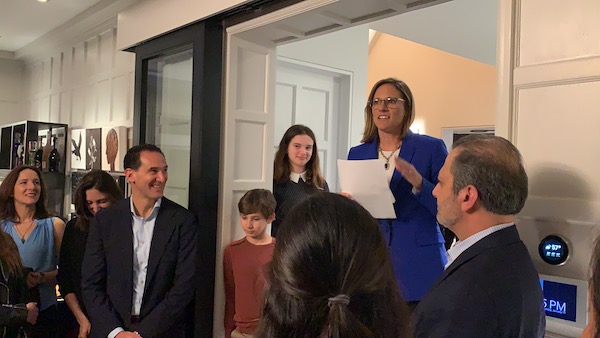 Rocah offers remarks at a recent event.
In your view, how can local policies impact the President’s attack on law enforcement on the Federal level? During one of your interviews you said, “the President called our justice system a joke and a laughing stock." I was wondering how actions at the local level could help to restore faith in the system.
Trump and Bill Barr are corrupting our federal government and justice system and using the power of their offices in hurtful ways to some of the most vulnerable people in our communities and governing without any accountability. It is more important than ever that local leaders stand up for and govern with integrity, fight for the rights and protections of all people under the law, and ensure that we administer justice fairly and build trust with the community. Local leaders, including District Attorneys, should use every legal tool possible to hold Trump and others who may be violating the law in his Administration accountable for misconduct and illegal activity that may have occurred in local jurisdictions. New York Attorney Tish James is doing this at the state level. Here in Westchester, for example, there have been allegations surrounding the Trump Golf Course that I believe we should look at.
In an interviews you claimed that there is plenty of organized crime - even in Westchester. A few weeks ago I was surprised to read about the arrest of a member of the Gambino organization who lives in Edgemont. Why is it so difficult to uncover this kind of corruption? How do you propose to be more effective at rooting out organized crime?
I prosecuted members of all of the major organized crime families for many years and was Chief of the Southern District’s Organized Crime and Racketeering Unit. In my experience, organized crime is pernicious because it takes over industries like construction or sanitation and makes it difficult for honest people to work without relying on organized crime. We have to partner with other law enforcement agencies that can help us infiltrate these groups and use smart and advanced investigative techniques to root out this kind of corruption.