







Demolition of the Incinerator Building at the Recycling Center
- Details
- Written by: Joanne Wallenstein
- Hits: 771
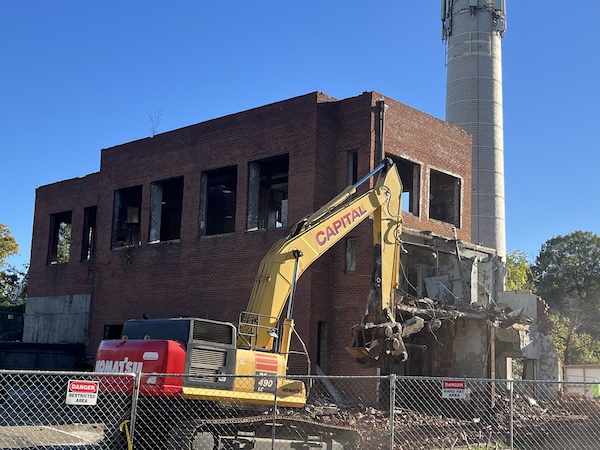 Incinerator Building Tuesday October 20: Photo Credit Jon MarkOut of use for decades, the incinerator building at the Recycling Center is being taken down. The entire structure will go, save the chimney which will remain as it serves as a mast for multiple cell phone antennas.
The Village has not incinerated garbage in Scarsdale for decades, though some incineration still occurs at a county facility operated by Wheelabrator in Peekskill.
Deputy Village Manager Emily Giovanni explained, “The Incinerator Building was built in the 1930's and was historically used for the disposal of solid waste. The facility has been non-operational for several years. The building was in very poor condition, had broken windows, cracked concrete and deteriorated steel. An inspection of the building by the Village's Superintendent of Public Works, Jeff Coleman, concluded that the Incinerator Building was beyond salvageable and needed to be demolished.
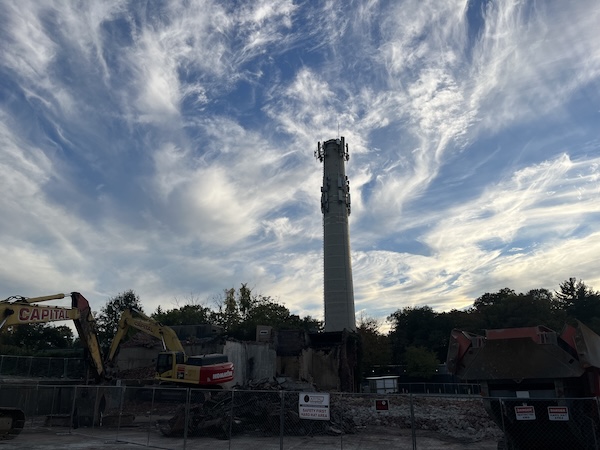 By the end of day, the building was gone: Photo Credit Jon Mark
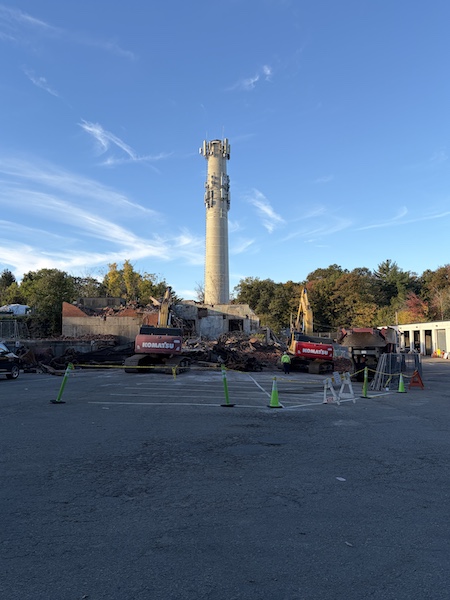 A new day dawns at the Recyling Center: Photo Credit Doug Ulene
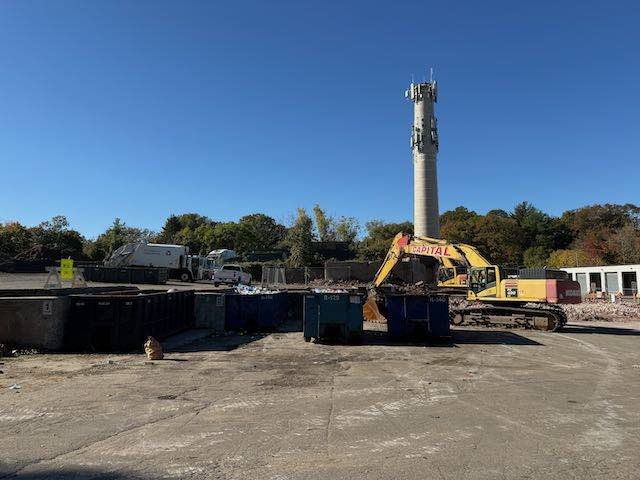 By Thursday, the debris was gone. Photo Credit: Glenn Fishman
Residents Encouraged to Run for School Board Nominating Committee
- Details
- Written by: Joanne Wallenstein
- Hits: 1404
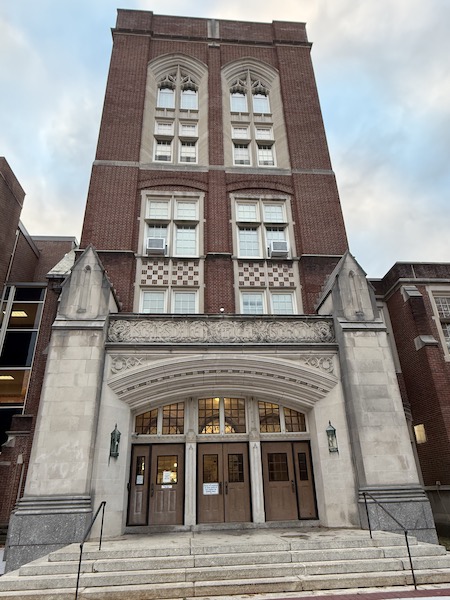 The Scarsdale School Board Nominating Committee (SBNC) is inviting residents to become part of a long-standing community tradition that helps shape the future of our schools. Being a part of SBNC is one of the most effective ways Scarsdale residents can impact the quality of our schools with a limited time commitment. Strong community involvement in the school board nominating process helps to ensure we get the highest quality of candidates for the Board of Education.
Formed in 1965, the SBNC is a non-partisan committee that identifies and endorses candidates for the Scarsdale Board of Education. Thirty members, drawn equally from the five elementary school neighborhoods, work together each year to recruit, interview, and recommend highly qualified candidates for the community to vote on in May.
Why join the SBNC?
Members play an active role in selecting Board of Education candidates, build connections across the community, and participate in a thoughtful process that has guided Scarsdale schools for decades. In 2024, Scarsdale residents voted to allow non-citizens to join the SBNC, ensuring that more voices can be part of this important process.
SBNC Membership details
All residents who are qualified voters, defined as a person at least 18 years of age, and a resident of Scarsdale for at least 30 days prior to the petition deadline of October 23, 2026, and interested in maintaining the excellence of Scarsdale schools are strongly
urged to consider running for an SBNC position.
Members serve three years on the SBNC, followed by two years on the Administrative Committee.
Open seats this year:
1 from Edgewood and Fox Meadow, 2 from Quaker Ridge and 3 in Greenacres.
How to run:
Interested residents should complete two forms by October 23, 2026 at 5pm: email the SBNC biographical form to sbncelection@gmail.com and mail/drop off the candidate petition form to the address at the top of the petition.
Election Day:
Wednesday, December 2, 2026 (snow dates: December 7 or 9). Voting will take place at Scarsdale Middle School from 7:00–11:00 AM and 3:00–9:00 PM.
For more information, visit scarsdalesbnc.org or email sbncelection@gmail.com.
We look forward to your participation and questions.
June (Xun) Deng and Jenny Simon Tabak
Election Co-Chairs, SBNC
Is Pickleball a Racket Sport? Neighbors Say No!
- Details
- Written by: Joanne Wallenstein
- Hits: 1875
 Though most of us think of pickleball as a racket sport, some sound sensitive neighbors are arguing that since pickleball is played with a paddle, not a racket, it should not be permitted at Fox Meadow Tennis Club on Wayside Lane.
The club (FMTC) thought the pickleball issue was resolved in May, 2026 when Scarsdale Building Inspector Frank Diodati determined that pickleball play was covered by Fox Meadow Tennis Club’s special use permit.
In his decision he said, “Over the years, the FMTC has maintained a variety of racket sports including tennis, platform and paddle tennis.” Furthermore, Scarsdale Village code allows “tennis court, platform tennis court, lawn tennis court or other racket sport facility” in Residence A Districts.
But after the club filed an application to convert a tennis court to padel courts, and to add lights to two of the paddle courts, attorneys for the neighbors filed an appeal to the Building Inspector’s decision on pickleball, and said that needed to be decided before considering the application for padel and lighting.
The neighbors are represented by the law firm of Abrams Fensterman LLP. In their appeal, they argue that:
1) Pickleball is not covered by the club’s special use permit because it did not exist prior to the date of the special use permits, which only allow tennis and paddle tennis.
2) Pickleball is not a racket sport as it uses a paddle, and the club is not a residence.
3) The Planning Board did not conduct a SEQRA review of the environmental impacts of pickleball.
4) Pickleball causes significant noise and list problems.
You can see their letter here:
It should be pointed out that paddleball, or platform tennis, also uses a paddle not a stringed racquet. Fox Meadow Tennis Club was founded in 1883 and paddleball, which uses a paddle, not a stringed racket, has been played there since 1931, when it built the first paddle court in the country. There are currently nine platform tennis courts at the club. And if the Special Use Permit allows for paddleball which uses a paddle, then why not pickleball?
In response to neighbor’s concerns, the club reduced the number of hours when pickleball can be played. But the sport remains very popular with members and their families.
In fact, the Village of Scarsdale recently converted two tennis courts into pickleball courts and they have been receiving lots of usage.
The club is seeking to add padel courts to the mix, as that’s the future of racket sports and they want to continue to attract members.
The Scarsdale Zoning Board of Appeals will hear the case at their meeting on October 14 at 7 pm.
From the Village: A New Playground at Davis Park and Code Changes Regarding Bikes and Scooters
- Details
- Written by: Joanne Wallenstein
- Hits: 1326
 With the advent of scooters, electric scooters and e-bikes, it is time for an update to Scarsdale’s Village code regarding the use of bikes and motorized vehicles on Village streets. The last update was 50 years ago, in 1966, and since that much has changed.
At the September 22 meeting of the Village Board Trustee Kofman introduced a public hearing on proposed changes to Village Code involving bikes. He explained, “The 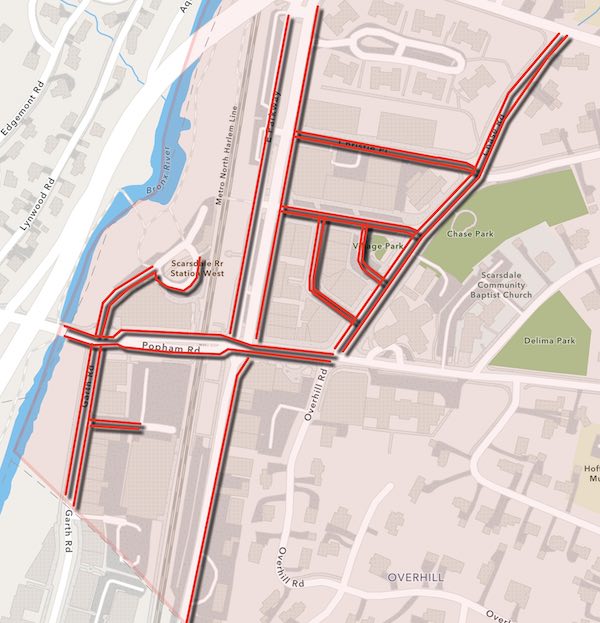 Prohibited areas for bikes on sidewalks in the Village center.code was last modified in 1966 and currently regulates on which sidewalks bicycles are allowed to be operated across the village. The proposed amendments would modernize this chapter to more clearly address the use of bicycles and electric transportation devices within the village. In addition to bicycles and bicycles with electric assists, the new code will address scooters, skateboards, unicycles, and other one-person electric devices. The amendment intended to establish a clear and consistent framework for how these devices can be operated within the village, particularly with respect to sidewalk use. And nothing in proposed amendments would restrict the local use of a wheelchair on a village sidewalk by a person with a disability.”
According to a memo from the Village, “Under the proposed amendments, bicycles with electric assist, electric scooters, and electronic personal transportation devices could not be operated on Village sidewalks and would instead have to be walked. The Village’s existing provisions allowing conventional bicycles to be ridden on certain designated sidewalks would remain in place but would not extend to these electric devices. The draft also expressly preserves the lawful use of wheelchairs and electrically driven mobility assistance devices by persons with disabilities.”
See the maps of the Village and Five Corners showing where riding on sidewalks is prohibited.
During the hearing several people spoke about the proposed changes.
Mary Laptek, of Bradford Road, speaking on behalf of herself said, “I agree completely that pedestrians must always have the right of way. However, I want to highlight a vulnerable group that is often overlooked in these discussions. Neighbors with mobility impairments who rely on electric scooters or compact devices as assisted equipment. On busy stretches like Route 22, the sidewalk is their only safe option. So I urge the board to carve out a clear, practical exception for powered assistive mobility devices, not just traditional wheelchairs, so that safety rules protect pedestrians without inadvertently cutting off disabled residents from navigating our town safely.” 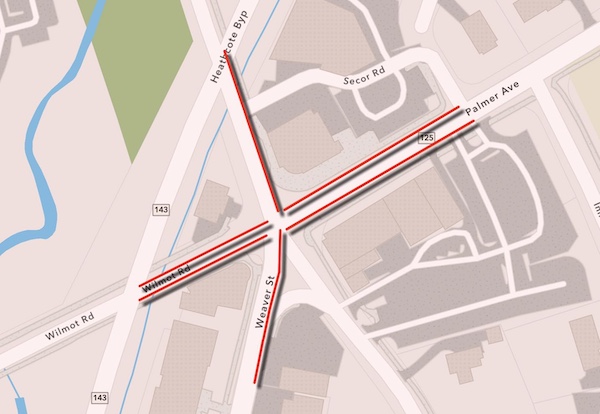 Prohibited areas in the Five Corners
Myra Saul said … “There remains a serious concern regarding bicyclists who use the sidewalks to ride their bikes. Here I am speaking of both adults and especially children. My understanding is that pursuant to the state's village and vehicle and traffic law, no adults are permitted to ride their bicycles on village sidewalks. Please confirm if that is correct. My understanding is that only children of tender years are permitted to ride their bicycles on village sidewalks pursuant to the state's vehicle and traffic law.”
“I'm no expert in this law, but regardless of the age of women, children, especially those who appear to be of middle school age, ride their bikes aggressively on village sidewalks. The senior advisory committee has informed the village that this situation is an accident waiting to happen. Children routinely bike at high speed and expect seniors to get out of their way instead of set of recognizing that they must accommodate walkers, sometimes they alert walkers to their presence with a small bell that can be hardly heard, especially if the walker is wearing AirPods or hearing aids, or they speak softly from far away. There have been numerous close calls. At some time, a walker will be hit, fall, and suffer a life-changing injury. This is very serious stuff for the individuals involved. It also raises issues regarding the village's potential liability. We need a concerted effort by the police and the schools to teach school-age children safety rules with respect to walkers and others who have the right to their public space on sidewalks before it is too late.”
Emily Goodwin of Secor Road said, “The proliferation and growing use of electric bikes and scooters presents a significant safety challenge, both for those operating these vehicles and for pedestrians who increasingly must share limited space. While I believe the proposed amendments address many of the key concerns, I am concerned the enforcement will be difficult if left solely to the police. Keeping our citizens safe will require active collaboration among parents, schools, children, and the police department. Children should be educated about the importance of appropriate safety equipment, including bells or horns and helmets, which are required under New York State law for anyone under the age of 13, as well as the general rules of the road, parents should likewise be educated about the consequences of failing to enforce and reinforce these requirements at home.”
Carol Silverman called for bringing back Bike Safety training. He said, “When my children were young, there was a whole police effort made. The kids brought their bikes. They got a special little inscription on it in case the bike got stolen. To the best of my knowledge, that's no longer happening. … It’s in the interest of safety for both pedestrians and the bike riders. So it's just my suggestion that somehow the Village Board and the Board of Ed get together and the police department and put that program back into effect.”
Mayor’s Comments
Opening the Village Board meeting, Mayor Arest recognized Carla Samuels who retired that day after 40 years of service to Scarsdale. About Samuels, he said, “Anyone who has had the pleasure of working with her nose of a warm smile, her incredibly kind disposition, and the genuine care she brought to every interaction, she spent decades helping the people who serve this community, often quietly and behind the scenes. And she always did so with professionalism, patience, and grace.”
Pickleball Courts
The Mayor thanked the Recreation Department and the Department of Public Works for their work to improve the temporary pickleball courts at Crossway. He said, “The result is a significantly improved playing experience for our residents today, while we continue working toward the new permanent course that the community deserves.” See more on the new pickleball courts here.
Comments from the Deputy Village Manager
Deputy Village Manager Emily Giovanni introduced Caroline Hurley is the Village’s new administrative intern.
She said that Rock the Dale, originally schedule for September 20 had to be postponed due to weather, and will likely be rescheduled for Sunday October 11, 2026.
Scarecrow Making Hayday will be held at the pool complex on Saturday October 3 from 11 am to 2 pm. She explained, “You can build your own scarecrow with straw and string provided by the recreation department. But you do have to bring your own clothes and accessories to give your scarecrow some personality. There's also going to be some food, some DJ entertainment, face painting, crafts, and of course, animals from Weinberg Nature Center registration is $75 per family and is available online.”
Halloween
Giovannia said, “The Halloween Window Painting Contest will take place in downtown Scarsdale on Sunday, October 18, from 9 am to 4pm with judging on Monday, October 19. The Scarsdale Halloween Parade is scheduled for Sunday, October 25.
Public Comments
Ying Ying Na from Rock Creek Lane said, “I want to thank the our mayor and the board for strengthening protection of wetlands, watercourses, and the buffer areas….You may already heard about the proposed development at0 Spier Road. … As of today, 428 community members signed the petition to stop that development. So the concern is really about flooding and drainage issues. As the lot has a live stream running through, it's a rocky slope. It has an open drainage on the side…. The development will bring down 13 mature trees…. The neighbors were talking about improveing our infrastructure before we add to the existing condition.”
Joe Lawrence raised concerns from a community meeting with Con Edison on September 15, 2026. He asked for an update on plans to excavate the gas line that has already been buried and questioned Con Ed’s requirement that anyone who needs the utility to repair their damaged sewer line sign a release before the work is done. He said, “We didn't ask for this pipeline to be put into our streets. Now we are at risk for our lives and our property, and now they're asking us to go out of pocket to hire a lawyer to review a waiver.”
The Mayor responded to Lawrence saying, …..”We were waiting for a lot of information from Con Edison relating to the work they plan to do, and the timeline… so that Superintendent of Public Works and the entire team can review them and make sure that everything meets the specs that we will require. Of course, we're bringing on our own inspector as well.” “There has been direct communication with the with DPS and PSC. We have a direct line with them now, which I think is actually great for Scarsdale in the long run.” “We are not aware of any evidence at this point that the specific matter under federal investigation and with an indictment occurred directly in Scarsdale. So I just I just want to make that clear. Again, that doesn't mean we aren't looking into everything ourselves and expecting to get plenty of answers, but specifically, we're not aware of any of that fraudulent activity that was uncovered….and we do appreciate that there will be extra checks. It's unfortunately going to be a huge inconvenience to the residents who live there, but we also want answers, and we also want to make sure that everything is being done with the safety of all of our residents in mind.”
 A new playground is planned for Davis Park
Other Business
Core Burn Pilates received permission to open a 1,539 square foot studio at 100 Christie Place in the space formerly occupied by the Bank of America.
A contract was awarded for painting Wayside Cottage.
A contract for $349,700 was awarded for a new playground at Davis Park at 198 Lyons Road. The plans include the construction of new play apparatus and safety surfaces. Take a look at the schematic for the new playground.
The Village approved new policies regarding fund balance and credit cards. See the details here.
Following an Accident, a Traffic Light is Installed on Post and Edgewood Roads
- Details
- Written by: Christine Weston
- Hits: 1434
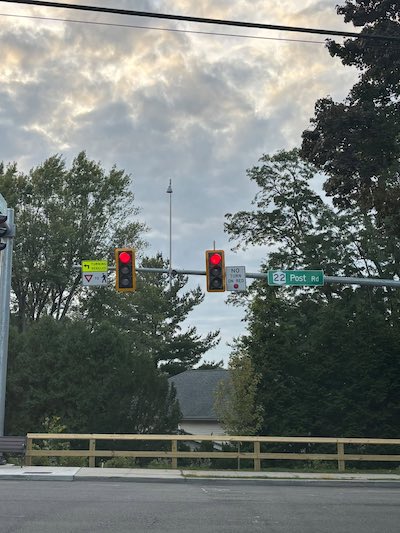 This letter was submitted by Christine Weston
Dear Scarsdale Community,
Today, a new traffic light went live at the intersection of Post Road and Edgewood Road—and for me, it represents much more than a traffic signal.
In May 2022, my son was hit by a car at this intersection. Thankfully, he was okay. But as a parent, it was the kind of phone call and experience you never forget. It also brought into sharp focus something many of us already knew: this was a dangerous intersection, particularly because of its proximity to Edgewood Elementary School.
After the accident, I began advocating for a traffic light. I quickly learned that because Post Road is a New York State road, this wasn't something our Village could simply decide to do. It required the involvement of New York State, traffic studies, approvals, funding and coordination among multiple levels of government.
It took more than four years.
There were plenty of moments when it would have been easy to assume that nothing was happening or that our concerns had disappeared into a bureaucracy somewhere. But behind the scenes, people kept working.
I am enormously grateful to Mayor Justin Arest and Deputy Mayor Dara Gruenberg for listening to our concerns and advocating on behalf of our community, and to Assemblywoman Amy Paulin and State Senator Shelley Mayer for taking up the issue at the state level and working with the New York State Department of Transportation to make this light a reality.
I also want to recognize my neighbors Jason Andrus and Glenn McClanan, who joined me in advocating for a safer intersection and helped keep attention on the issue. This was very much a community effort.
Today, we got to see the result.
At a time when it is easy to become cynical about government and whether individual voices can make a difference, I think it's important to tell the stories when the process does work.
Residents identified a safety problem. Neighbors came together. Our local officials listened and advocated. Our state representatives took action. And although it took far longer than any of us would have liked, today there is a traffic light at an intersection that will be safer because of that collective effort.
My son is older now. The children walking to Edgewood today were not the same children who were there when this effort began. But that's part of what makes this moment so meaningful to me.
We kept pushing for a change that might not benefit our own children as much as it will benefit the children who come after them.
So today, as that light turns red, yellow and green for the first time, I want to say thank you—to Mayor Arest, Deputy Mayor Gruenberg, Assemblywoman Paulin and Senator Mayer, and to the neighbors and community members who spoke up and stayed involved.
What began with a frightening experience for our family has resulted in a lasting improvement for our community.
This is what local advocacy can accomplish, and it is what government can accomplish when residents and public officials work together.
--Christine Weston