










Goodbye Old House, Hello New House
- Details
- Written by: Jamie Kayam
- Hits: 8641
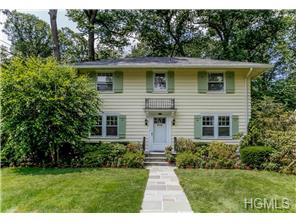
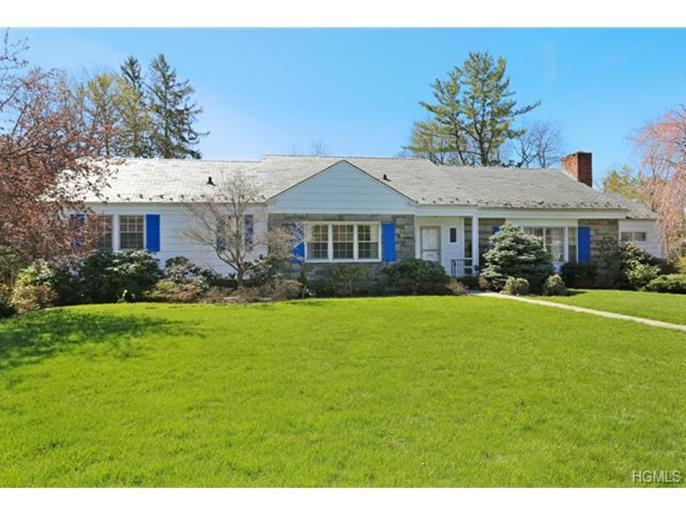
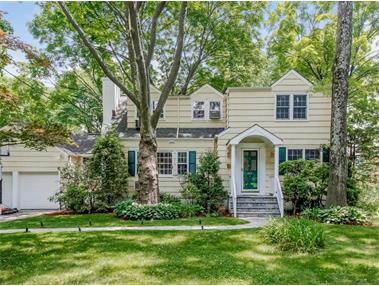
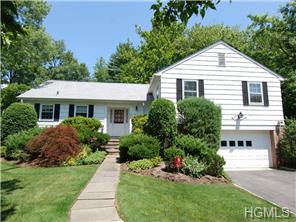
Does it seem like more houses are getting demolished in Scarsdale than usual? Ever wonder what the process entails, who's swinging the proverbial wrecking ball and who's designing the new homes built in their place?
There can be some very good reasons to replace an older home. It's fairly common for age-related wear and tear to bring a property's value and attraction down, prompting developers and enterprising buyers to invest in new house construction, and smaller homes on larger lots can offer the potential of untapped value. Sometimes a current owner may just want a new house.
The details on this subject can seem endless, so to start, this article focuses mostly on the process of building a new home in Scarsdale. We hope it offers some clarifying perspectives for our neighbors.
Risk and Reward
Right now, the real estate market in Scarsdale is hot. Many listings move into contract fast and every month there are new homes scheduled for construction. But that wasn't always the case; the economics of turning a dime can get tricky:
One particular project in Greenacres took a developer nearly six years to conclude; a property was purchased and demolished in 2006 for $1,181,000 million, built new and listed for sale in 2010 at $3,150,000 and stood vacant until it sold in late 2012 for $2,235,000. Holding the house for six years cost about $210k in property taxes, and the reduced price was $915k less than the intended sale price. That would have left a balance of $844k to develop the property. If new construction cost 700k, that would leave a profit of $144k — over a six year period that's about $24k per year.
Yet developers continue to see dollar signs all over our town. In June this year a listed property in Heathcote was aggressively bid on by multiple parties, and in just 2 weeks went to contract above asking price — by a developer. The buyer stated he intends to keep his new purchase as a rental home for clients while he completes multiple other projects in Scarsdale.
Demolition to Construction
What does it take to get a new house built? I spoke with Liz Marrinan, Scarsdale's Village Planner, to get a broad overview of the entire process. Here are the simplified steps from demolition to new construction:
- Submit an application for demolition to the Committee of Historic Preservation (CHP). The CHP is tasked with reviewing all demolition requests that involve over 50% of a structure. A review is conducted of a home's historical significance and can potentially be denied a permit for a tear down. But, if approved, start polishing your wrecking ball!
- Hold on, there are a few exceptions — in some cases, the Planning Board must conduct a review of your application as well. They'll get involved if your property is located on designated wetlands or is one of Scarsdale's rare flag lots (these are houses located behind other houses with long driveways).
- Submit your new home designs to the Board of Architectural Reviews (BAR). The BAR requires that new construction plans are submitted by a licensed architect, and will be reviewed for aesthetic qualities and adherence to design regulations. Once approved, it's time to proceed to step 4, but don't worry, the BAR will meet with you again for landscaping design before you can move in.
- Submit your plans to the Building Department and the Engineering Department. First, Engineering will need to review and approve your plans for a stormwater permit, and then a building permit can be issued.
- Congratulations, you may now pass Go! But hold on, your project will be subjected to multiple inspections by the Building Department as you progress. So make sure you run a tight ship and comply with all regulations.
House Design 
One of the most intimate aspects of new home construction involves presenting the design for approval.
I spoke with Jack Scott Miller, Chairman of Scarsdale's Board of Architectural Review, to get some additional insight into how the BAR conducts the process.
For full disclosure, please note that I'm an alternative member of the BAR (an active substitute), so I sometimes sit on the BAR and assist in conducting design reviews.
Jack referred me to the BAR's official mandate, which states: "The purpose of this chapter to preserve and promote the character and appearances and conserve the property values of the village."
The BAR tries its best to hold the line on quality designs as changes in the architectural landscape persist, but developers and property owners are tenaciously lobbying for what they want as well.
A huge part of BAR public hearings are neighbor's concerns. Residents often appear at meetings in groups, prepared to express their opposition to proposed projects. Complaints range from home designs being too large and driveways too long to new designs that contrast with the theme of a particular block and driveways that meet the road too close to other existing driveways.
Neighbors also bring complaints about rainwater running off from new home sites onto their properties, resulting in flooding issues, but that concern is dealt with by the Engineering Department.
Building Permit and Inspections:
To gain better insight into the actual process of building a new house, I reached out to Scarsdale's Building Department Director, Nunzio Pietrosanti. We discussed some of his experiences and concerns as new projects come into his office for oversight.
Under ideal circumstances, a project application is processed in about four weeks if all paperwork is in order and there's a minimum backlog of submissions at the office. Sometimes processing can take up to eight weeks. The Building Department tries to work closely with everyone who's submitting a project, and I found Nunzio's openness to be a reflection of the department's efforts to be accessible and user-friendly.
There are typically two types of entities who come to the department to get a project started; property developers who bring years of experience navigating the process and individual property owners trying their hand at house building for the first time. Applications with errors can get rejected, so if you're going it alone, consulting with professionals and taking the time to study village regulations can help expedite a complicated process.
The Building Department has a busy schedule. The process of inspecting a new house as it's being constructed can require up to 15 on-site inspections over a period of about a year, and there are currently 2 inspectors on staff to accommodate all reviews. Larger houses can take even longer.
Inspections range from analyzing foundations and load-bearing structures to plumbing and natural gas lines, as well as coordination with Con Edison for electrical lines, and conformity to approved design specifications. Additionally, the Engineering Department gets involved in the inspection of storm drain installations, as well as approving soil erosion and sediment control measures in order to issue a stormwater permit.
It's a delicate dance between developers, inspectors and third-party specialists all trying to meet deadlines and expectations of safety and quality.
Ready to move in?
In addition to all of the professionals employed by the village, there's also the team that's going to actually build your new house.
If you've ever marveled at how complicated a small bathroom renovation can get, just imagine the details involved with a house. And don't forget to include the bathrooms.
To start, you'll need a land surveyor, architect, foreman, foundation builder, craftsmen, bricklayers and masons, plumbers, electricians, roofers, asphalt pavers, and you're definitely going to need a landscape designer. Which direction will your house face, how will the sun shine on it? Solar panels or geothermal heating, or both? How many zones for the central A/C and radiators? Lighting fixtures, faucets, door knobs, dumpsters, port-a-potties, marble or granite — can we move in yet?
The details can seem endless, and there's an enormous amount of talent and skill involved. Considering it all, it's impressive to watch these houses go up in just one year.
Federal Monitor for Affordable Housing Settlement Calls to Depose Astorino
- Details
- Written by: Joanne Wallenstein
- Hits: 9415
Federal Monitor James Johnson, the New York attorney charged with overseeing the implementation of the Fair and Affordable Housing settlement in Westchester, is now calling for Westchester County Executive Robert Astorino and his staff to be deposed in court. Stating that Astorino and his team "have made statements that have confused the public, misstated the terms of the Settlement and signaled ongoing defiance of its terms.," Johnson is asking for the deposition to focus on "the County Executive's public statements and the areas of non- or partial compliance."
Johnson's order came as part of his second biennial assessment of the County's compliance to the 2009 decision that prescribed a far-reaching plan to "expand opportunities for African Americans and Hispanics to live in integrated communities in Westchester."
Some of the County Executive's misstatements cited in the report include the following:
- Astorino's assertion that the Monitor was attempting to impose a new requirement of 10,768 rather than 750 units with allocations of hundreds of units to specific communities.
- County Executive's claim that the cost of the settlement could exceed one billiion dollars.
- Statement that HUD intends to build six-story high rises.
The 73-page report analyzes all progress on the settlement and charges Astorino with misrepresenting the
terms of the court order and deliberately confusing the public. Though he credits the County with making progress in constructing the required housing units, Johnson says Westchester has failed to meet many of the other stipulations. Johnson charges the County Executive with attempting to reduce the terms of the settlement to the construction of units while ignoring the mandate to educate the public, to conduct an advertising campaign and outreach effort and to produce an acceptable review of local zoning codes that impede fair housing.
The Settlement called for the County to conduct an analysis of certain restrictive zoning practices in the 31eligible communities, to specify a strategy to overcome exclusionary zoning practices and to identify the types of zoning practices that would, if not remedied, require the County to pursue legal action. Though the County submitted multiple analyses, none found evidence of exclusionary zoning. Johnson calls the multiple analyses that were submitted "deficient" and said the County "had failed to fulfill it's duty," as they did not examine the question of race as an obstacle to the development of affordable housing.
After several analyses were rejected by HUD, Johnson retained independent housing consultants to review the data and according to the biennial report in March 2013 the consultants "concluded that seven of the 31 municipalities eligible under the Settlement (Harrison, Lewisboro, Mamaroneck, Ossining, Pelham Manor and Pund Ridge) had zoning ordinances that limited affordable housing or made the development of affordable housing practically infeasible." Astorino responded by holding a press conference in which he claimed that the Monitor was changing the terms of the settlement and could require the County to build 10,678 units rather than the 750 stipulated by the court.
HUD has punished the County by withholding more than $12 million in funds earmarked for Westchester municipalities, and more could withhold another $5.2mm if the impasse continues. In an effort to produce an acceptable analysis (A-1) and secure funds due to the County, the Westchester County Board of Legislators has now stepped in and suggested that the Monitor oversee the analysis.
Astorino has rejected the Board's move to work with the Monitor saying that Johnson is advocating "rewriting the terms of the Settlement," and "giving HUD unprecedented power to dismantle local zoning." He said HUD would strip local governments of Home Rule, and "replace the zoning analysis" done by the County (which after eight reviews found no evidence of exclusionary zoning based on race or ethnicity) with its own reports and conclusions." The County Executive is holding fast to his contention that there is no evidence of exclusionary zoning based on race or ethnicity.
Though Astorino thinks Johnson is over-reaching, the Anti-Discrimination Center that brought the original lawsuit against the County feels that Johnson's report does not go far enough. They call the report a "masterpiece of misdirection" and want the County to be charged with contempt. In an opinion piece on their website they say, "On the basis of evidence clear to all, the Monitor ought to have been asking the Court to hold Westchester in contempt for its brazen and ongoing violations of the Consent Decree."
Now that Astorino is vying to be the Republican candidate for Governor of New York State, the Settlement is bound to become an issue in the race. Though some in Westchester believe the County Executive is defending their right to local zoning control, statewide voters could view his defiance and failure to seek compromise as a problem with his leadership skills. Strapped for funds, neither the County nor the State can afford to turn away federal grants, and voters outside the County may look upon this case as black mark, not as a credit to Astorino's resume. The history of the Settlement is a complex issue that upstate voters may not take the time to thoroughly analyze. Instead they might focus on the bottom line – which is that Westchester County now stands to lose almost $20 million in HUD funds if the issues cannot be resolved.
Edgemont High School Celebrates 58th Commencement
- Details
- Written by: Joanne Wallenstein
- Hits: 7018
It was graduation night for the Edgemont High School Class of 2014 on June 26th. The school held their 58th Commencement Ceremony on a warm but beautiful evening. On the program were three class speakers; Jason Lei, Caroline Newman and Ivan Paskov as well as remarks from EHS Principal Devan Ganeshananthan, Faculty member Molly Earle and Jennifer Darger of the Board of Education. The band played Pomp and Circumstance on the way in and the way out and the ceremony ended with a sea of blue mortar boards in the air.
Check out these lovely photos contributed by Mariela Melamed, mother of graduating senior Maya Melamed. If you would like to add photos of your grad to the gallery, please email them to scarsdalecomments@gmail.com.
The Last Word on Lois
- Details
- Written by: Joanne Wallenstein
- Hits: 8598
With the retirements of so many key players at the Scarsdale School District this year it's been difficult to give each of these long-term members of our community their proper due. In addition to Superintendent Michael McGill, Greenacres Principal Gerry Young, STA President Trudy Moses, Scarsdale Teacher's Institute Director Susan Taylor a host of well-loved teachers have announced that they will also leave us this year.
But we can't close the book on 2013-14 without recognizing District Clerk Lois Rehm who will complete 30 years in Scarsdale at the end of July. We sat down to chat with Rehm about her three decades at the district and she said "I enjoyed my stay, working with all the fine board members and superintendents. I have learned a lot from everyone and found my fellow staff members to be wonderful and collegial." She reminisced about serving under at least four superintendents, Dr. Thomas Sobol, Dr. Richard Hibschman, a short stint by Dr. Francis Murphy and 16 years with Dr. Michael McGill. Rehm wore many hats, exemplifying the concept of multitasking before anyone coined the term. Over the years her job grew to encompass the roles of secretary to Dr. McGill, the Board of Education as well as District Clerk.
With prior experience as a legal secretary and paralegal, Rehm maintained the complex and ever-changing agendas for the Board of Education, quietly keeping the whole community on track. She ran the board and budget elections, managed the entire list of Scarsdale district voters and even the schedule for Dr. McGill.
Who knows if it will take one or two people to fill her shoes!
She won't go far in her retirement. She and her husband Merlin Rehm now live in the
residence for the Trinity Lutheran Church on Crane Road where he serves as the Pastor. He will also retire this year and they will move to their home in Eastchester.
At the June 23rd meeting of the Scarsdale Board of Education, here's what Board President Suzanne Seiden said about Lois Rehm:
"How can we possibly say thank you and good bye to Lois Rehm?
Lois is the heart and soul of Scarsdale.
Lois knows everything.
Lois is a bit like Corporal Walter Eugene O'Reilly of MASH fame—fondly known as
"Radar." To remind you Radar got his nickname because he heard the choppers
before anyone else and seemed to know what people wanted from him before
they could say it.
Lois is our Radar.
Lois always knows what is about to happen before the rest of us.
Lois anticipates what we need before we even think to ask."
Susie Rush also expressed her thanks to Rehm saying, "As difficult as it is to say goodbye to Dr. McGill, it is even harder to say goodbye to Lois Rehm, our beloved District Clerk for the past 30 years. How can anyone adequately put into words how invaluable Lois has been to the District or imagine life at the District without her? The sporter of a myriad of hats, Lois carried out her seemingly limitless responsibilities unfailingly, flawlessly, without fanfare, and always with a smile.
While that would be an extraordinary accomplishment on its own, Lois did more. She was always one step ahead, anticipating what would be needed and doing it. But what for me was most inspiring is her inexhaustible patience and unwavering professionalism. I don't think I've ever heard Lois raise her voice or express exasperation. I certainly have never heard her complain or even hint at the feats she has achieved. Either she is a saint (which I've said often she is) or her husband gets to hear it all when she gets home. Lois is not just the consummate district clerk and genius behind all that goes on in the Board of Ed offices; she is the very heart and soul of the district; she embodies non sibi. Lois, you leave a gaping hole that cannot be filled.
Thank you for your years of service and unwavering dedication to the district. We will miss you dearly. We wish you all the best as you begin a new phase in your life, and experience something which is likely foreign to you – stress-free days and Monday evenings."
And on behalf of Scarsdale10583.com we thank Lois too! We will miss her almost daily email and are not sure how we are going to keep things straight without her!
Grievance Day: How it Went in Scarsdale
- Details
- Written by: Joanne Wallenstein
- Hits: 9772
June 17th was Grievance Day in Scarsdale .... a day for those who wanted to appeal their tax assessment to go before the Board of Assessment Review to state their case. Given the revaluation, and discontent by some with their new valuations, we wondered how it went at Village Hall. Village Assessor Nanette Albanese promised to send some statistics on the day and will do so. In the interim, we received the following comment from Robert Berg, a member of the Board of Assessment Review along with Tom Giordano, Paul Sved, Gary Ellis and Ken Sklar.
Here is what Bob said followed by observations with a resident who was less than thrilled with his session:
From BAR Member Robert Berg:
Yesterday (6/17) was property tax Grievance Day in Scarsdale. That means it was the last time for property owners to file any challenges to their tentative property assessments resulting from the first town-wide property tax revaluation since 1969. Grievance Day also provided property owners with the opportunity to present evidence at a live hearing to the Scarsdale Town Board of Assessment of Review to support their challenges. The Board of Assessment Review is an independent town board comprised of five residents of the Village of Scarsdale who are familiar with local real estate property values. The Board members are all community volunteers who have been appointed by the Village Board of Trustees. The primary responsibility of the Board of Assessment Review is to determine whether the assessment of each complainant is illegal or erroneous by reason of inequality or overvaluation, without regard to the methods employed by the assessor in making her own determinations. Thus, the Board of Assessment Review provides an important, independent "check and balance" on the accuracy of the assessment roll as we decide the grievances based on the evidence presented by the property owners.
We hear, in person, all grievances by property owners who have requested an in-person hearing on Grievance Day. Most grievances, however, are submitted by the property owners "on the papers" without a live hearing. The Board meets frequently over the summer to deliberate, and the decisions we reach are mailed to property owners on September 15, 2014, the date the assessment roll becomes final. If a property owner of a qualifying property disagrees with our determination, he/she may file a simple Small Claims Assessment Review petition with the Supreme Court, and owners of all types of property may bring an Article 78 action in the Supreme Court.
Because of the revaluation, the number of grievances filed, unsurprisingly, is very high. The Assessor's Office has been hard at work processing these filings, and the actual number will not be known until the end of the week. However, the number of property owners who scheduled a live hearing before the Board and appeared yesterday was much higher than usual. Given the revaluation, and certain property owners' unhappiness with the tentative property assessments determined by Tyler Technologies, this was expected. Last year, I recall about 2 or 3 owners appearing for a live hearing. Yesterday, we had close to ninety (90)! Given this large number, we tried to limit each hearing to five minutes, but we really wanted to give each owner the opportunity to speak his/her peace and present whatever evidence he/she wants us to consider. As a result, we fell behind schedule, and some property owners had to wait for an hour or two past their scheduled hearing time. For that, we apologize, but no property owner was shortchanged. Every one who wanted a live hearing received one. We thank the taxpayers for their patience and understanding. We actually heard cases for about 11 hours, including a short dinner break. We thank the Village Assessor and her staff, the Village Attorney, and the court reporter for sticking with us, hour after hour, so that all property owners could be accommodated.
We did not make any determinations yesterday. Instead, as we told grievants, we are in an information-gathering mode with respect to their complaints. One thing property owners need to understand is that, by law, the tentative property assessments they have received are presumptively correct. In order to prevail in their grievance, the taxpayer must produce evidence to rebut this presumption. The type of evidence necessary to rebut this presumption will vary. But as we told taxpayers yesterday, the Board finds that the submission of an independent appraisal from a licensed professional real estate appraiser is oftentimes very helpful evidence to support a taxpayer's claim for an assessment reduction.
Nonetheless, we took pains to tell taxpayers that we do not require them to submit such a professional appraisal and that we will consider any and all evidence that they submit. By way of example, other very helpful evidence includes:
-An executed contract for the purchase of a property in an arm's-length transaction between unrelated parties for a property that was offered on MLS,
-Other evidence of the purchase price on a recently closed transaction,
-An active MLS listing of a property being offered for sale.
Many grievants or their representatives have submitted, or have stated that they will submit, independent appraisals to support their claims. We invited grievants, if they have not done so, to submit an independent appraisal in the next two to three weeks, again reminding them that they are not required to do so in order to have their assessment reduced. We have the authority to reduce an assessment, under the law, whenever we determine, in our judgment, that the proof submitted by the complainant is sufficient to overcome the presumption that the tentative assessment is correct. The Board takes its responsibility very seriously, and the members of the Board will be spending many hours meeting and deliberating this summer as we carefully evaluate the merits of each grievance.
From a Resident:
I was warned in advance by the Assessor's office not to be late for my 7 pm scheduled hearing, so I arrived on time and was told the hearings were an hour behind schedule. Since the evening hearings were 2 hours behind schedule, I was called before the board at just after 9 pm.
Although the board took a recess, when the hearings resumed a pizza delivery was made and several members ate pizza while listening to citizen's grievances.
Board members were not provided with nameplates for their seating as is typical of Village meetings.
Nanette Albanese, the Village assessor who sat with the board, was aggressive; she countered every argument she heard. She was especially aggressive towards attorneys speaking on behalf of property owners.
Bob Berg seemed to chair the board. He was patient and sympathetic and he let everyone have their say, hence the delays.
Most owners were prepared with statements, but focused on trivial issues, e.g., small differences in property square footage, quality conditions of homes and rooms. Most owners were not prepared with relevant material to support their arguments, e.g., recent third-party appraisals.
In all cases I heard that evening, Bob Berg suggested to all that lacked a third-party appraisal to get one and deliver it to the Assessor's office within 2 weeks so it could be considered when a final review of grievances would be conducted. For those who did already have appraisals available to deliver, Bob Berg and Nanette Albanese said emailed PDFs would be accepted.
Most property owners seemed ill-equipped to present an argument that would result in any substantial changes to their assessments, focussing on personal opinions and affections towards their property. Some brought to light that their property's location was in a unique setting, such as elevated land or flood zones.
I had submitted 3 appraisals from 3 consecutive years within the last 5 years, personally delivering a stack of 100 pages to the assessor's office when filing my grievance, and received a receipt for the delivery. All of my paperwork was lost by the Assessor's office. After the meeting I emailed the Assessor's office copies of my appraisals as PDFs and requested another confirmation of receipt -- which I have yet to receive.
I reminded the board that they were in violation of a lawsuit settlement that had offered me and agreed to 2 years prior.
Nanette Albanese argued against me that the lawsuit settlement (which she personally initiated and signed into contract) was not substantial to this year's grievance. Other board members were quick to interrupt her and requested I resubmit all of my appraisals, assuring me that the lawsuit and multiple appraisals would strongly be considered.
I explained to the board that Tyler Corps first assessment of my property was 50% above the agreed lawsuit settlement, and that Tyler's revised assessment was sent out late, missing its end-of-May deadline, which made it difficult for property owners to be prepared with the most up-to-date assessments available. In my case, the correction I received was substantial, adjusting the majority of the excessively high first valuation — I told them that was a good start.
Did you go before the BAR on Tuesday? What was your experience? Email scarsdalecomments@gmail.com or comment in the area below to share your thoughts with other readers.