







Global Citizenship Day Brings Learning, Creativity, and Culture to Scarsdale High School
- Details
- Written by: Claudia Wang
- Hits: 373
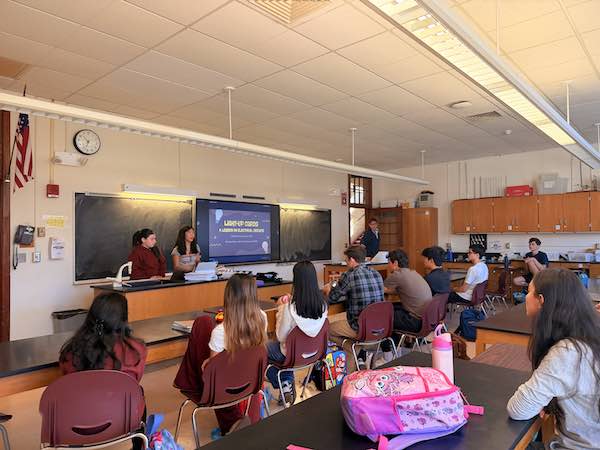 Students discuss global inequities in education.On Friday, October 9th, Scarsdale High School adapted its standard schedule to host Global Citizenship Day (GCD). This incredible school-wide event transformed the everyday class schedule into an immersive, day-long series of workshops designed to broaden perspectives, foster global awareness, and inspire community engagement.
Featuring guest speakers in the Auditorium and Little Theatre alongside creative workshops led by student club leaders, GCD offered SHS students a rich variety of meaningful experiences.
Across the building, student-led workshops stood out as a highlight of the day, showcasing the dedication and creativity of SHS clubs.
Human Rights Club: Exploring Literacy Through Art and Activism
Led by Kara Rodrigues, Emma Florence, Jiya Choudary, Melanie Tucker, Alice Suh, Rowen Kao Celmer, and Eden Rieber, the Human Rights Club dedicated its session to examining global inequalities in education. The workshop opened with an informative presentation on the right to literacy, detailing how gender discrimination and socio-economic barriers restrict educational access around the world.
To help participants to engage with the issue beyond slides, the leaders introduced "Page Turners, " a hands-on activity where students created blackout poetry and illustrations using old book pages.
"The Human Rights Club is about raising awareness of real human rights issues and promoting equality, inclusion, and respect for all people," explained co-leader Kara Rodrigues. "Our goal is to help people understand human rights issues and to encourage them to take action."
Reflecting on the session's impact, Rodrigues added, "Rather than only listening to us presenting, students also had the opportunity to participate in the Page Turners activity and create something of their own, which made the topic more interactive and allowed students to express themselves through poetry and art."
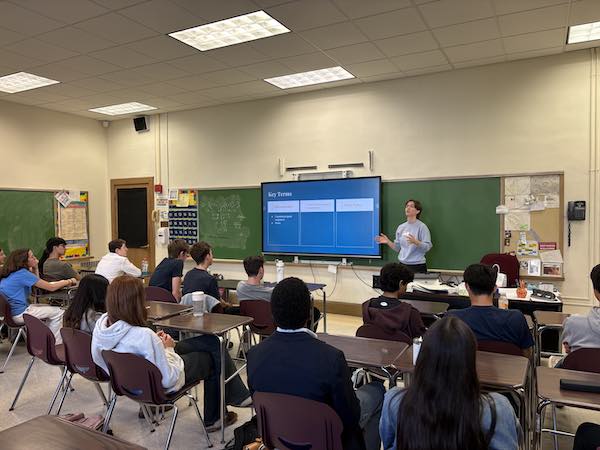 Session on Community Engagement
GEMS: Sparking Curiosity and Engagement in STEM
Girls Excelling in Math and Science (GEMS), led by Maddy Nam and Ariana Riggi, brought practical science to life during their GCD session. GEMS serves the broader Scarsdale community by designing and teaching monthly STEM lessons for 4th and 5th-grade girls across all five elementary schools.
For Global Citizenship Day, the leaders brought their goals and experiences to their SHS peers. Participants learned about basic electrical circuits before putting the physics concepts into practice by crafting light-up greeting cards. "Our goal is for the girls to grow more willing to experiment, ask questions, and envision themselves as problem-solvers who may one day pursue a career in a STEM field where women have been historically underrepresented," shared co-leader Maddy Nam.
Nam noted that sharing their work with fellow high schoolers was a rewarding experience, reflecting that "the session went really well, and we were thrilled to see the high school participants just as engaged in the activity as the elementary school students are every month!"
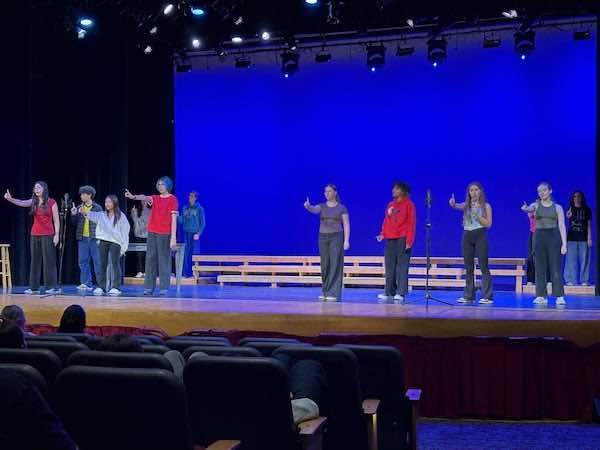 Cast of the upcoming production of Urinetown perform.
Jabberwocky: Celebrating Global Voices and Creative Expression
Scarsdale High School's literary magazine, Jabberwocky, hosted two sessions centered on international literature and creative writing. Led by student leaders Daniel Chung Hang Sze, Griffin Kong, Liam Weintrob, Claudia Wang, Samantha Warren, and Claire Friedman, and under the guidance of club advisor Mr. Mounkhall, the workshop passionately introduced participants to poetry from Brazil, England, Ireland, Taiwan, and China.
After volunteers read aloud the selected works, leaders facilitated a lively group discussion on recurring cultural themes, symbolism, impactful literary techniques, and interpretive messages behind each poem. The session concluded with a 15-minute writing workshop, where attendees drafted their own poems and short stories based on prompts tied to global culture. Several students volunteered to read their original pieces aloud and were encouraged to submit their work for publication in the Jabberwocky Magazine.
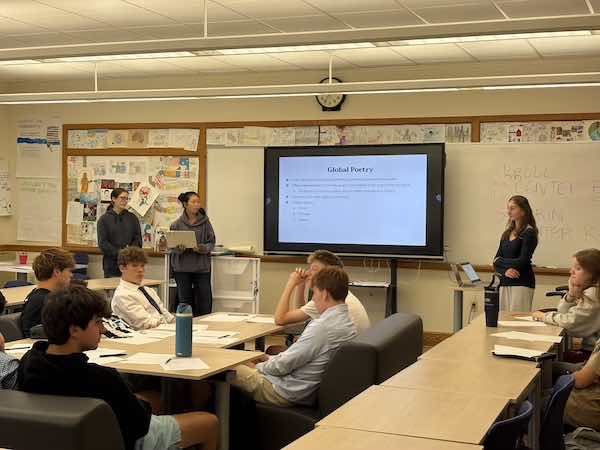 A student presentation on poetry at the SHS Jabberwocky Club session.
An Impactful Day for the SHS Community
By combining meaningful guest lectures with interactive, student-led workshops, Global Citizenship Day successfully highlighted the interconnectedness of our world. The event not only educated students on global issues, but also demonstrated the active role Scarsdale youth.
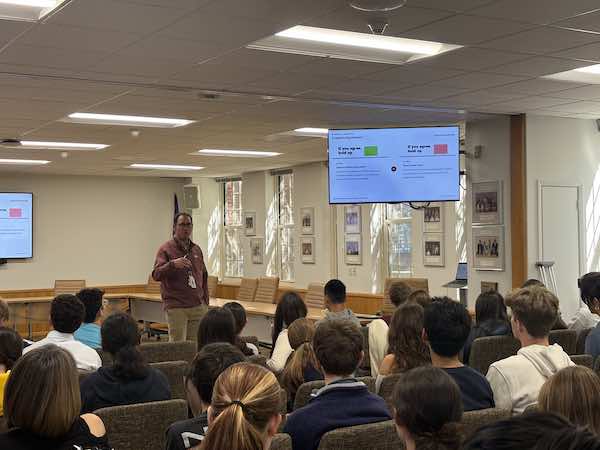 School Superintendent Drew Patrick led a session too!
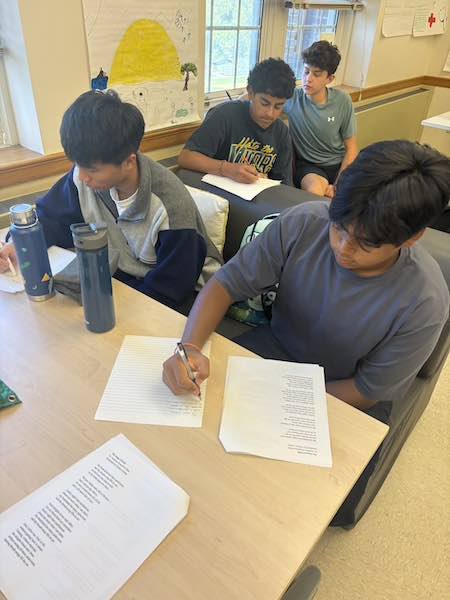 Students write poems and short stories at Jabberwocky workshop.
Photos by Jack Capobianco
Scarsdale’s Football Team Defeats Mount Vernon 51-0
- Details
- Written by: Jack Capobianco
- Hits: 704
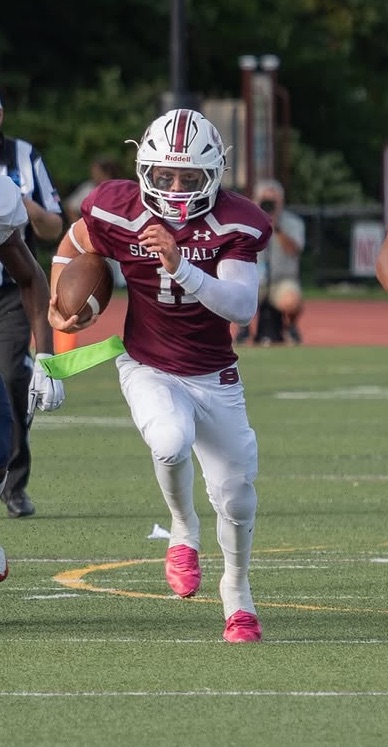 Following their huge 22-13 win against the Arlington Admirals on homecoming, the Scarsdale Raider football team won their second straight game after beating Mount Vernon 51-0 at Memorial Stadium on Friday October 9, 2026.
The team's offense, led by quarterback and senior captain Patrick Simon got off to a fast start after Simon ran 70 yards all the way to the endzone giving the Raiders a 7-0 advantage on the second play of the game.
Later in the first quarter, Simon, scoring his second rushing touchdown of the quarter, gave the Raiders a 14-0 lead.
Touchdowns by senior captain Lars Burrows and junior Shane Kelly put the Raiders up 30-0 by the end of the first half. Outside of the play of quarterback Pat Simon, these two guys, Kelly and Burrows, who serve as running backs on the team have been nothing but dynamic for the Raiders offense.
Being up by four touchdowns at halftime allowed for Scarsdale to rest their starters and give players who do not normally see playing time to see the field in the second half.
Rushing touchdowns by seniors’ Corey Novoseller and Charlie Tessler in the fourth quarter padded the Raiders 51-0 dominant win.
With the win, the Raiders improved to a 4-1 record giving head coach Andy Verboys his 20th winning season in 22 years since he began as the head coach for Raider football.
The Raiders will have a bye week and then will return to action on Saturday, October 24th for a matchup against North Rockland to close out the regular season. The game will be at 6PM at North Rockland High School in Haverstraw, New York. The Raiders will look for some revenge as last season, North Rockland defeated Scarsdale 19-14 at Butler Field.
From the BOE: Enrollment Declines, Turf Field Completed, EV Buses on the Road
- Details
- Written by: Shilpa Spencer
- Hits: 1692
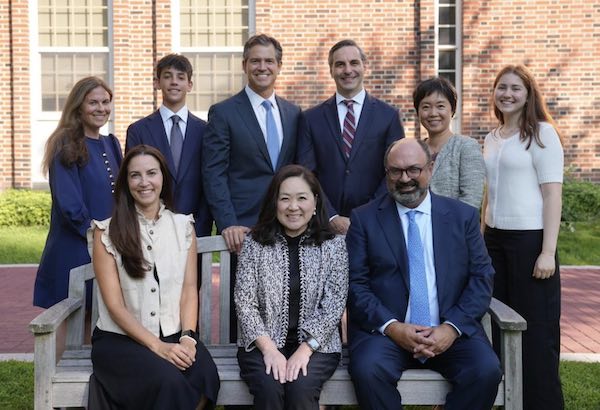 The 2026-27 Scarsdale Board of EducationThe Scarsdale Board of Education opened its Sept. 14 meeting by recognizing the 25th anniversary of the Sept. 11 attacks before turning to several start-of-year updates, including student enrollment, staffing and extensive facilities work completed across the district over the summer.
Suzie Hahn, Scarsdale Board of Education President, reflected on the anniversary after attending Scarsdale’s Sept. 11 memorial ceremony alongside other Board members, village officials, first responders and religious leaders.
“We are grateful for the opportunity to come together as a community to honor and remember those we lost, and to reflect on the enduring strength and unity that emerged from that day,” Mrs. Hahn said. Mrs. Hahn also thanked Scarsdale educators for continuing to teach about the attacks at a time when the district’s students are too young to know Sept. 11 as a lived memory.
Superintendent of Scarsdale Schools, Drew Patrick, then discussed how the anniversary was recognized within Scarsdale schools. Students paused for a moment of silence, the middle school news program included a segment on Sept. 11, and high school social studies classes held discussions. Scarsdale educators also shared their personal experiences from the day with high school students during a community lunch.
“As we do annually, we did pause on Friday for a moment of silence to remember the lives that were lost, the extraordinary acts of heroism, and the enduring impact the acts of violence of September 11, 2001, have had on our communities, our country, and the world,” Dr. Patrick said.
Following this, the Board provided a brief update on the Scarsdale Teachers Institute (STI), work over the summer. Highlights included mentioning that enrollment was at its highest since 2020, and courses ranged from the core “Skillful Teacher” course, to new classes examining genealogy, historical research, elementary inquiry, and global cultural traditions.
Student Board member, Lucy Eisenberg, also provided an update on the opening weeks at Scarsdale High School. She highlighted the senior chalking tradition outside the Brewster Road entrance and said student government had begun discussing a trial block schedule that will take place after Thanksgiving break, with students expressing both excitement and concerns about the change.
Enrollment Shifts Lead to Staffing Adjustments
Much of the meeting then focused on the start of the 2026-27 school year and how changes in enrollment are affecting classrooms and staffing, which was presented by Megan Troy, Assistant Superintendent for Human Resources and Leadership Development.
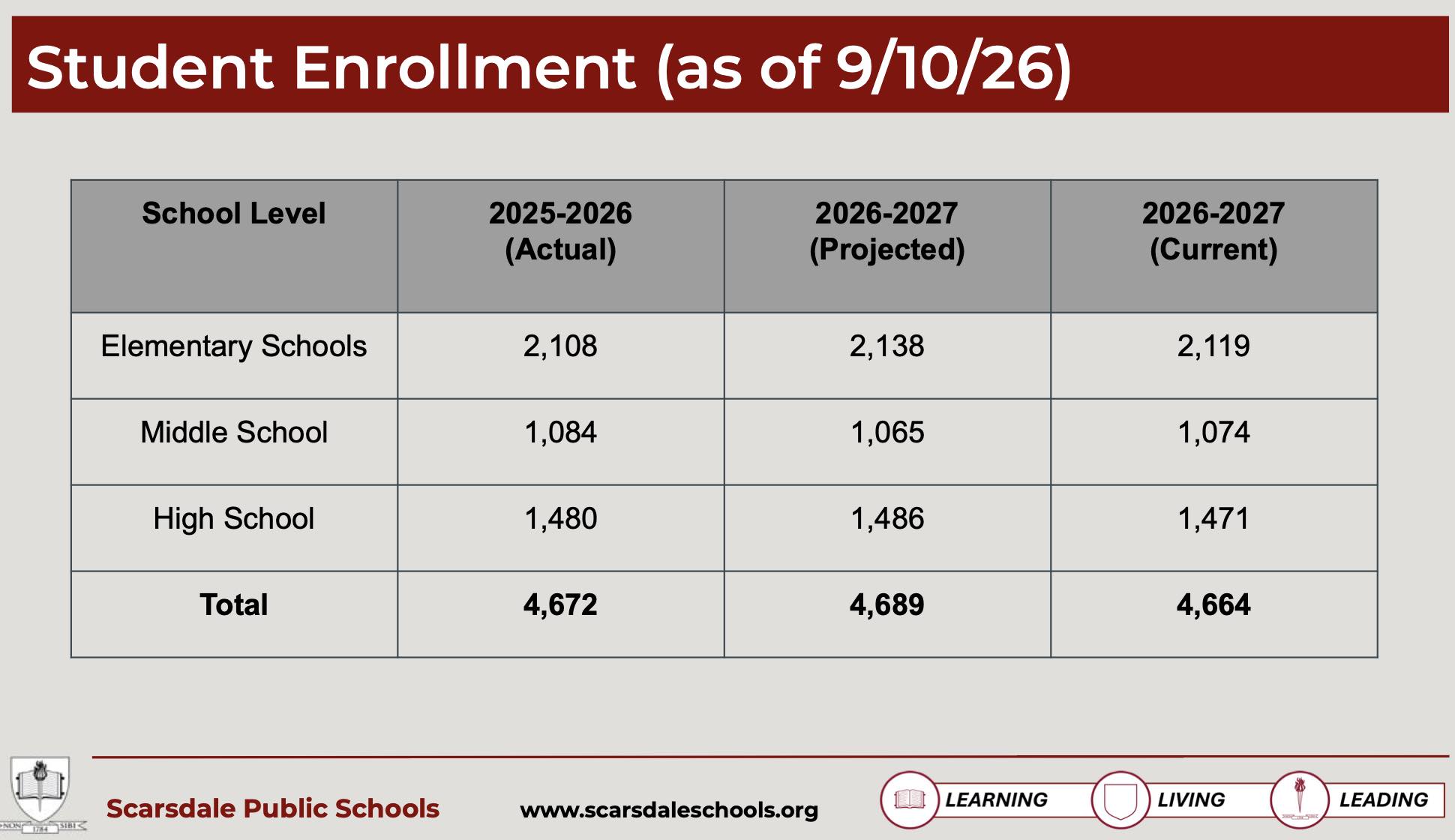
The district welcomed 4,664 students this year, eight fewer than last year and 25 fewer than projected. Despite the slight decline in overall enrollment, changes at individual elementary schools required the district to add two classroom sections.
At Edgewood Elementary School, second-grade enrollment increased to 73 students after additional students registered over the summer, requiring another section. As a result, FLESS, the school’s world language program, no longer has a dedicated classroom this year, with the teacher instead moving between classrooms.
Quaker Ridge faced a similar situation in third grade. Additional students enrolled before the district’s Aug. 15 cutoff, bringing enrollment to 67 and requiring a fourth section. Enrollment dropped to 66 two days later, but the district does not change sections after Aug. 15 because families have already received their classroom assignments.
The changes demonstrate how even small enrollment shifts can affect staffing because Scarsdale aims to keep elementary classes at no more than 22 students in kindergarten through third grade and 24 students in fourth and fifth grade.
“Just a few students can cause those shifts,” Mrs. Troy said.
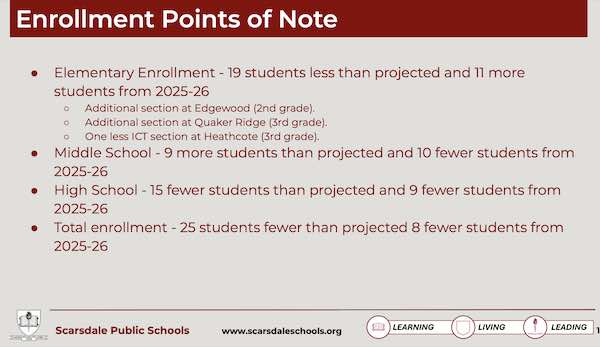
Elementary enrollment currently stands at 2,119 students, while the middle school has 1,074 and the high school has 1,471. District officials expect a slight decrease at the secondary level while elementary enrollment increases, a trend that will eventually shift as those younger students move into the middle and high schools.
The district began the year with 661.8 full-time equivalent staff positions. Staffing was adjusted to accommodate the two additional elementary sections and changing special education needs. At the high school, increased special education needs required an additional 0.2 FTE beyond what had been budgeted.
Extensive Work Completed Across District Facilities
Facilities were another major focus of the meeting, with Nick Ferraro, the Facilities Director, outlining work completed while students were away over the summer.
Among the most visible projects was the transformation of the high school practice field, long nicknamed the “Dust Bowl,” into a fully turfed field. The new space can be used for both instruction and athletic practices, helping reduce scheduling pressure on Butler Field.
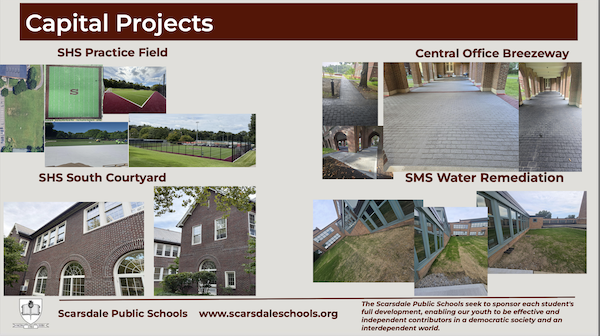
Other projects included water remediation at the high school and middle school, completion of the new lower-field playground at Fox Meadow, renovations to the Fox Meadow main office and expanded installation of lower-maintenance flooring at the high school.
Much of the summer work was completed by district employees. The grounds and maintenance departments combined to complete nearly 40 projects in addition to their regular responsibilities.
Custodial and cleaning staff also deep-cleaned and prepared approximately one million square feet of district facilities, including 352 classrooms, 223 offices, 208 bathrooms and 58 large gathering spaces. At the high school, custodians began restoring terrazzo floors to their natural stone finish, which officials said should reduce future maintenance costs and labor.
Mr. Ferraro emphasized that the work was completed while the facilities departments reduced overtime compared with previous years. District and building leaders also continued planning for upcoming bond work at Fox Meadow and Edgewood over the summer.
EV Bus Project and School Security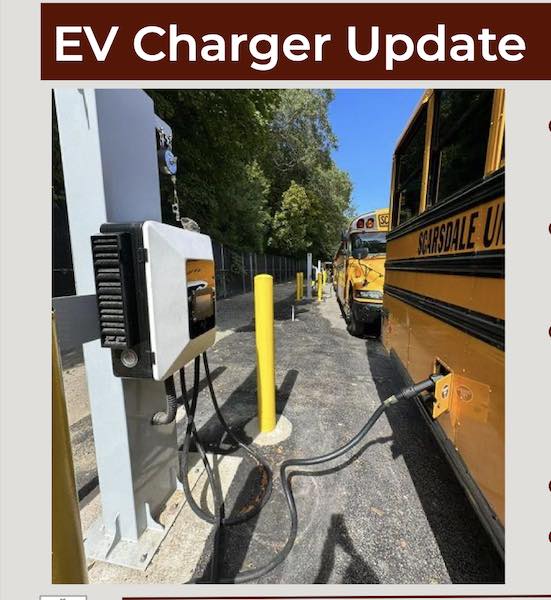
The Board also received an update on the district’s electric vehicle infrastructure. Four electric school buses are currently operating, along with an electric SUV, and a mini bus is on order.
Four EV chargers have been installed at the district bus compound, although one was awaiting a replacement component. The other three were operating on temporary power while the district awaited additional infrastructure work and a Con Edison transformer.
“We’re not quite where we wanted to be,” said Andrew Lennon, Assistant Superintendent for Business, noting that the project had originally been expected to be completed in July but experienced scheduling and permitting delays. Mr. Lennon said the district was nevertheless “within striking distance” of completion.
Emergency Preparedness and School Security
The district also provided an update on emergency preparedness following its first interagency meeting of the school year with the Village, Scarsdale Police Department, Scarsdale Volunteer Ambulance Corps and Scarsdale Family Counseling Service. Officials discussed lockdown procedures, first-responder access to schools and potentially adding SVAC to the district’s internal radio system to improve coordination during emergencies. The district is also reconsidering security vestibules at the middle and high schools similar to those already in place at the elementary schools.
District officials said the emergency response team would also review its incident command structure, threat-assessment protocols and the opening fire drills conducted across all seven schools.
In other business, the Board reviewed an early calendar for development of the 2027-28 school budget and approved new seventh- and eighth-grade texts, fall Scarsdale Teachers Institute courses and several PTA gifts supporting student programs.
The Board’s next business meeting is scheduled for Oct. 5.
Scarsdale Schools Pause Proposed Student Expression Guidelines After Community Concerns
- Details
- Written by: Shilpa Spencer
- Hits: 1864
 The Scarsdale Board of Education will hold off on implementing proposed guidelines governing student expression at school-sponsored activities after months of community feedback raised concerns about free speech, clarity and the potential for unintended restrictions on students.
The proposed Guidelines for Student Expression at School-Sponsored Activities returned to the Board at its Aug. 24 meeting after first being introduced in May and subsequently revised. According to the meeting agenda, the district received 109 public comments following the initial proposal.
The guidelines were intended to clarify expectations for student dress and speech when students participate in school-sponsored activities, a category the district views as distinct from the broader conduct covered by its existing Code of Conduct.
During the Aug. 24 discussion, Superintendent Dr. Drew Patrick recommended pausing the effort rather than putting the latest version into effect as the new school year begins.
Patrick acknowledged that the original draft had shortcomings, saying it “had the potential to prohibit protected speech at worst, or risk wildly different interpretations of acceptable versus unacceptable speech.” He said the revised version was “vastly better” but that the proposal had generated enough concern that the district risked losing “the forest for the trees.”
Instead of immediately adopting written guidelines, Patrick proposed that the district begin the school year by reinforcing existing expectations with students and faculty and examining how those expectations operate in actual school activities.
“I think at this point that’s my recommendation that we take a pause and we start the year thinking about all the feedback that we’ve got,” Patrick said.
Board members generally supported taking additional time, although some emphasized that the issue should not simply disappear.
Board member Omer Wiczyk said the revised guidelines were substantially improved but warned against abandoning the effort altogether.
“I don’t think it’s something that we should be shelving,” Wiczyk said, adding that the public debate itself may have created “more confusion now” over what expression is acceptable during school-sponsored events.
Another member of the BOE, Jim Dugan, agreed with a pause but argued that some written standard could ultimately be valuable because relying solely on past practice leaves administrators with significant discretion.
“I do think it’s a worthy endeavor of trying to get right,” Dugan said, while warning that unclear rules could raise concerns about censorship.
The debate followed substantial public involvement. The district’s agenda said 109 comments had been submitted after the first draft, and residents, parents and students continued raising concerns at Monday’s meeting.
Elise Streicher, speaking on behalf of the PTC Executive Committee and Scarsdale High School PTA Executive Committee, said the organizations supported the district’s goal of keeping school events “safe, respectful, inclusive, and free from disruption,” but remained concerned about the proposal.
“We worry that these guidelines could potentially lead to students feeling afraid to speak up, and a culture of silence isn’t who we are as a Scarsdale community,” Streicher said.
Students also weighed in. Zach Rublin, speaking from a statement prepared with Sammy Cascade as co-presidents of the Scarsdale Policy Action Club, expressed concern that language restricting unauthorized political messaging could be interpreted to apply to student publications.
Rublin pointed to Scarsdale High School’s long history of student journalism on political issues and asked the district to make clear that the guidelines would not prevent that tradition from continuing.
Board members also discussed whether the district could eventually address some of the concerns through revisions to the existing Code of Conduct instead of creating a separate set of guidelines.
Board member Leah Dembitzer, supporting the pause and encouraging that it also be picked up eventually, cautioned that codifying vague language can itself discourage legitimate expression. Patrick agreed that the district needed to consider the possibility of an unintended “chilling” effect on speech, saying there was an element of “first do no harm” to whatever guidelines are eventually produced.
The pause does not appear to mean the issue is finished. Asked whether the district would revisit the guidelines in several months or wait until the next annual Code of Conduct review, Patrick said he could not yet provide an exact timeline.
“Let’s get school open first,” Patrick said, explaining that administrators could spend several months observing school events and examining how existing practices work in real settings. If changes to the Code of Conduct are ultimately proposed, Patrick said those ideas would be discussed publicly before the district’s annual review.
For now, Scarsdale will begin the 2026-27 school year without implementing the proposed written guidelines while administrators and the Board continue considering how to balance clear expectations at school-sponsored activities with students’ rights to expression.
Scarsdale Board Reviews Code of Conduct and Discusses Proposed New Guidelines on Student Expression
- Details
- Written by: Joanne Wallenstein
- Hits: 2723
 After several incidents in the schools last spring sparked controversy over political speech and attire, the Scarsdale Board of Education drafted and proposed new “Guidelines for Student Expression at School-Sponsored Activities” in May. Those guidelines were met with reservations from members of the community who feared a chilling affect on free speech. According to the district, “A comment form was opened for public feedback, and 109 comments were received.”
At the July 15, 2026 meeting, a revised draft was included in the agenda that defines “which activities are included, and clarify that the guidelines apply to student participants (as opposed to audience members, for example).”
You can review the new proposed guidelines here:
On Wednesday, the Board continued its discussion on proposed guidelines for student expression at school-sponsored activities, with administrators emphasizing that the document remains a draft and will be revised again before the start of the school year. Superintendent Dr. Drew Patrick said the guidelines are intended to make existing practices more transparent, not to create new rules.
"We're not required to have board approval of regulations that associate with board policies," Patrick said. "It's been our practice to do that... because it's a way to inform the board and the public of how the administration is going about implementing the policy."
Patrick said the guidelines "emanate from the administration's felt need to more clearly articulate our current practice" for school-sponsored activities and noted that revisions reflect more than 100 public comments. He stressed that the guidelines "stand apart from the code of conduct," are "not part of the code of conduct," and "we're not taking any action" to adopt them at this time. Instead, the district plans to revisit the draft at its August meeting.
Several board members expressed appreciation for the administration's efforts while raising concerns about the draft's language.
Board member Leah Dembitzer said terms related to political expression remain "vague" and warned that uncertainty "causes a chilling effect because there's uncertainty over what is allowable and what is not allowable."
Board member Kevin Ziegler echoed those concerns, saying the section on political advocacy "might be worth another look."
Board member Jim Dugan said he continues to struggle with language that "can kind of approach reading like a blanket prohibition on political expression," adding that he does not want Scarsdale to become "the only school district that tells our students you cannot engage in any political expression of any kind at any school activity ever."
Patrick acknowledged the challenge of balancing student expression with the district's responsibility to oversee school-sponsored events.
"The act of writing this down can create interpretations that chill... the perception of something that we don't believe the words mean," he said. "How we attend to that possibility while still feeling like we have a tool is the challenge."
The board will continue reviewing the proposed guidelines before considering their implementation for the 2026-27 school year.
Public Comments
Several residents urged the Scarsdale Board of Education to reconsider the proposed guidelines arguing the district's existing Code of Conduct already addresses misconduct while raising concerns about First Amendment protections.
Alissa Baum thanked the board for seeking public input and revising the proposal but said she remained opposed to the guidelines. She said, "It still disappoints me that you're pursuing these guidelines because I do think the code of conduct amply covers what's going on," Baum said. She praised revisions clarifying that the rules apply to participants rather than spectators and encouraged the board to further clarify how the guidelines would apply to student clubs, school newspapers, and symbolic speech.”
Rokaya Hassabala questioned the need for the proposal, asking, "What educational problem are these guidelines solving that our existing policies do not already solve?" She argued that existing policies already prohibit "harassment, discrimination, threats, bullying, obscenity, and behavior that disrupts school" and urged the district to withdraw the proposal.
Jordan Copeland raised constitutional issues with the draft.
He said, “First, it applies the same restrictive standard to two categories of student speech that aren’t the same constitutionally. Second, it specifically bans political speech, which is a significant First Amendment problem.
Starting with what’s legitimate, under Hazelwood, the District can control speech that’s part of a school-sponsored program like a newspaper, a yearbook, an approved speech, a graded assignment, or a theatrical production, because those are put out through the school and appear to carry the school’s approval.
But a school-sponsored event doesn’t turn every participating student’s personal expression into school-sponsored speech. A student wearing a button to an art exhibition, or a player kneeling at a football game are exercising personal expression, which is constitutionally protected more than school sponsored speech. The personal speech can only be restricted if it causes, or can reasonably be expected to cause, real disruption, or if it infringes on someone else’s rights, or involves harassment or safety concerns.
The second problem is that political speech can’t be singled out in a policy or in enforcement. A student performer can be prohibited from using the mic during a performance to make a statement about the Middle East, but the same prohibition would apply to a student who uses the mic to promote their YouTube channel. A student actor can’t ad-lib political lines into a play, but they can’t ad-lib comedy lines either. A student orchestra member can’t wear a Black Lives Matter shirt, but they also can’t wear a Taylor Swift shirt, because of the formal dress code for the performance. In every one of these examples, the problem isn’t politics. It’s disruption, misuse of a school platform, or breaking a neutral rule that applies to everyone equally. And the District can’t ban political clothing outright just because it’s political, or because it’s worn at a school-sponsored event.
I'd also point out that in one way the latest revision actually made one constitutional problem worse. The earlier draft limited political symbols that "may reasonably be expected to create disruption." I previously objected to the added references to "division" and "controversy," because those aren’t the legal standard. But the disruption language at least tied the policy to Tinker's requirement that a school can restrict speech if there’s a reasonable forecast of material and substantial disruption. Without that language, the current ban on political viewpoints is even less defensible.
Scarsdale’s Code of Conduct already meets the correct constitutional standard. It protects students’ right to express their views while allowing the District to regulate speech that disrupts school operations.
So I urge the Board not to adopt these guidelines as written. If administrators or teachers need additional guidance, it should be limited to neutral rules about scripts, microphones, and school-controlled platforms. And the Board should have district counsel directly address how a policy that specifically targets political speech can be squared with First Amendment law.”
Mayra Kirkendall-Rodriguez said, “I continue to be extremely concerned about the draft “Guidelines for Student Expression at School-Sponsored Activities and its current revision. The removal of the "disruption" language is the only improvement in the new version. Yet, the proposed guidelines continue to be extraordinarily vague and do not acknowledge the constitutional protections that students do have in school. Board members have all taken an oath to uphold the constitution.”
Scarsdale resident Abby Balbale thanked the Board of Education for seeking additional public input and revising the proposed student expression guidelines but argued the latest draft still raises significant constitutional concerns.
Balbale said she appreciated the removal of the phrase "disruption, division, or controversy," but contended that the revision "worsens the core issue by stripping away any threshold of material disruption."
She argued that the proposal "looks dangerously like an absolute blanket ban on student political speech at school events" and questioned how the policy would be applied, asking whether "a student who wears a pride pin to prom" could be required to remove it.
Balbale also expressed concern that the guidelines could limit classroom assignments and student journalism, saying, "It simply says that political advocacy has no place in student assignments, and that is really scary."
She concluded by urging the district to withdraw the proposal, arguing that "our existing policies already give our administrators and our teachers complete authority to stop hate speech, harassment, bullying, or any actual operational disruptions." Instead, she said, the district should "trust our educators, trust our existing code of conduct to handle genuine disruptions, and continue to let Scarsdale students learn how to think, argue, and engage with the world."
Board President Suzie Hahn thanked the speakers and said the board would address the comments during its later discussion of the proposed guidelines.
Code of Conduct
The Board also held its annual public hearing on the district's Code of Conduct with administrators recommending no changes for the 2026-27 school year while discussing artificial intelligence, student conduct, and free expression.
Assistnat Superintendent Eric Rauschenbach noted that a committee of stakeholders discussed how artificial intelligence relates to plagiarism and harassment but concluded existing language already covers inappropriate AI use. "The use of AI in ways that violate the code of conduct... are all covered. It's really a means to how kids are breaking the code of conduct, rather than AI itself being a violation."
Rauschenbach said student committee members suggested creating a one- to two-page summary of the Code of Conduct for secondary students to make expectations more accessible.
During the hearing, board members asked about staff training to investigate harassment, bullying, and discrimination. Rauschenbach said administrators receive specialized training through McGrath to ensure investigations are conducted equitably, while teachers receive additional training on recognizing bullying, harassment, and student distress.
During the public hearing, Scarsdale resident Mayra Kirkendall-Rodriguez commended the district's Code of Conduct for recognizing students' rights to "oral expression, written expression, symbolic expression, peaceful assembly, and inviting speakers under appropriate circumstances."
After comparing Scarsdale's policies with those of neighboring districts, Rodriguez said she found that while the district already provides "meaningful protections for student expression," its policies "could provide greater clarity by more explicitly explaining the constitutional principles that govern student speech."
Scarsdale Schools Welcome New Teachers and Theater Director for 2026-27
The Board of Education also welcomed four new educators as the district continues preparations for the 2026-27 school year.
Assistant Superintendent Meghan Troy introduced the new hires, saying the district is "still onboarding and welcoming new faces to Scarsdale."
Ryan Kelleher joins Scarsdale High School as a physics teacher after previously teaching at Stepinac High School in White Plains. Farrell said Kelleher's focus on "hands-on learning experiences" aligns with the district's instructional goals.
Christine Hamilton was introduced as an elementary special education teacher in an integrated fourth grade co-teaching classroom at Fox Meadow School. Farrell praised her emphasis on "relationship building, including families, students, and colleagues," adding that her "warmth and approachability will be welcomed by all in Scarsdale."
Mary Feighery will serve as a full-time science leave replacement teacher at Scarsdale Middle School. Farrell highlighted Ferry's previous work in Mamaroneck and said, "Her love of science and her deep commitment to supporting all learners will be an asset to everyone in Scarsdale."
The district also welcomed Anya Washington as its new theater director. Farrell said Washington demonstrated "both an expertise in the technical aspects of the position and a student-centered approach to instruction," adding that the district looks forward to seeing "her impact on and off the stage."