







Do You Have a Grad in the House? Send Us a Picture to Celebrate Your Graduate Online at Scarsdale10583
- Details
- Written by: Joanne Wallenstein
- Hits: 3502
 Let’s face it. June is simply not June this year. What happened to the pool parties, graduation celebrations, barbeques and neighborhood noise? Why aren’t we attending the prom, moving up ceremonies, retirement dinners and graduation?
Who would have thought that this June almost everything would be cancelled and the number-one wardrobe addition would be a mask?
But since this is our new reality, let’s make the best of it.
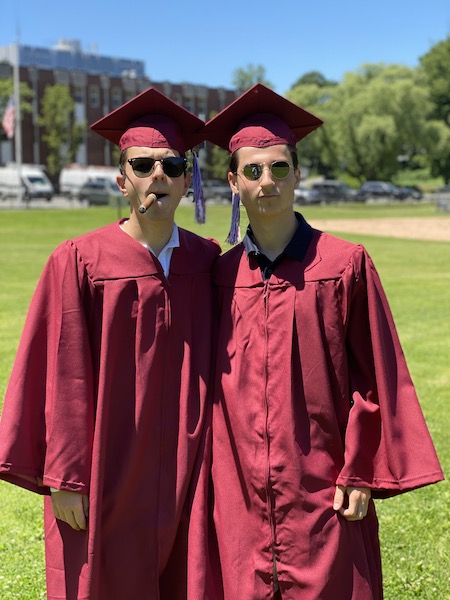
If you have a grad in your house -- 5th grade, 12th grade or college, let’s celebrate them online.
Please forward us a picture of your grad – in their cap and gown or graduation dress, with or without the family.
Include their name and school from which they are graduating, and we’ll post and toast the grads on Scarsdale10583.
Send your photos and information to Scarsdalecomments@gmail.com. Congratulations!
District Celebrates Ten Retirees
- Details
- Written by: Joanne Wallenstein
- Hits: 5803
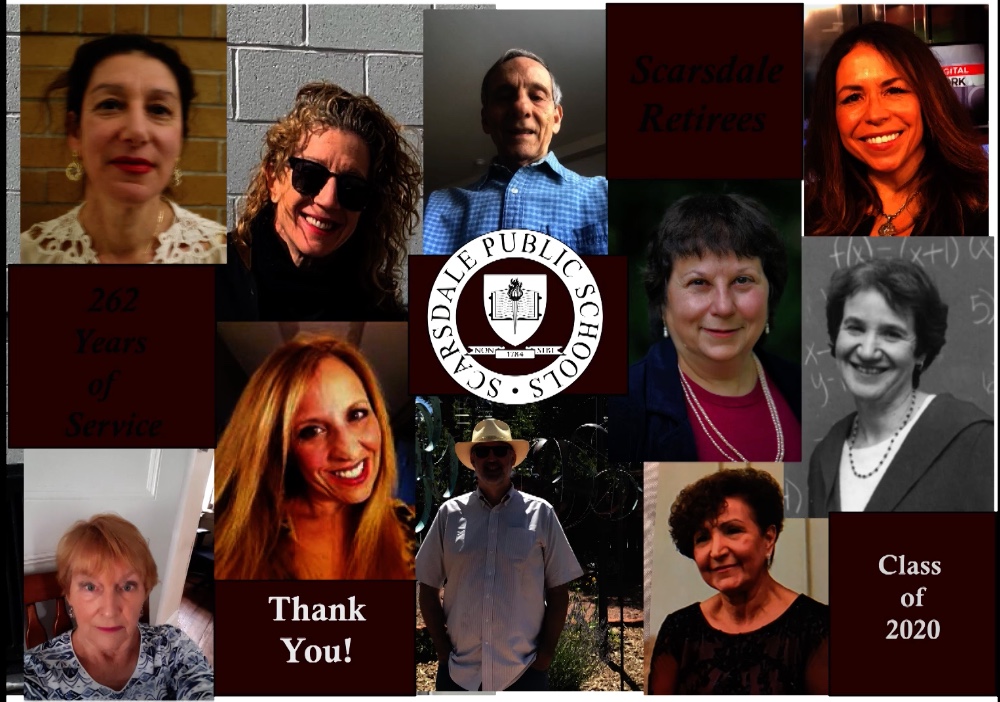
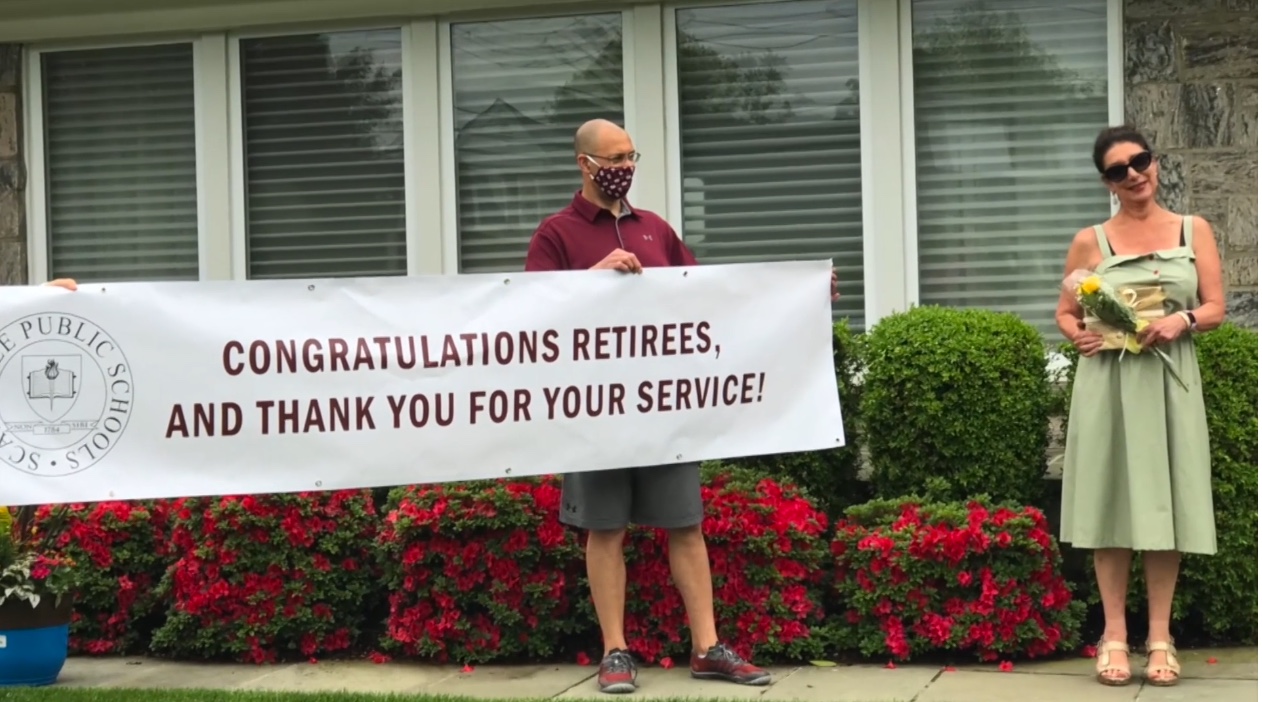 Administrators drove a parade of cars to each retirees home to congratulate them.Ten retiring employees of the Scarsdale Schools were honored at an online ceremony on June 2. The tributes were personal, insightful and touching and paid tribute to the dedicated professionals who have given a lifetime of service to the students.
The ceremony opened with beautiful musical performances from Scarsdale students. The first was a Zoom performance by the Scarsdale Strings Orchestra, each playing at their homes, but somehow achieving harmonious synchrony under the baton of Amedee Williams. This was followed by a solo saxophone performance by Michael Farina.
The performances and the ceremony are on view here:
The ceremony opened with Dr. Hagerman in front of a backdrop of the breezeway of the school, where the ceremony customarily takes place. He said the ten retirees had given 262 years to the district.
In a ceremony watched online by over 100 teachers, warm tributes were made to each retiree.
 Jerry Crisci began with goodbyes to Syle Morrone, a computer aid in the elementary schools for 14 years. Crisci said, “Everyone loved him. He was a “patient listener,” who was “able to work with technology and little kids,” and had a “grandfatherly way.” He started out as a copywriter and was “gifted as a creative writer,” and often wrote poems for his colleagues. He wrote this final verse as a goodbye to his friends in the district:
Goodnight cursed scanner, Of piercing beeps.
Goodnight cables’ huddled heaps.
Good night, good night to all of those.
Good night to all my dear tech pros.
Farewell, lights out, the saying goes.
Today, you see, my labs will close.
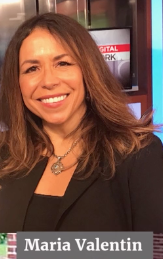 History teacher Maria Valentin is retiring after 18 years at Scarsdale High School. Dr. Hagerman said she taught students the importance of understanding facts and stories and how to “ask and answer big anthropological, philosophical and historical questions.” He said that Valentin “Helped students to understand themselves and the world around them and was passionate about social justice and equity…. inspiring countless students to become passionate, inclusive, just and equitable.”
Her students thanked her for her” kindness and spunk” and expressed “deep gratitude for her passion and commitment to them and her craft.”
Colleagues remembered that she “coordinated a school wide writing contest on justice and injustice and invited a noted civil rights attorney to address the students on law, emphasizing that the struggle for human rights and justice is ongoing.”
Dr. Hagerman said, “You have prepared our students to take action and make their voices heard. Thank you for the indelible impact you have made on SHS and the legacy you have left behind.”
Choking back tears Valentin said it was “an honor to retire from the Scarsdale Schools.”
Jerry Crisci then addressed Vicki Presser, the district’s Chief Information Officer who retires after 18 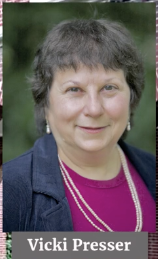 years. He said, “With her name she was destined to work in public relations… She is a proud graduate of Brandeis and has a Masters from the Columbia School of Journalism.”
Presser was “always active in politics and was a delegate at the 1972 Democratic convention. Her life was dedicated to public service and she was President of her local synagogue and president of the NYS Public Relations Association.
Crisci called Presser a “proofreader extraordinaire,” and said she always led the singing of happy birthday at administrative meetings and directed lost visitors at the school. She was recently elected to the White Plains Common Council and plans to spend a lot of time with her new grandchild.
Presser left the Board by singing the following song:
“Thanks for the memory
Of Bond and Budget votes
Endless meeting notes,
The students
And the teachers
And reporters seeking quotes!
I thank you so much.”
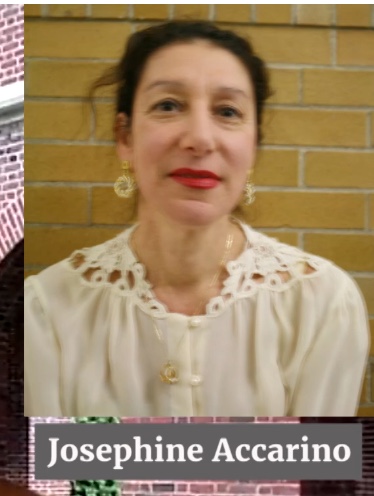 Drew Patrick called teacher aide Josephine Accarino an unsung hero of the classroom. She worked at the district for 22 years and had a genuine love of her students. Her colleagues said, “she was a pleasure to work with, very organized and motivated” and “finds creative ways to help.” Quoting John Muir, Patrick said, “Between every two pine trees there is a door leading to a new way of life,” and encouraged Accarino to “trade in her high heels for a pair of hiking shoes and go explore.”
Rachel Moseley toasted retiring SHS Math teacher Laura Estersohn, saying that earlier this year she was sad to learn that “there was high degree of statistical probability that Laura was going to retire.” Estersohn came to Scarsdale 23 years ago after teaching at Lehmann High School in the Bronx. She is a graduate of the University of Pennsylvania and holds a masters degree in math from Yale. She has also been inducted into many national honors societies. Math teacher Joe Nista said that Estersohn “helped to build classes that are now mainstays in the high school curriculum and was instrumental in starting the AP, now AT program in statistics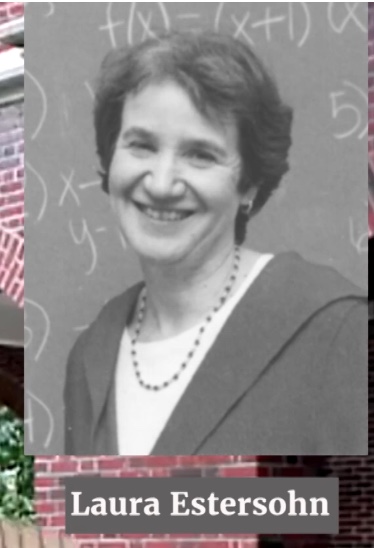 at the high school. She was the coach for the math team for many years and is known throughout Westchester for her innovative ways of teaching statistics and her interactive classroom.
Principal Ken Bonamo observed her at work and said, “ It came as no surprise that your preparation, classroom atmosphere and delivery were outstanding reflecting a deep knowledge of mathematics and genuine care and concern for students themselves. Colleagues describe her as patient, compassionate, fair minded, remarkable, with a gentle nature, a sweet disposition, the ability to listen and a teacher “who has the best interests of her students at heart in all that she does.”
Tom Maguire, who taught at SHS for 31 years, was lauded by Edgar McIntosh. He called Maguire “Deep-thinking, rigorous, exacting and erudite,” with a curriculum that pushes students to think critically and insists that students develop informed, supported points of view that can be defended eloquently.”
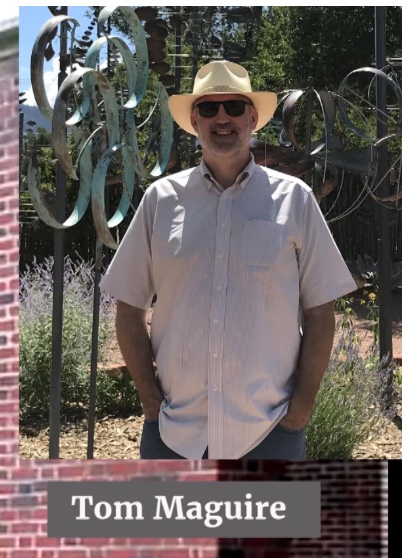 He noted that Maguire came from a family of educators, with his dad a retired superintendent and his wife Patty Dempsey also a retired teacher.
McIntosh said, “Tom is known as one of the most demanding teachers in the high school, but in the best possible sense. Maguire’s name is spoken with reverence and trepidation because students know they will be challenged and held accountable but they will also laugh and learn.” Bonamo said Maguire was “the happiest curmudgeon I know.” He said, “When I needed to hear something unpleasant but straight, I could count on Tom to stop by…. and added, “I will miss Tom for his counsel and his humor and all he has done for our students.”
Eric Rauschenbach offered the following about special education teacher Renee Lund who has been at the middle school for 32 years. He called her “calm, gentle and warm” as well as  “assertive, driven and tireless.” He called her the “energizer bunny” and said she “accomplishes more before she walks into school then most of us accomplish in an entire day.” She teaches the sixth grade parallel class and is an advocate for the children. She is driven to help them improve their academic, improve self-esteem and help them develop self-advocacy skills to be more independent. Rauschenbach said, “ She teaches students with significant challenges and she has never given up on any of them using a magic formula of pedagogy and love.
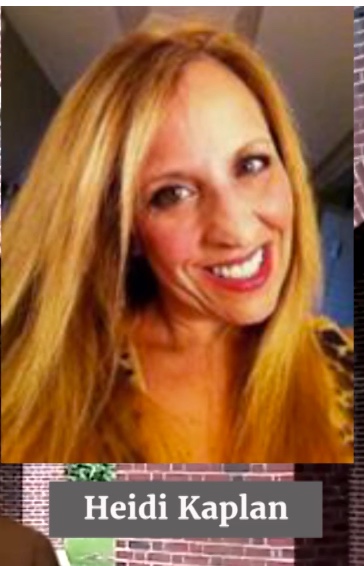 Heidi Kaplan is retiring after 39 years of teaching math at the middle school. Drew Patrick complimented her “consistent approach to teaching and learning.” She “guides students to individual discovery and optimizes student involvement and interactions with the material.” She “set clear and high expectations and found ways to engage each and every learner.” He said, “Kaplan helped the weakest and the strongest students and was a good colleague, as she was “Firm in her convictions but flexible enough to work with all team members.
Last, teacher aid Elaine Dobrydino is retiring after 40 years at Edgewood School. Patrick said, “she helped students find 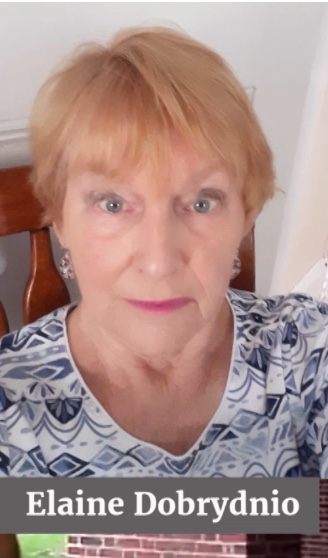 success,” and “welcomed students each day with a warm smile.” According to her colleagues, “she “made a difference in the lives of children, could always be counted on and never complained. She arrived at school each day ready to tackle whatever work was needed.”
Watch the ceremony on Vimeo here: https://vimeo.com/channels/boe
Comments From Mayra Kirkendall Rodriguez and Bob Harrison
- Details
- Written by: Joanne Wallenstein
- Hits: 3787
 Here are comments From Mayra Kirkendall-Rodriguez delivered during public comment at the Board of Education, June 1, 2020
Multiculturalism, Diversity and Inclusion Initiatives of the Scarsdale School District Are Important
In the first couple of Zoom Board meetings, I shared you with my analysis and forecast for the national and NY State economy. Unfortunately, I still not even the beginning of a recovery next year. I also stated that I was and am very concerned about Scarsdale residents’ ability to absorb tax increases. I very much appreciate Messrs. Mattey’s and Martin’s analysis of key stress factors such as very low interest rates, declining sales tax revenue, and the low probability of more state aid. In my professional experience, your stress analysis was sound and detailed. Your process helped me come to support this budget and to vote yes on it. I encourage my fellow residents to please review the incredible amount of material on the website, and if nothing else, please look at the very good tables and graphs in the District’s publication Insight.
For the next budget process, I would encourage the administration and board to detail to the community what the learning objectives are for your established multicultural, diversity, and inclusion initiatives which you have from K-12 and what funding is being allocated to meet those objectives.
Today the Dean of the Wharton School wrote an email to alumni stating “Words cannot express how profoundly saddened I am that African-Americans, and people from other racial, ethnic, and religious groups, are systematically marginalized and routinely subjected to racism, all the more so when this threatens their lives and their livelihoods.”
And you Dr Hagerman, in your holiday greeting letter wrote “We recognize that embracing inclusivity and the diversity within Scarsdale takes a concerted effort. It requires awareness of our similarities and differences, specific and accurate knowledge of others’ values and beliefs, along with the skills to individually negotiate various types of multicultural relationships. There are certainly structural changes that can support that work, and we are committed to doing that. It is important as an institution that we consistently state and model our beliefs.”
I encourage you to let us know what guidance and curricular development you will have for our students to understand, what is a riot? What are the historical, economic, psychological, racial, climate change, or religious causes of riots? How have riots unfolded in Russia and South Africa, as opposed to here in the US? Are the people who participate in riots thugs? Or are the ‘riots the language of the unheard’ as Dr. Martin Luther King Jr said in 1968? What should be Scarsdale school’s role in producing future leaders who will be looking for solutions to racism and marginalization, long after we are gone? Good night and be well.
Letter from Bob Harrison
To the Editor: Mr. Klein is "not" one of the two best candidates for the Scarsdale School Board. Bob, where have you been for 36 years in Scarsdale? We have never seen you at a public Board of Education meeting or a Village Board meeting. Have you ever volunteered and served on any Scarsdale Forum Education Committee or any other Forum Committees? To our knowledge the answer is NO.
Have you ever studied the Scarsdale School Budget as we have over 25 years? Have you ever participated in any School Budget Study Sessions? We think the answer is NO. Do you know what the size of the School District's unassigned Fund Balance is and that it can be used to lower any tax rate increases - a very important decision for the BOE. Bob you say you represent the empty nesters but based on your property taxes you have no skin in the game. You have lived in Scarsdale with a very little contribution to the community for years. There is an indication that have property in the mountains.
With regard to your nomination for the School Board by the secret SBNC nominating committee we do not know how many candidates were considered. There are comments in the community that there was only one other candidate considered for the second open Board position which is not very representative for over 12,000 registered voters. For voters you should know that the SBNC has not always been good in their nominations. Recently the SBNC FAILED to re-nominate Pam Fuehrer to a second three-year term for no good reason.
There was a political group within the SBNC who wanted a new school at Greenacres. Who says the secret SBNC is a great system? Pam ran independently like Mayra Kirkendall-Rodriguez is doing now and won the election. Pam is now President of the School Board and doing a great job as Mayra will do,
We strongly recommend that Scarsdale Taxpayer Voters vote for the two best candidates with the best resumes and volunteerism and children in Scarsdale Schools who are:
Mayra Kirkendall-Rodriguez who is a significant volunteer in the schools and community including the Co-chair of the Fox Meadow School Multicultural Committee, and the Young Writers' Workshop, Co-chair of the Scarsdale Forum's Education Committee with understanding of the school budget and educational needs of the District.
Mayra's professional and educational background are extensive as a bank and capital markets risk consultant and trainer with international clients as the owner of MRV Associates and she has holds degrees from Harvard/Radcliffe, the Lauder Institute and the Wharton School MBA at Penn and has studied at Hebrew University in Israel. Her analytical abilities would be helpful and important to the Board with the economy in a depression.
Amber Yusuf who is a proven volunteer for Scarsdale as a PTA leader and seasoned professional to serve on the School Board. Her education training as an electrical engineer from Washington U in St. Louis and MBA from California Berkeley make her an analytical thinker to problem solve on the Board.
Amber has served within the schools as Heathcote PTA president and PT Council president. She served as After-School Clubs Chair and serves as a hockey mom with her family.
Please put your X on the ballot for Mayra Kirkendall-Rodriguez and if you chose a second candidate make it Amber Yusuf and mail it in the pre stamped envelope immediately to be received by the School District by 5 PM on Tuesday, June 9th.
If you have any questions, please contact us at 914 646-4054 (cell) or by email at proscars@aol.com.
Bob Harrison
Fox Meadow Road
Scarsdale Taxpayer Alert
Letters in Support of Bob Klein and Amber Yusuf for Scarsdale School Board
- Details
- Written by: Joanne Wallenstein
- Hits: 3722
 Here are letters in support of Bob Klein and Amber Yusuf for Scarsdale School Board:
To the Editor: Bob Klein and Amber Yusuf are two outstanding school board candidates who have been vetted and nominated by the nonpartisan School Board Nominating Committee. They have demonstrated intelligence, integrity, independence, and a steady temperament. As a slate they will bring both experience and a fresh perspective to Scarsdale’s Board of Education.
The SBNC represents you. Look at the member list at scarsdalesbnc.com to judge for yourself. You will find a diverse cross-section of your friends and neighbors reflecting today’s Scarsdale. There are empty nesters and parents of children at every level of the school system, working professionals and full-time caregivers, life-long residents and recent arrivals to Scarsdale and the United States.
As the current Joint Committee and former SBNC chair, I am proud of the SBNC’s diversity of age, race, gender, ethnicity, religion, and life experience. The SBNC is not some “establishment” seeking to maintain the status quo, but rather a dynamic, independent collection of residents with a variety of perspectives and a shared desire for the highest-functioning school board. After months of fact finding and discussion, they have nominated two excellent community volunteers.
Bob Klein is a creative, analytical former architect, an "empty-nester" with extensive professional experience in long-term, complex planning and problem solving. He is empathetic and action-oriented, having helped found an organization which welcomes, protects, and advocates for refugees. Bob has a demonstrated ability and willingness to think outside the box and ask the questions that lead to better solutions.
Amber Yusuf is a standout Scarsdale volunteer with comprehensive, high-level experience on both the school and village sides, from PT Council to the League of Women Voters to The Acceleration Project. She has professional strategic, financial, and global expertise and is a respected and approachable straight-shooter. Amber possesses the passion and comprehensive knowledge to hit the ground running as a new school board member.
I enthusiastically endorse the SBNC’s composition, process, and nomination of Bob Klein and Amber Yusuf for the Scarsdale School Board.
Jordan Copeland
Woods Lane
Having lived in Scarsdale for more than 40 years, I have appreciated the careful study that the two nominating committees that select candidates for the Village Board and School Board commit to. The committees study the candidates’ skills, experience, history of working constructively with others and so much more. The recent work of the School Board Nominating Committee is no exception. With a number of people applying to be candidates for the School Board, the Committee was able to select Amber Yusuf and Robert Klein to serve us. Being able to choose from multiple applicants based on their characteristics, knowledge and all the other aspects that a group of 30 people have studied and pick the candidates that will serve us best has served us well for years. That’s what makes the work of the Board of Education top notch and that is why I support the SBNC’s candidates.
Dan Hochvert
62 Woods Lane
To the Editor:
It is with great enthusiasm that I endorse Amber Yusuf for Trustee of the Scarsdale Board of Education. I am making this endorsement in my individual capacity and not in my position on the SHS PTA Executive Committee.
I have known Amber and her family for ten years, as my neighbor in the Heathcote School District. In addition, I had the pleasure of working with Amber on the PT Council Executive Committee when she was the President of the Heathcote PTA. Amber has all the qualities one would want in a school board member. Amber is intelligent, thoughtful and deliberative. She is open-minded, a careful listener and a consensus builder. Amber brought a unique perspective of multicultural awareness to our PTC meetings and decision-making process. She has the distinctive ability to view problems through the lens of many stakeholders, a skill that will serve her well on the Board of Education.
Amber is a dedicated volunteer. Her extensive experience within the community, both for the Village and for the schools, allows her the perspective necessary to understand and address the concerns of a broad constituency. Her professional experience in engineering and technology, which includes an MBA, will ensure that she is ready to meet the financial and educational challenges of the Board of Education.
Our School Board Nominating Committee has always selected smart, capable and conscientious Trustees and this year is no exception. Amber is highly qualified to serve our community in this role. I strongly support Amber Yusuf for School Board, without reservation.
Sincerely,
Leanne M. Freda
Palmer Avenue
To the Editor,
I have been a resident of Scarsdale for over 13 years, and I am proud to write in support of Amber Yusuf for election to the Scarsdale School Board. I have known Amber for almost 10 years as my two daughters and her two sons have gone through The Little School, Heathcote School and Scarsdale Middle School, and with Scarsdale High School on the horizon for our eldest children.
I served as the Heathcote PTA President under Amber’s leadership during her term as the 2018-19 PT Council President. Amber had two major district initiatives taking place during her tenure -- the decision for the district to take over the school lunch program for all 7 schools, and the security and safety issue which became very contentious among different factions in the community.
As with any change, the takeover of the school lunch program came with an onslaught of issues from disparity between the schools, to food allergies, to the loss of revenue to the individual PTAs. Amber handled each problem calmly, rationally, politely, and, most important, effectively.
When different community groups were aggressively arguing safety and security issues at the schools, Amber was there to guide all of us as PTA Presidents. The questions of whether security guards and teachers should have guns were at the forefront. In typical Amber style, she had done all the research, understood all sides of the debate, and intelligently helped navigate the issue on behalf of the PTA’s.
Amber is one of the most dedicated volunteers to our schools’ programs I have met in my time here in Scarsdale. She has held the most important parent volunteer positions, as the PT Council President and an elementary school PTA President (Heathcote). These positions come with major responsibilities at the district level with constant interaction with the Superintendent and his cabinet, as well as the school board. Amber fulfilled these responsibilities in a most exemplary manner.
Amber is analytical and intelligent, while also being well liked and respected by all who have worked with her. In addition, she is a good listener and always respectful of others. I can’t think of a better candidate for the Scarsdale School Board. We’ll be lucky to have her!
I support the SBNC slate of Amber Yusuf and Robert Klein.
Kate Eichel
Heathcote Road
To the Editor:
I am writing this letter to show my support for Amber Yusuf’s candidacy for a seat on the Scarsdale School Board of Education.
I had the pleasure of working with Amber Yusuf during the time I was after school clubs co-chair and co-president elect for Edgewood PTA (2017-18) and as PTA co-president for Edgewood (2018-19). Over the course of those years, I attended numerous meetings where I witnessed Amber’s openness and willingness to listen to all thoughts and ideas on various topics. Her willingness to truly do what is best for our Scarsdale schools coupled with her business acumen will allow her to be a major asset on the board.
Amber has been a leader within the Scarsdale Schools PTA ever since she moved here. From class parent, to after school clubs chair, to PTA president, to last year as Parent Teacher Council president (and many roles in between), Amber proves to be passionate in all she does. On top of being a wife, mom to two Scarsdale school children, businesswomen, school leader, she also manages to have time for involvement in community organizations. She has been a member of the Scarsdale Youth Hockey Team and the Citizens Nominating Committee of Scarsdale among other organizations.
Amber embodies all of the qualities to make to an excellent candidate. She has my full confidence in her abilities to continue the extraordinary work of the board. I hope you join me and vote for Amber Yusuf for school board; mail-in ballots are due by 5pm on June 9th.
Sincerely,
Susie Smith
Boulevard
To the Editor:
In March, Amber Yusuf was honored to be nominated for the Scarsdale School Board of Education by the School Board Nominating Committee (SBNC), a group of 30 elected individuals from all 5 neighborhoods in Scarsdale. She, along with Bob Klein, hopes to serve the Scarsdale community by maintaining excellence in our schools while balancing our fiscal responsibilities.
They need your support and they certainly have mine!
I have worked closely with Amber for a number of years through PTA efforts in various capacities. I cannot think of anybody more qualified to fill this role for our community.
I am a Fox Meadow resident and have been very active in our FMPTA for 6 consecutive years, serving in a range of volunteer positions from class parent through to one of the VP board positions. In theory, I would not know Amber very well yet through PTC I have worked very closely with Amber and can state emphatically that she is exactly what our BOE needs. I have found her support of all the schools to be exemplary and she brings best practices to us all as well as being open to those we have found successful in our specific elementary school.
Amber is the quintessential person for this type if role: intelligent, thoughtful, fair, able to see situations from multiple perspectives, and most importantly capable of making decisions when there is no "right" answer thus solving challenging situations to further the overall objectives of the school district, students and our community. She is informative, collaborative, and a pleasure to work with to create amazing opportunities and programs for our children.
Jennifer Zola
Carstensen Rd
Scarsdale Kids Take Initiative During Trying Times
- Details
- Written by: Joanne Wallenstein
- Hits: 3944
 Motoko and Ayaka Gueler dressed for Colonial Day - at homeThough the streets of Scarsdale are quiet, don’t be fooled. There’s lots going on inside. Scarsdale kids are busy learning for themselves and creating great resources to teach one another.
A fourth grader at Edgewood was disappointed about the cancellation of the annual colonial fair and encouraged parents and teachers to design a virtual fair on Zoom. The children made whirly gigs (a Colonial toy), played colonial Bingo and each shared information from his/her colonial research project. Many children wore their colonial costumes for the one-hour Zoom session for Mr. DeStefano’s and Mrs. Aberman’s 4th grade classes.
Gold Award Girl Scouts who are high school students in 11th and 12th grades are busy helping to keep younger troops engaged. Annabelle Donnelly is running a wonderful “Save the Bees” workshop which culminates in girls planting pots of flowers to attract bees and building a bee hotel for mason bees. Gillian Zitrin is running a “Destress through Art and Mindfulness.” workshop which includes yoga, making a “Stress-less box “and a homemade stress ball. Other workshops girls are running include: anti-bullying and a peek into the fashion industry. All of these are executed via Zoom.
And Rebecca Friedland, a fourth grader at Quaker Ridge School created a website called quarantine 4 kids filled with things to keep kids busy during these hard times.
 Rebecca Friedland has designed a website filled with fun activities to do during the quarantine.
Find her recipes to cook and projects and to make at www.quarantine4kids.com. She invites you to visit her website to get some great ideas about how to have fun during the quarantine. A stressless box designed by 4th grade Junior Girl Scout Sofia Clark during a workshop.
 Colonial Day celebration via Zoom
 Adina Zitrin - a happy Colonial Day participant.
- 30 Granted Tenure, School Vets Alternative Ways to Celebrate the Class of 2020
- From the Board of Ed: School Election Via Mail, Concerns About Elementary School eLearning and Installment Billing for Taxes?
- Win-Win: Thank a Community Volunteer and Support College Scholarships for Scarsdale Students
- Proposed 2020-21 Scarsdale School Budget to Go Up Just 1%