








Scarsdale Board of Ed Extends Superintendent's Contract and Accepts Gifts from Maroon and White
- Details
- Written by: Joanne Wallenstein
- Hits: 4967
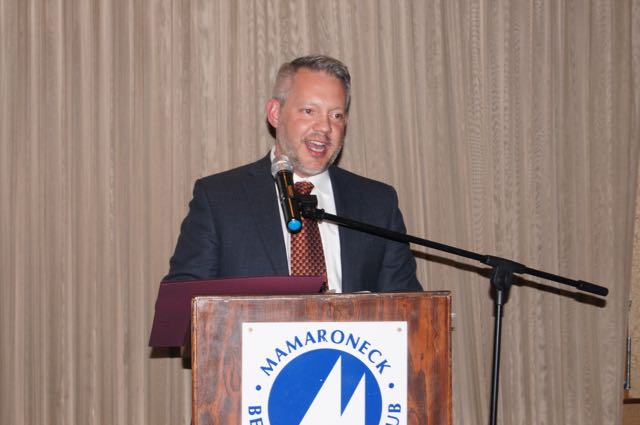 The Scarsdale Board of Education has extended Superintendent Thomas Hager's contract for one year following a comprehensive review of his performance. Dr. Hagerman, who had previously served as Superintendent for the nationally renowned Winnetka School District 36 on Chicago's north shore, came to the District last summer after the Board conducted an extensive national search for a new superintendent.
As part of its duties, the Board of Education engaged in a comprehensive review process to evaluate Dr. Hagerman's performance during his first year as Superintendent. This process resulted in the conclusion that, especially given the unique challenges of a transition to a new administration, Dr. Hagerman was a highly effective Superintendent, leading the District through a successful 2014-15 school year.
Dr. Hagerman's success was evidenced by, among other things, the implementation of an ambitious entry plan through which he engaged with numerous school and community representatives and groups through hundreds of meetings and discussion groups, the development and passing of the 2015-16 school budget by a substantial majority, the successful development and passing of a facilities bond for essential school construction related to the provision of 21st century education, the recruitment of outstanding individuals to replace key departing administrators and principals, the reorganization of Board meetings to be more efficient and accessible to the public, and a thoughtful reorganization of the District's central administrative office functions to capitalize on strengths, clarify roles and responsibilities and balance workload.
Reflecting on his first year as Superintendent, Dr. Hagerman commented: "As part of my formal evaluation process, I had the opportunity to reflect deeply on the challenges and successes of the year. It is heartening that there have been more of the latter then the former, putting us on a positive trajectory moving forward. I am also pleased that, embedded in much of this year's progress, there has been a real coalescing of community, Board, parent, faculty and student interests and needs. This year has proved to be a testament of why I came to Scarsdale: people are clearly passionate about this place, and are committed to the ongoing success of all of our students."
Board of Education President Mary Beth Gose noted that "Scarsdale is very fortunate to have Dr. Hagerman at the helm of our community's most important asset. The Board unanimously decided to offer Dr. Hagerman a contract extension and hopes that the success achieved by Dr. Hagerman will continue as we work together over the coming years to preserve and enhance the quality and breadth of the educational experience for our children."
Board Accepts Gifts from Maroon and White:
On Monday June 22nd , Maroon and White donated an additional $24,161 to the Board of Education for the PE and Athletic programs at Scarsdale High School as well as Scarsdale Middle School. With these gifts, Maroon and White has given over $35,000 dollars to the Scarsdale School District in 2015. Maroon and White is the parent booster organization that supports and encourages athletics at Scarsdale High School and only donates items that are not funded by the school budget.
Since its inception over 48 years ago, Maroon and White has played a vital role in supporting the athletic programs at Scarsdale High School through the recognition of student athletes and financial contributions to the physical education and athletic programs. This year's gifts include the following:
· Swim team: Swim timers/watches
· Wrestling: Table score clock and tournament wrestling mat
· 10 Lacrosse helmets
· Cross Country, Indoor and outdoor track: EZ UP tent
· Field Hockey: Rollers, straps, bands for flexibility and strength training, HUDL (15 items)
· Girls Lacrosse: 3 agility ladders
· Cheerleading:. Tumbling mat, Minivox sound system
· Boys Baseball: Screens, tamps, balls, caddy (6 Items)
· Boys and Girls Crew Team: Pylo boxes and medicine balls (8 items)
· SMS PE Program: 1 recumbent bike
· SHS/PE program: 41 Rollerblade skate/helmet packages
· Boys and Girls Swim Teams: Swim banner and swim storage bench at WCC
· Football/All Teams: Sports scope camera video system
· Baseball/Softball: Tension batting cage
· Girls Soccer: Soccer tennis net, wobble pillow (6), match play ball bag, game day notebook (3)
· Trophies for basketball, cheer and wrestling tournaments
Maroon and White is a 501c(3) organization. For more information about Maroon and White and to become a member go to www.maroonandwhite.org
Happy Birthday to Emily Hirsch
- Details
- Written by: Joanne Wallenstein
- Hits: 8867
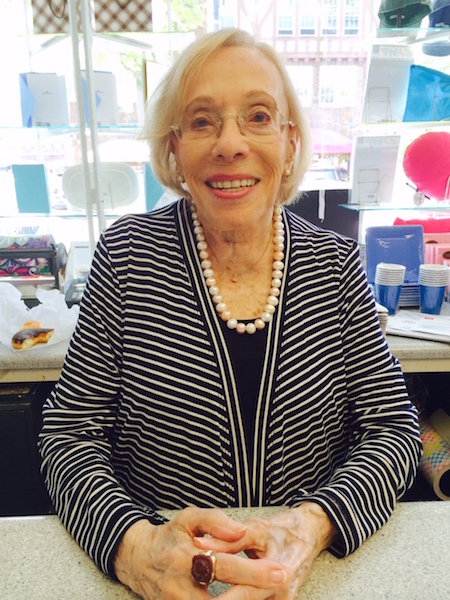 Emily Hirsch, the owner of Candy 'n Cards in Scarsdale, will celebrate another big birthday on Tuesday June 16th. Though she doesn't want to share just how big a birthday it is, she did admit to running the store for a record 47 years. Undoubtedly one of the most seasoned retailers in Scarsdale, she enjoys her customers who she has known so well for so long, and the sense of community in the Village.
On Tuesday, the Chamber of Commerce organized a surprise birthday party for Emily at Lange's where Tony Domini provided this massive cake.
Stop by Candy 'n Cards on Spencer Place on Tuesday to wish Emily a happy, happy and many more!
Seven NYS Regents Reject New Teacher Evaluation Changes
- Details
- Written by: Joanne Wallenstein
- Hits: 5433
 In an unusual show of dissent, seven members of the 17-member Board of Regents have signed a statement opposing the recently enacted new teacher evaluation law and the State Education Department's proposed regulations that would make student test scores the most significant factor in teacher evaluations.
Citing their accountability to the public and their review of research, the seven Regents say the current amendments "are based on an incomplete and inadequate understanding of how to address the task of continuously improving our education system."
In order to "remedy the current malfunctioning" teacher evaluation system, they call for a delay of implementation; a significant reduction in the weight given to student standardized test scores, a reduced role for "external" evaluators, and consideration of the developmental needs of English Language Learners and special needs students. Click here to read all six of their "essential" proposed amendments.
The Board of Regents is elected by the Legislature and charged in the State Constitution with the power to set P-12 education policy. The new Annual Professional Performance Review (APPR) law, enacted by the Legislature and Governor as part of the State Budget on April 1, set key parameters but left it up to the Regents to interpret the details through regulations.
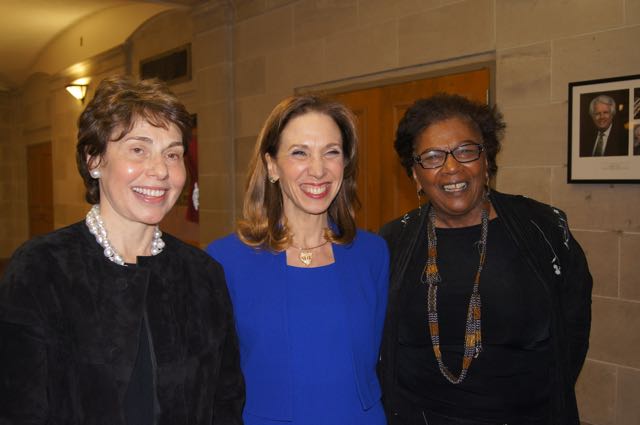
Among the signers of the opposition statement is Regent Judith Johnson, who was elected in March by the Legislature to represent Scarsdale and other communities within the 9th judicial district (Dutchess, Putnam, Westchester, Orange and Rockland). Back in April, as a participant on the Scarsdale Forum panel discussion on the Common Core held at Scarsdale High School, Regent Johnson received a standing ovation from the audience when she called for a reconsideration of the new teacher evaluation system.
The position of the seven Regents is similar to that expressed recently by 40 area superintendents, who created an online petition to "Suspend and Amend" the NY teacher evaluation law. As of the date of this writing, the on-line petition had 20,450 New York signers, with over 200 from Scarsdale, including Superintendent Dr. Thomas Hagerman.
The NYS PTA also wants the law delayed and revised with input from parents and teachers. The Assembly has already passed a bill to delay implementation of the new teacher evaluation law; however, with the Legislative session about to end on June 17, the Senate has yet to take action.
The NYS PTA is now urging members to send a message to their Senators: "Time Out on Educator Evaluation Provisions".
NYS PTA education coordinator Catherine Romano writes: "As the recent opt-out movement showed, parents are concerned about over-testing and over-reliance on student test results to evaluate teachers and principals. Assessment is important, as most parents and teachers realize, but the new system goes too far and makes a single test at a single point in time the predominant factor in educators' evaluations."
Maroon and White Celebrates Spring Athletes
- Details
- Hits: 7651
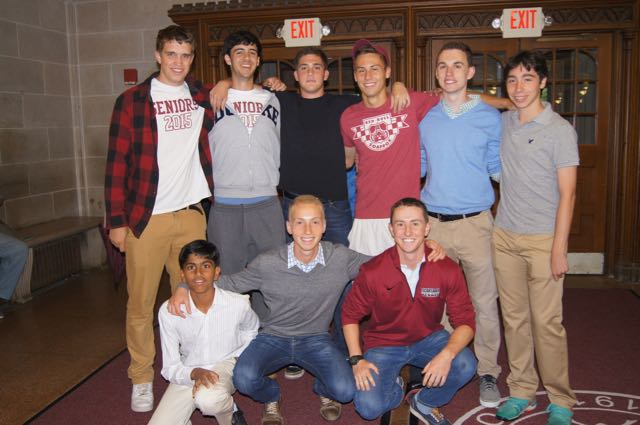
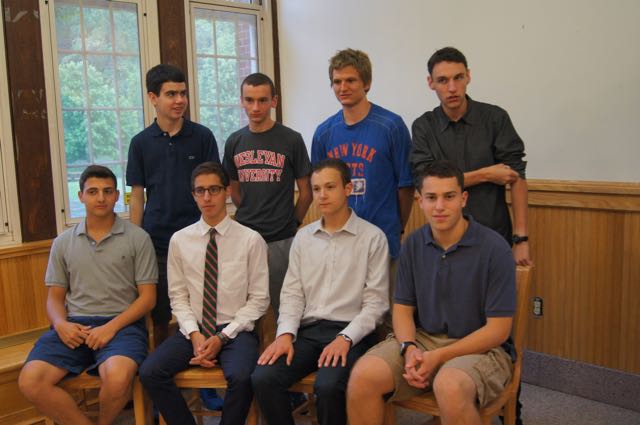
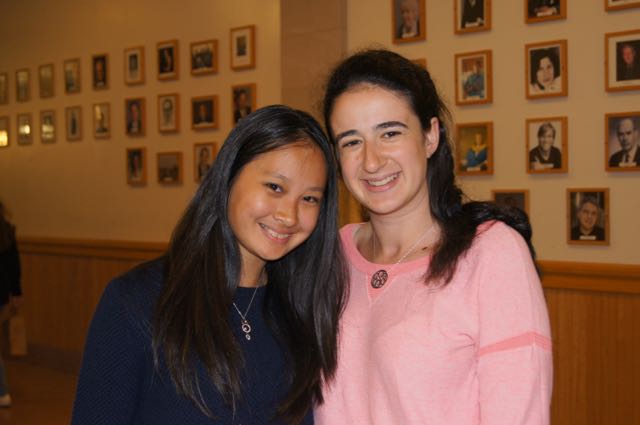
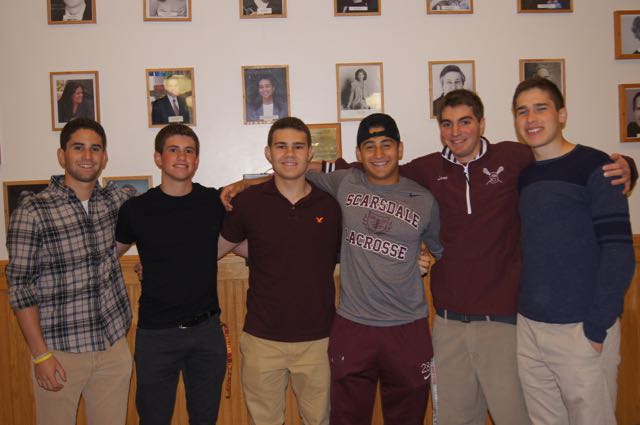
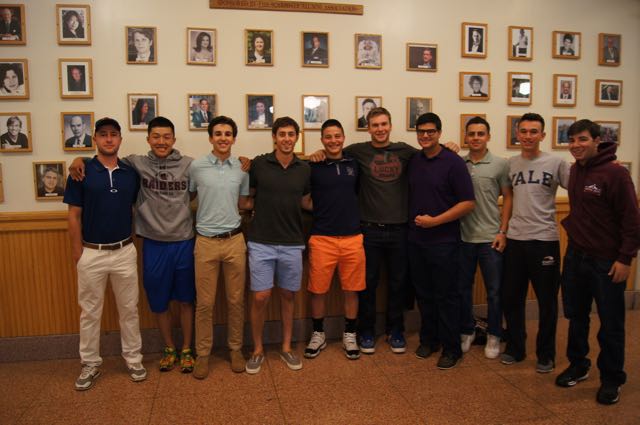
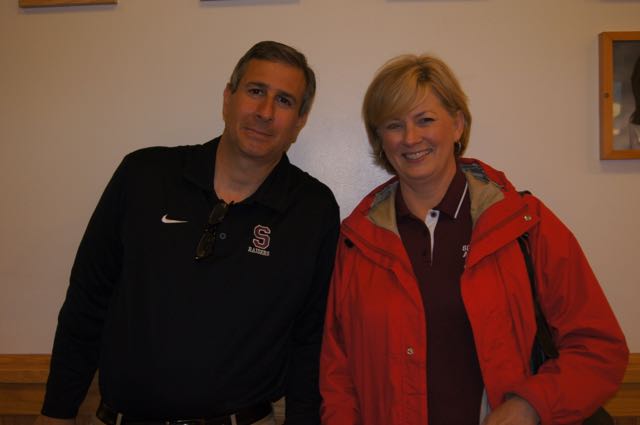 Maroon and White held a celebration to honor their spring teams on Tuesday June 2nd. Despite the rain, volunteer parents stood outside to barbeque hot dogs and hamburgers for 400 guests, provided by Omaha Steaks and donated by Danny and Beth Bernstein.
Special awards were given to the following students:
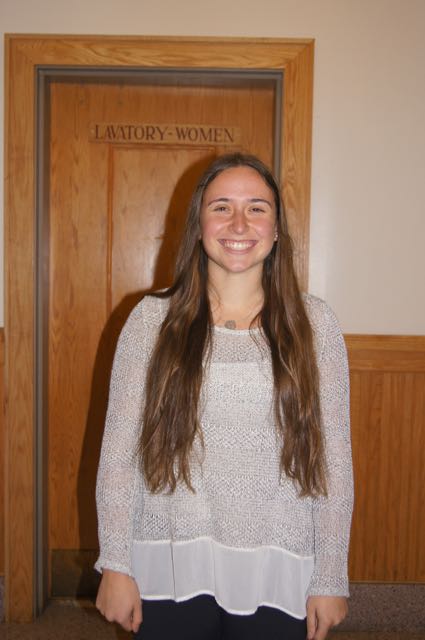 Spring Athlete of the Year: Hailey Thornton and James Nicholas
Haley Thornton is a junior on the Girls Track team, and the #1 in the girls pentatholon in Section 1. She also holds the Scarsdale record for the 100m hurdles.
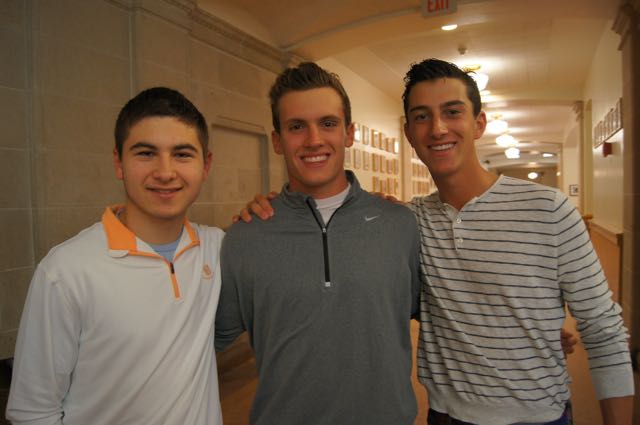
James Nicholas is a Senior and a three sport all state athlete. He recently won the 2015 Boys State Golf championship, and will be playing football and golf next year at Yale University.
Peppers Family Award (female) Taylor Mancini
Taylor is a senior at Scarsdale High School and is a captain of the Girls Softball team. She is a three sport athlete, and has played at Scarsdale High School for 12 seasons, barring one winter season lost due to injury.
Peppers Family Award (male) James Nicholas and Jonny Dorf
This award goes to the male student who has success both on the field and in the classroom. Jonny Dorf and James Nicholas are both exceptional students at Scarsdale High School, and exceptional athletes. Both of these students will be attending Ivy League Schools next fall. James is a star golfer, hockey player and football player, and has been named all state in each of these sports. Jonny is another star student, with a high GPA in the most difficult courses at the High School. On the field, and court, he is captain of both the soccer and tennis teams, and is known as an extremely fierce competitor, and a model teammate.
Nina F. Mooney Award: Bridget Horwood
This award goes to the athlete who is positive nand enthusiastic for their sport, and is a good teammate. Bridget embodies these things, as she is always looking for ways to pick her teammates up, in order to help the team and help each person individually. She was nominated for the award by two coaches this year, and also served as captain of the Lacrosse team.
Nonie Knopp Memorial Award: Jake Zurkow
Jake Zurkow is an athlete who also embodies the idea of a positive teammate. Even though he was not on the field or on the ice the most, he was always working the hardest at practice. He tried to work hard for others as well, trying to pick up his teammates and help them improve alongside himself. He was dedicated in every sport he played, and was a valued member of every team he has been on.
Elizabeth Timberger Memorial Award: Sara Arbelaez and Janet Frehil
This award is presented to two students who perform the behind the scenes tasks. Both of these ladies were managers of the Girls Volleyball team in the fall, and they worked hard to keep the practices functining and the team alert and ready to go. They also provided crucial statistics on each player to the coaching staff, in order to make the coaches better able to pinpoint weaknesses and correct mistakes. They were always willing to do the little things to help the team succeed, even though they weren't always given the credit. 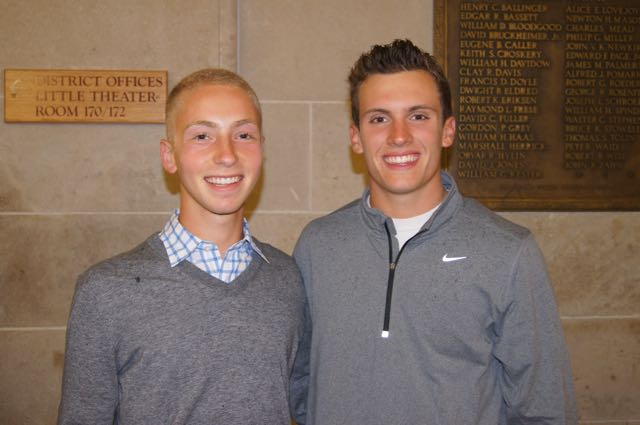
Several teams had excellent seasons. Both the boys' golf and tennis teams were undefeated in their leagues and sent players onto the state tournament. James Nicholas competed in the NYS tournament at Cornell and took first place among the 99 entrants.
The track team had another very good season. Finishing second in the league. Sophomore Greg Crowley qualified for nationals as well. The Girls Track team placed third in the county.
The boys' tennis team finished their season undefeated in the league, and won their league. They sent two doubles teams and 3 singles players to the sectionals and Senior Jonny Dorf went onto the state tournament. The three singles were Jonny Dorf, Luke Smith, and Sam Gray, one doubles team was Chris Landgrebe and Jacob Eisenstein, and the other was Zack Schulman and Rich Bennett.
The Boys Lacrosse team endured another difficult season, finishing 2-14. The team shows some promise however, graduating only 6 seniors. The girls lacrosse team finished 9-8 this season, losing in the playoffs to Fox Lane.
The Boys baseball team finished 8-11 this year, with significant wins over White Plains, New Rochelle, and rival Mamaroneck. Fox Lane unfortunately beat them in the playoffs. All Section - Tyler Mandel, All Section Honorable Mention - Harrison Wirth, All League: Will Eisler, Ryan Huo and Jacob Stein. The girls Softball team had a good season, going 11-9 but losing in the first round of the playoffs.
The Boys Golf team went 24-0 in the regular season, Josh Goldenberg and Ethan Bunzel lost unfortunately, in the Conference Championship. James Nicholas, however, won the State Championship at Cornell on May 31. The boys team also has the highest winning percentage of any team at Scarsdale High School this year, and they have won 20 of the last 21 league championships, and are 3 time defending section 1 champions. Four girls golf team members have gone to sectionals this year, 2 are in the Top 20.
Dr. Nicole Conkling Weds Dr. Eric Daniel Wang
- Details
- Written by: Joanne Wallenstein
- Hits: 7936
 Dr. Nicole Conkling, daughter of Scarsdale Village Clerk Donna Conkling and Thomas P. Conkling, was married to Dr. Eric Daniel Wang at the Church of St. Augustine in Ossining on Sunday May 24, 2015. Dr. Wang is a son of Dr. Neng Eva Wu of Vestal, N.Y., and Dr. Hong Wang of DeWitt, N.Y.
The bride and groom, both 28, met at Stony Brook University, from which each received medical degrees. They both are residents in plastic and reconstructive surgery at the University of California San Francisco Medical Center; Dr. Conkling is in her second year and Dr. Wang is in his third.
The wedding reception was held at The Castle in Tarrytown and the cake was provided by Lulu Cake Boutique in Scarsdale.
An Ossining native, Nicole worked for the Scarsdale summer camp for two summers in high school, where she met Jennifer Buckmeyer, a Scarsdale resident who was her maid of honor at the wedding. Nicole interned at the Public Safety Building for two summers during her undergrad years, and also worked in the Scarsdale Building Department for a year before she started medical school. She also taught Stanley Kaplan classes, worked with hospice and was a member of the Taconic Opera.
The bride will continue to use her name professionally. She graduated summa cum laude from Washington and Lee University. Her father is a program manager for energy service for Public Service Electric and Gas Company in Newark, where he oversees energy efficiency.
The groom graduated from Cornell. His parents are professors of electrical engineering, his mother at Binghamton University and his father at Syracuse.
Photo credit: Frank Farina