








PT Council Hosts Book Discussion on Testing and Local Control at the Library
- Details
- Written by: Stacie M. Waldman
- Hits: 4457
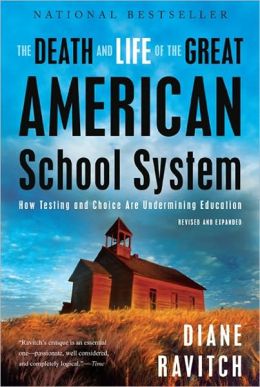 On Friday, January 10 the Scarsdale Library and the Scarsdale PT Council engaged the community in a book discussion on "The Death and Life of the Great American School System: How Testing and Choice Are Undermining Education," by Diane Ravitch (Basic Books, March 2010). The turnout was high, as over 40 people including PT Council President Pamela Rubin, School Board President Suzanne Seiden and Scarsdale High School Principal Kenneth Bonamo attended and participated.
Dr. Ravitch is a Research Professor of Education at NYU and a Senior Fellow at the Brookings Institution. She describes herself as a historian of education and an educational policy analyst, and has over 40 years of field experience. From 1991-93, she was the Assistant Secretary of Education and Counselor in the George H.W. Bush Administration. President Clinton appointed her to the National Assessment Governing Board that oversaw federal testing. She was invited to attend the event but was unable to be there.
Ravitch's book is described on Amazon.com as "...a must-read for all stakeholders in American education," and with 266 reviews, it received a nearly perfect 5-star rating. Her book focuses on the education-centered issues of privatization, standardized testing, punitive accountability, charter schools, and the downside of molding schools to run like businesses. Her model for the ideal educational system would:
• Leave decisions to educators, not politicians or businessmen
• Devise a truly national curriculum that sets out what kids should be learning in every grade
• Use charter schools to educate kids who need help the most, not to compete with the public schools
• Pay teachers a fair wage for their work, not "merit pay" based on flawed and unreliable test scores
• Encourage family involvement from an early age
Elizabeth Bermel, Director of the Scarsdale Library, moderated the book discussion. Mary Beth Evans, the Parent Teacher Council (PTC) Legislation Committee Co-Chair, opened the morning by exclaiming, "There has been so much research done since this book was written regarding problems with using test scores to evaluate teachers and the method that's being used, so I wonder what Dr. Ravitch's view would be on this today?" Another woman who described herself as a community member and a major stakeholder in education for years responded that, "...policies take a long time to kick in. I was witness to all this and very involved in the schools for many years. I see this book as a warning for what will happen 3-4 years down the road."
PT Council President Pamela Rubin raised the idea of privatization of schools and the loss of control when a school accepts money from a private source. "People like Bill Gates are coming in with huge amounts of money and doing what they see as beneficial for the schools, excluding educators from much of the decision making," she said. Termed the "billionaire boys club," they can skirt around the Boards of Education within the various school districts because of the cash they are willing to pour in to the schools. Ravitch argues that decisions about education should be left up to the educators, not politicians or businessmen, regardless of how much money they are willing to donate. There was a general agreement on this point in the room.
Ms. Rubin also conveyed her surprise at the amount of money that is being poured into currently mandated teacher evaluation programs with no data to back them up. Cited was poor teacher morale and heightened anxiety around using student test results to grade teachers, given the many other contributing factors to student performance in the classroom. For example, one person brought up how a teacher may receive a better evaluation if observed toward the end versus the beginning of the school year. Another wondered why parents shouldn't have a say in how teacher evaluations are done or whether they should be done at all. Referring to pre and post mandated teacher evaluations, Kenneth Bonamo, Principal of Scarsdale High School, stated that, "...the percentage of teachers rated proficient in our schools has actually remained the same. " Adding a business perspective, Ms. Rubin said that holding teachers 100% accountable for student performance might make sense if schools were businesses. "It sounds so simple," she said, "but reading this book, you see why a business model doesn't work in schools. Diane Ravitch definitely changed my mind about what's appropriate in a school setting." Another education stakeholder stated that our society has decidedly "...shifted the focus onto the teacher for why the child is failing versus the child, home life, and other factors."
Mary Beth Evans brought up the idea of education as a commodity versus a right. "Charter schools are a prime example of that", she said. In her book Dr. Ravitch discusses the problem with charter schools and how they get around regulation, including teachers' unions, and why only the rich should be able to choose this form of education. Elizabeth Bermel added that an impoverished family can't afford to move into a high-ranking public school district like Scarsdale because of the prohibitively expensive housing costs and high taxes, continuing the cycle. "It's not really a complete choice to live in Scarsdale," said Mary Beth Evans. "You need to be able to afford a house and property taxes here." Nods of agreement resonated the room.
Barbara Kaminsky, a retired teacher in the Mt. Vernon School district who sent her own children through the Scarsdale schools, spoke about her experiences that touched on both the errors of teacher evaluations as well as the role that poverty plays in education. "How do you evaluate me one day a year when some of my students live in halfway houses...or when my students claim they don't sleep well because of the gunshots they hear at night?" she asked. "Although some of my students did succeed, many were not upstanding citizens. Some ended up in jail. So how do you evaluate me as a teacher in one day given these other factors?" In fact, according to Pam Rubin, if you take out the lowest 10% of impoverished students in the U.S., our country ranks #1 in education. "We have a poverty problem in this country, not an education problem, " she said.
Testing was another hot-button that took the floor. The "Common Core Curriculum" was developed without teachers in the room, and does not seem to be going over well with the Scarsdale crowd. By law, teachers cannot show parents their child's state test, as it is proprietary, which is problematic. "Given Scarsdale's academic standing, don't we trust that teachers teach the curriculum?" argued one passionate group member. "I like to use Applebees as an example. Management doesn't assume that all the hired cooks can actually cook well. They hire people to follow a set of directions- to cook a set menu. And they are told not to stray from the exact ingredients and instructions. Do we really want every child educated exactly the same way and our teachers to be robots?" Many seemed concerned that educational autonomy would be stripped away from our teachers. Another person brought up measurable competencies that would help students become sustainably successful in life, such as technological skills, presentation skills, collaborative skills, and team-building skills.
On a more humorous note, Lisa Eisentstein repeated the commonly held assumption that all of our students need to go to Harvard and become doctors, lawyers, and MBAs. She is friendly with someone who is an executive assistant and has been for many years, although this woman graduated from University of Virginia, a top-tier school. "She might be the smartest person among us," she said, snidely. "She has regular hours, great benefits, limited stress, and a terrific paycheck."
Vacation Postcards
- Details
- Written by: Joanne Wallenstein
- Hits: 5277
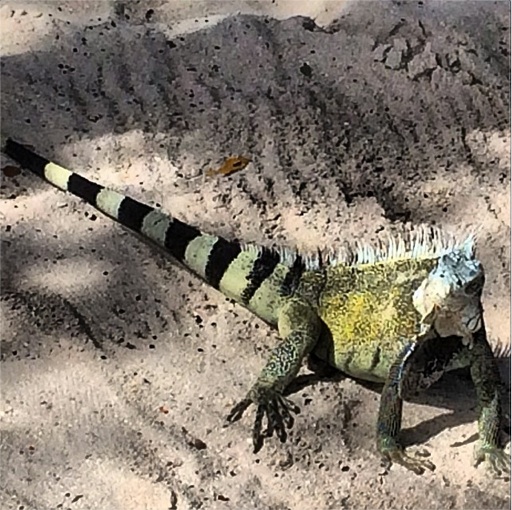
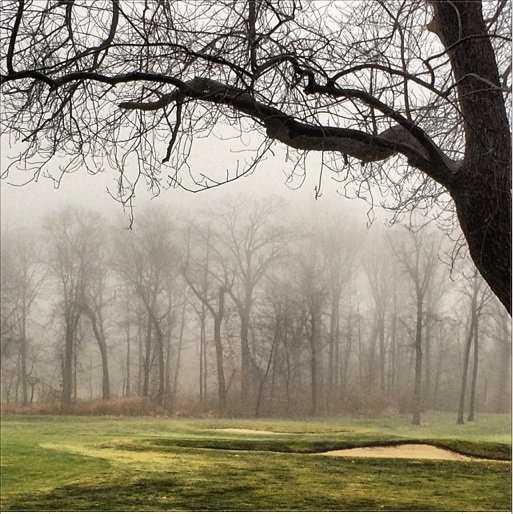
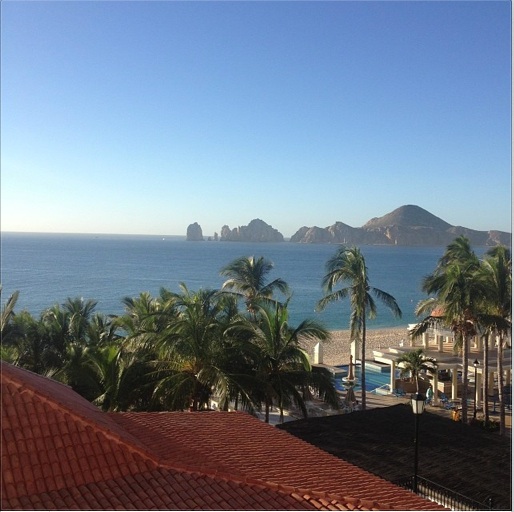
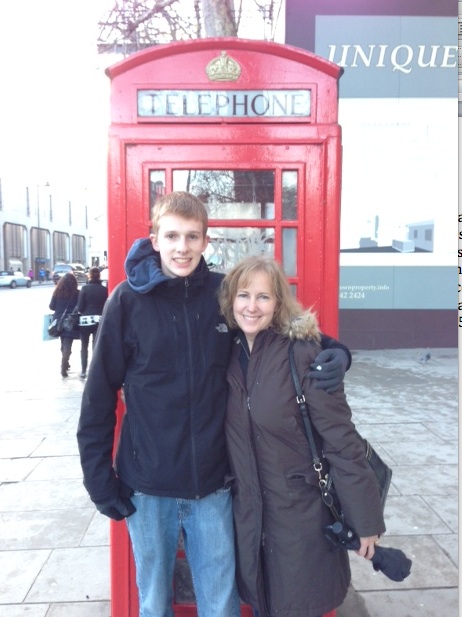
 Oh the places you go! The two-week school vacation gave some the chance to get away for the holidays. With Christmas and New Year's Day both falling on Wednesdays, many took advantage of the extended break to travel far and wide. Lucky for us they shared their experiences with photos on Facebook and Instagram, capturing some stunning scenery. Here are just a few of the photos from locals who forwarded their photos to Scarsdale10583. If you took some good shots, please send them to us at scarsdalecomments@gmail.com to include below: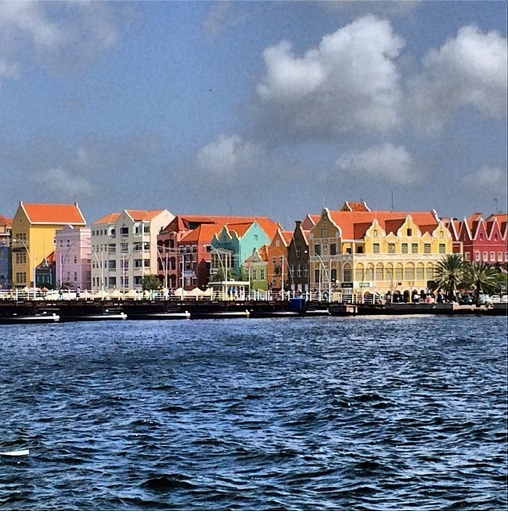






Trains, Legos and Monsters: Vacation Program for Kids at Scarsdale Library
- Details
- Hits: 4215
 All aboard. Like peanut butter and jelly, and milk and cookies, toy trains and Christmas are a natural fit and the Scarsdale Public Library is again setting up its Thomas the Tank Engine train set for children to come and play with. The trains are scheduled to arrive on Saturday, December 21, and will make their last run on Saturday, December 28. They will be available during library hours.
In addition to trains, Monsters are also coming to the library. Monsters University, the popular computer-animated comedy film from this summer will be at the library in a special vacation week showing on Friday, December 27, at 11:00 am.
Monsters University tells the story of two monsters, Mike and Sulley, and their time studying at college, where they start off as rivals, but slowly become best friends. The film features Billy Crystal, John Goodman, Steve Buscemi, Bob Peterson, and John Ratzenberger.
Also during the vacation period, the popular LegoMania will return on Saturday, December 21, from 2–4 pm. The library provides Legos and Duplos and the children their creative talents. Registration is required at the library website.
Additional information is on the library website, www.scarsdalelibrary.org, or available by calling the Children's Department at 722-1303.
Scarsdale's Julia White Performs in White Christmas
- Details
- Hits: 5410
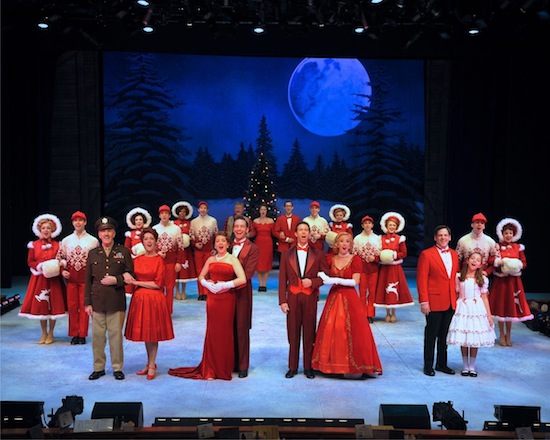 Julia White, a sixth grader at Scarsdale Middle School, plays the role of Susan Waverly in Westchester Broadway Theater's holiday production of Irving Berlin's White Christmas. Julia shares the role with Nicole Kolistas, from Connecticut, who performs alternate performances. The show has received terrific reviews and is on from now until January 12. See Julia –lower right, in the photo above of the entire company of the show. Visit broadwaytheatre.com for show dates, times and tickets.
Fun for All at the Maroon and White Basketball Tournament - Beginning December 5
- Details
- Hits: 3718
 Free mini basketballs, wristbands and Raider Router Rally towels are just a few of the prizes that will be distributed at the annual Scarsdale Maroon and White Kari Pizzitola Holiday Basketball Tournament that begins on Thursday December 5th and runs through Saturday December 7th at Scarsdale High School. The Scarsdale Varsity Girls and Boys Basketball Teams are playing Friday night and Saturday. On Friday, Dec. 6th, the Scarsdale Varsity girls will host Gorton at 6 p.m. and the Scarsdale Varsity boys host South Bronx at 8 p.m. On Saturday, Dec. 7, there will be four games, with the Boys Consolation Game at 2 p.m., the Girls Consolation Game at 4 p.m., Boys Championship Game at 6 p.m. and the Girls Championship Game at 8 p.m. on that Saturday.
The first 100 people who arrive Friday night will receive a mini basketball! Additionally, all spectators will receive a free wristband and Raider Router Rally towel. There will be a fabulous raffle with great prizes, including Knicks tickets, Harman/Kardon headphones, gift certificates to restaurants and spas and more! Drinks and refreshments will be available for purchase. More details can be found at http://www.maroonandwhite.org/, including an update after the Friday games of the game schedule for Saturday.
Friday night will feature Scarsdale Fifth Grade Tri-County Basketball League scrimmages at halftime of the two Scarsdale games, a special appearance by the Scarsdale High School A Capella group and more festive activities!!!
Here is the complete schedule:
Thursday 12/5
- Girls 5PM Fox Lane (H) vs. Mahopac (A)
- Boys 7PM Lincoln (H) vs. Fox Lane (A)
Friday 12/6
- Girls 6PM Scarsdale (H) Vs. Gorton (A)
- Boys 8PM Scarsdale (H) Vs. South Bronx (A)
Saturday 12/7
- 2PM Boys Consolation Game
- 4PM Girls Consolation Game
- 6PM Boys Championship Game
- 8PM Girls Championship Game