






Survey Results: How Much Do You Give?
- Details
- Written by: Stacie M. Waldman
- Hits: 5387
 Tis the season for shopping, as evidenced by solid reports of spending by consumers on Black Friday and Cyber Monday. But it's also the season for giving your time or your money. What if you have money but no time to volunteer? What if you have limited funds but have time on your hands? How can you get your kids in on the giving spirit? Everyone can find a way to give this season in one way or another. In fact, a survey of our very own Scarsdale folks (results below) showed that we are generally very generous in terms of volunteerism and dollars.
Albert Einstein said, "It is every man's obligation to put back into the world at least the equivalent of what he takes out of it." Giving Tuesday was developed through a partnership between the 92nd Street Y in Manhattan and the United Nations Foundation as a way to help people give to charitable organizations in myriad ways.
Here are some suggestions for how to integrate giving into your life:
I would like to donate money to good causes, but how do I find good causes?
Erik Waldman, a physician, donates money each year to brain cancer research at UCLA. His aunt died of a brain tumor five years ago. "I think it's important to give money for things that you can't conquer with your own skills," he said. "I can help fund the scientists that do the research to help find a cure for brain cancer even if I don't have the ability to find a cure myself."
I, personally, know that I can't volunteer to go to Nepal to build a school tomorrow, but I can donate to organizations sending people over tomorrow to do it. It can be intimidating to find an organization for your donation. Some experts recommend thinking about the basic needs people have, (food, water, health care, access to economic opportunity, shelter, and education), choose that which you feel is the most necessary for human survival, then research organizations that specialize in providing these services. Other experts suggest making a list of your interests and going from there; for example, theatre, museums, guide dogs for the blind, animal welfare or religion. There are sites like Charity Navigator and Great Nonprofits that aim to help people wishing to donate money make a sound decision about to whom they send their contributions. Charity Navigator provides ratings for charities, publishes the CEO's salaries, and has helpful lists if you're confused about where to donate such as Top 10 Lists, Donor Advisories, and the highly recommended Ten Practices of Savvy Donors. It also lets you browse charities by category. Great Nonprofits allows donors to give their own ratings of charities.
I can't donate monetarily this year. How can I give in other ways?
There are ample volunteer opportunities in our communities. Emily Weston, a mom of two, donates many hours of her time as a CASA (Court Appointed Special Advocate) and also volunteers for the Junior League of Central Westchester (JLCW). "I became a CASA to give me a balance in life and give back in some small way. Foster kids need someone to advocate for them," she said. "It's a broken system and often a CASA is the only constant in their lives. I don't forget for a day," she continued, "how privileged we are to live where we do and have what we have and I do my best to teach my children gratitude every day." She thinks that by volunteering, and by them seeing this, they are learning early on what it means to give back and are more likely to feel grateful for everything they have.
Lisa Copeland, a mother of three, began volunteering for Family Services of Westchester (FSW) a few years ago. She saw the need of vulnerable children in our area and wanted to do something about it. "It felt wrong to me that so many children right here in affluent Westchester lack basic necessities," she said. She learned that FSW provided essentials for kids right in our own backyard. ""FSW provides everything from warm winter clothing to transitional support for incarcerated mothers and protection from gun violence. I started out volunteering for 'The Sharing Shelf' that collects and distributes clothing to children. Last year I joined FSW's Board of Directors and I know that what I give in terms of time, money, and in-kind donations are making a real impact." Lisa also uses her own family as a baseline and as a reality check. "When I compare the amount I donate to what I spend on my own children's essentials and enrichment activities," she added, "I know that I'm barely scratching the surface of the need out there and I feel that it's my responsibility to help because I can."
Other ideas for volunteerism include JLCW, Scarsdale Women's Club, Kiwanis Club, Lions Club, Rotary Club, Meals on Wheels, places of worship, nursing homes, hospitals, soup kitchens, museums, theaters, or even abroad with international organizations. Donating blood or plasma on a regular basis is a great way to give back, as is joining a bone marrow transplant list. You can volunteer at an animal shelter or a zoo, or you can even offer to watch a friend's children for an afternoon if you can see she's having a bad day and could use the break.
How can I involve my kids in volunteerism or donating to those less fortunate?
Julie King, past president of JLCW, says that her family participates in Giving Tuesday, "...as a way to slow down and focus on what matters during the holiday season, hopefully teaching my children there is more to the holidays than Black Friday and Cyber Monday." As a Junior League member, Julie's kids have the opportunity to participate in volunteer opportunities such as Bronx River Cleanups and packing of donated candy for soup kitchens after Halloween. Many schools do toy drives, clothing drives, food drives, and winter coat drives. JLCW is currently doing a school supply drive as well as a diaper drive, and these items can be dropped off any time on the porch of Wayside Cottage. The faces of my own kids when they make donations are priceless. Your child can join the boy or girl scouts and do volunteer work through that. Younger children may enjoy coloring in coloring pages through Color a Smile. They send pages your children make to nursing home residents and military personnel overseas. Kids often love participating in beach and trail clean ups in the warmer months as well as 5k runs/walks for specific causes that matter to you or to them. Even something simple like dressing your child in purple for pancreatic cancer awareness day, helps them learn the art of empathy.
In our family, we reserve one of the kids' holiday gifts as a gift for someone else. We set the dollar amount, and the kids choose where they would like to send their donation based on their interests. When our son was one, he loved his footed pajamas so his donation went to the Pajama Program of Westchester that provides pajamas and books to kids living in group homes, temporary housing, and shelters . Our daughter loves books, so several years of her donations have gone to Room to Read, an organization that builds libraries and publishes books in local languages in order to provide education to children in developing countries who would otherwise never have an education.
Is Scarsdale generous?
Though only 49 people responded to the "Scarsdale Giving" survey on Scarsdale10583, here is what we learned: In dollar amounts, 39% (the majority) give between $1,000 and $5,000 annually; 20% give less than $500, 20% give more than $10,000, and 12% give between $5,000-$10,000. Whereas 80% of respondents said their annual donations are increasing, 20% said they are decreasing.
To whom does Scarsdale give?
Scarsdale folks are most likely to give to local service organizations (75%) and religious organizations (60%). Another 30% give to the arts or global organizations, and a mere 12.5% of respondents give to political organizations. 54% listed "other" as where they send donations.
Does Scarsdale volunteer?
Yes, Scarsdale volunteers! 29 out of 46 said they volunteer in the community whereas only 17 out of 46 said they don't. Of those that volunteer, 36% work 1-5 hours per month and 36% work 6-10 hours per month. Another 18% work 11-20 hours per month and an impressive 9% work between 21-50 hours.
How do you give back? And how do you feel you benefit from giving? Share your stories in the comments section below.
Purchase Holiday Cards to Give the Gift of Education
- Details
- Written by: Joanne Wallenstein
- Hits: 3483
 Soon, every Scarsdale household will receive this year's appeal to support the Scarsdale High School PTA Scholarship Fund for College. The Scholarship Fund provides one-year grants to college-bound SHS seniors. These grants, generally ranging from $1,000 to $7,500, are made to seniors in good standing and who will receive a SHS diploma, on the basis of demonstrated financial need. There is no fixed number of recipients. Each year, awards are based on need, the number of qualified applicants, and available funds. The Scholarship Fund Grant Committee makes allocations and administers the fund. All applications are held in the strictest confidence; applications are reviewed by number and not by name.
The Scholarship Fund relies on donations from Scarsdale residents, as well as local businesses and organizations. Because of the generosity and steadfast commitment of so many residents, organizations and businesses that supported the Fund last year, the Scholarship Fund Grant Committee was able to provide $85,300 in grants, in varying amounts, to 19 graduating seniors for their freshman year of college this fall. These scholarships helped keep the door to higher education open for these students.
Community members may also participate in the Scholarship Fund's fundraising efforts by purchasing holiday cards to honor teachers. Orders must be received by December 12th. Holiday cards are currently on sale here. Donations to the Scholarship Fund are fully tax-deductible.
Students who wish to apply to the Scholarship Fund may obtain applications from any Dean at the High School or online. Completed applications should be submitted to the Scholarship Fund Grant Committee no later than May 1, 2015. For more information, please visit the Scarsdale High School PTA Scholarship Fund for College webpage or contact Chair Monica Rieckhoff or SHS PTA President Amy Cooper.
300 Volunteer to Help Feed the Needy
- Details
- Written by: Joanne Wallenstein
- Hits: 4248
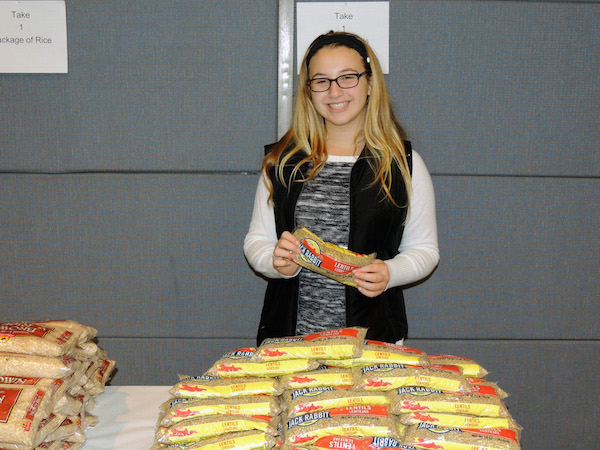 More than 300 people spent the morning of Veterans Day in community service, decorating packages and filling them with food to be distributed to the hungry through area food pantries.
The event, which took place in two locations, was part of UJA-Federation of New York's Westchester Families Feeding Families initiative, which brings together Westchester families, synagogues, teen groups, and other community organizations to participate in local food and supply drives throughout the year. Packing took place at the Jewish Community Center of Mid-Westchester in Scarsdale and the Rosenthal JCC of Northern Westchester in Pleasantville.
"It's hard to imagine someone not having enough to eat, but that, sadly, is sometimes the case," said Vivian Sklar of Scarsdale to the children at the JCC of Mid-Westchester. "Sometimes it's very hard for older or ill people to shop, especially during the winter months, and they need donated food to be delivered to their homes. You are doing a very good deed by making life a little easier for them and showing them you care."
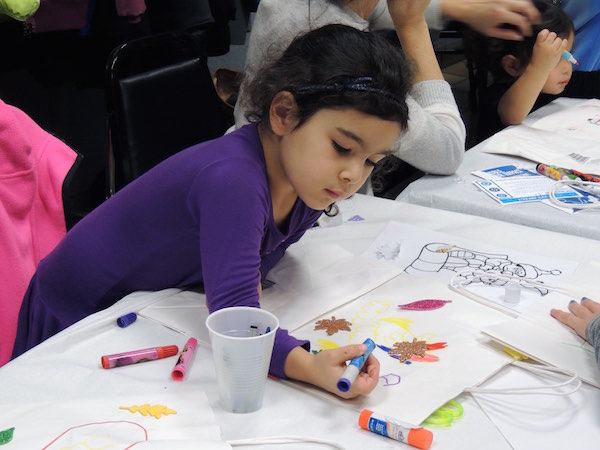
During the event, volunteers decorated bags and created holiday cards to deliver warm wishes to the recipients. The bags were filled with a variety of canned and prepackaged food, as well as items such as paper towels and tissues that cannot be purchased via the government food stamp program.
"UJA-Federation supports nearly 100 health, human-service, educational, and community agencies that improve people's lives. One hundred agencies! Can you imagine how many people they help?" Tara Steinberg of Irvington asked the young volunteers at the Rosenthal JCC. "If you're imagining 4.5 million people each year, you're right. Our agencies feed the hungry, house the homeless, and provide services to people with special needs and Holocaust survivors and the elderly, and so many more."
Heathcote Alumni Remember the '60's
- Details
- Written by: Joanne Wallenstein
- Hits: 7441
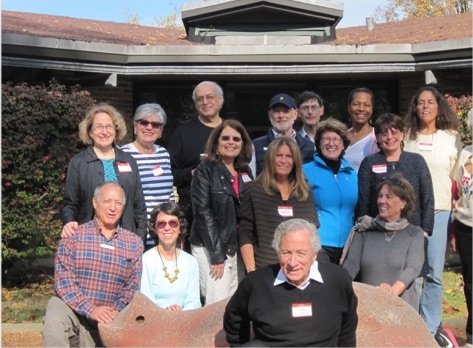 Long dormant memories came alive last weekend when 18 alumni of Heathcote Elementary School reunited at the school they graduated from in 1960. Meeting at the playground on Innes Road, they marveled at how much the school had changed, and how much it hadn't.
The only piece of playground equipment remaining from the alums' 1950s school days was the clay turtle, fondly remembered as a great climbing spot but as being much larger and taller. Many recalled its being delivered via flatbed one afternoon, and the excitement this caused in their young lives. Also remembered were the many times one or another had crawled under the terrapin to plan adventures and playdates. Amazing how small the reptile and its belly space have become in just over 55 years!
The reunion was organized by Peggy Salzer LoCastro who attended to many special details. She made copies of the 1954 article in Life magazine describing the opening of the unique school and enlarged the photograph of the entire 1960 fifth-grade graduating class for everyone to sign. Black and gold gum balls ("Black and gold, fight, fight!") adorned the picnic table, and tasty food ordered from the deli at the Five Corners fed everyone. The original deli was remembered by all as a narrow store with a single aisle covered with sweet-smelling sawdust shavings. Two large barrels anchored the aisle.... Just reach your hand into the deep brine to select a five-cent pickle.
The group circumnavigated the school's perimeter, often peering into classrooms and sharing reminiscences as someone else's tale unlocked long-forgotten memories. Everyone remembered the school fondly, whether it was the colored glass panes sprinkled along corridors, the presentations performed in the individual pods to other same-age classes, or the handsome fireplace in the library that one could always snuggle close to with book in hand.
All said, the group agreed that Heathcote School had aged very gracefully, and they appreciated that it remained nestled in the woods, just as it had decades before.
Scarsdale Residents Improve the Lives of Thousands of Children in Vietnam
- Details
- Written by: Joanne Wallenstein
- Hits: 19510
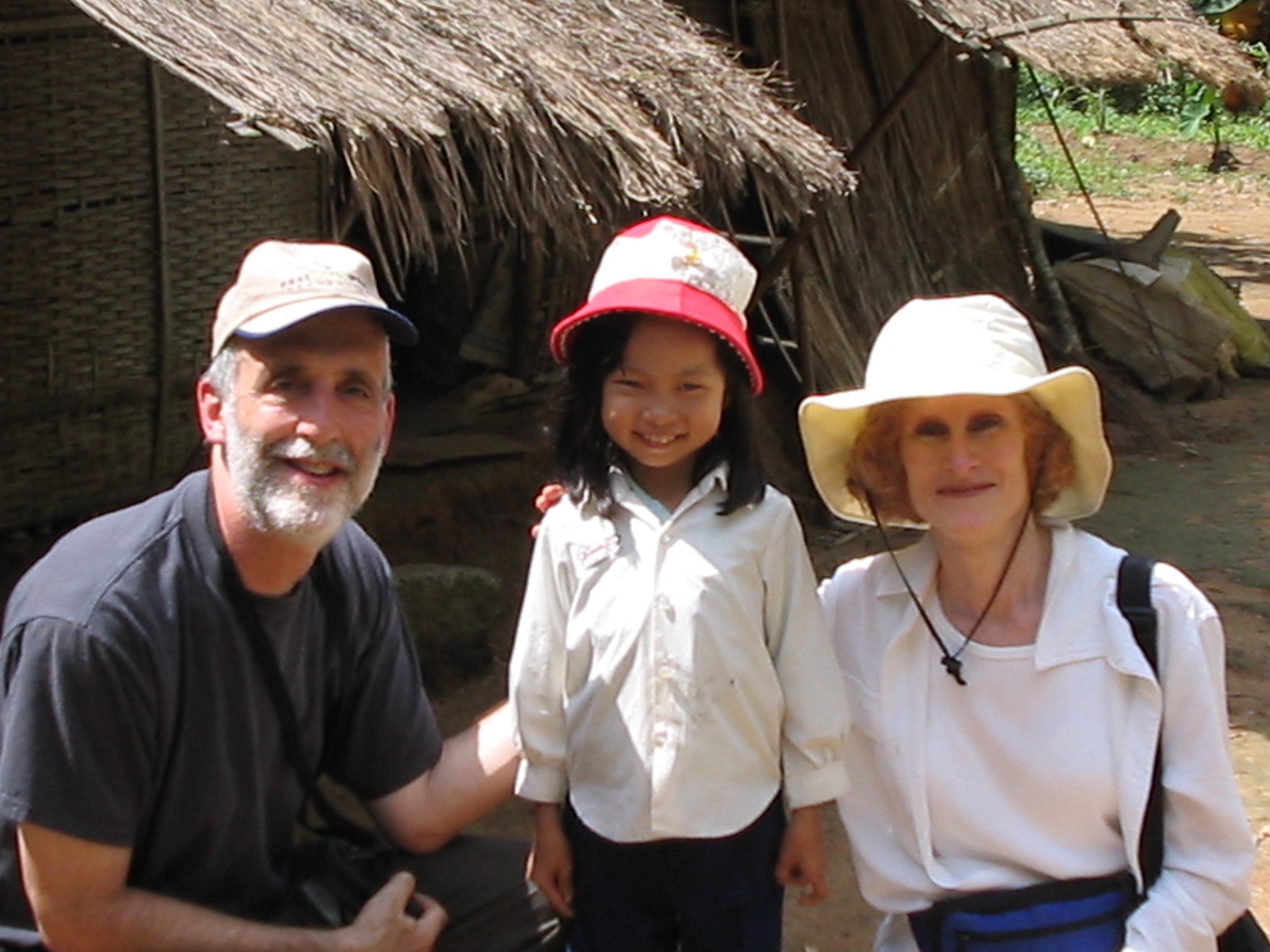 A Backroads Walking Tour of Vietnam in 2003 evolved into the adventure of a lifetime for Scarsdale residents Eric Hemel and Barbara Morgen. The trip was the couple's first foray into Asia and while touring rural areas of the country they found that many children were not in school. But rather than just noting the hardship and moving on, Morgen and Hemel found a way to address the issue and have spent the last 10 years sending thousands of children to school. Their inspiring story demonstrates how individuals can be effective at solving what sometimes appear to be insurmountable global issues that leave most of us shrugging our shoulders and feeling powerless.
Hemel had a distinguished career in finance before conceiving the Scholarship Program to Enhance Literacy and Learning (SPELL), which provides scholarships to impoverished Vietnamese students to send them through school. Before leaving Wall Street, Hemel was President of Alson Capital, a New York City based investment partnership. Prior to that, Hemel was Co-Head of U.S. equity research at Merrill Lynch, , an equity analyst at First Boston, Morgan Stanley and Merrill Lynch for 13 years, and was ranked in the annual Institutional Investor poll in the Financials and REIT categories for 12 consecutive years, nine as #1 in his sector. Before coming to New York , he held several positions in the Reagan Administration, including serving as staff director of the President's Council of Economic Advisers. Eric graduated from Stanford University, where he earned his B.A., MBA, and Ph.D.
His wife Barbara Morgen is an attorney who worked for most of 25 years in the for-profit sector as a futures and derivatives lawyer. In 2004 she joined the Court Appointed Special Advocates (CASA) program in Westchester, which is under the umbrella of the Mental Health Association of Westchester. As a staff supervisor, she trains and supervises volunteers. "CASA's" are trained volunteers, who are appointed by Family Court judges to advocate for children who are in foster care, or at risk of placement in foster care, as a result of abuse or neglect. CASA volunteers report to the Court on the child's status, with particular emphasis on a child's health, developmental and educational needs. Morgen is a graduate of Brown University and University of California at Hastings Law School.
The couple moved to Scarsdale in 1986 and have lived in the same house ever since. According to Hemel, "The best thing about it, in addition to friends, was that it was a wonderful place to raise our two children--Daniel and Deborah. The schools were great as per the conventional wisdom. But, in addition, we also found Edgewood to be the perfect "Leave it to Beaver" neighborhood where both the elementary school and parents promulgated and reinforced great values."
Here's the story, in Hemel's own words of his evolution from Scarsdale financier to philanthropist and agent of change:
"Barbara and I were guests on the first Backroads Vietnam Walking Trip in the fall of 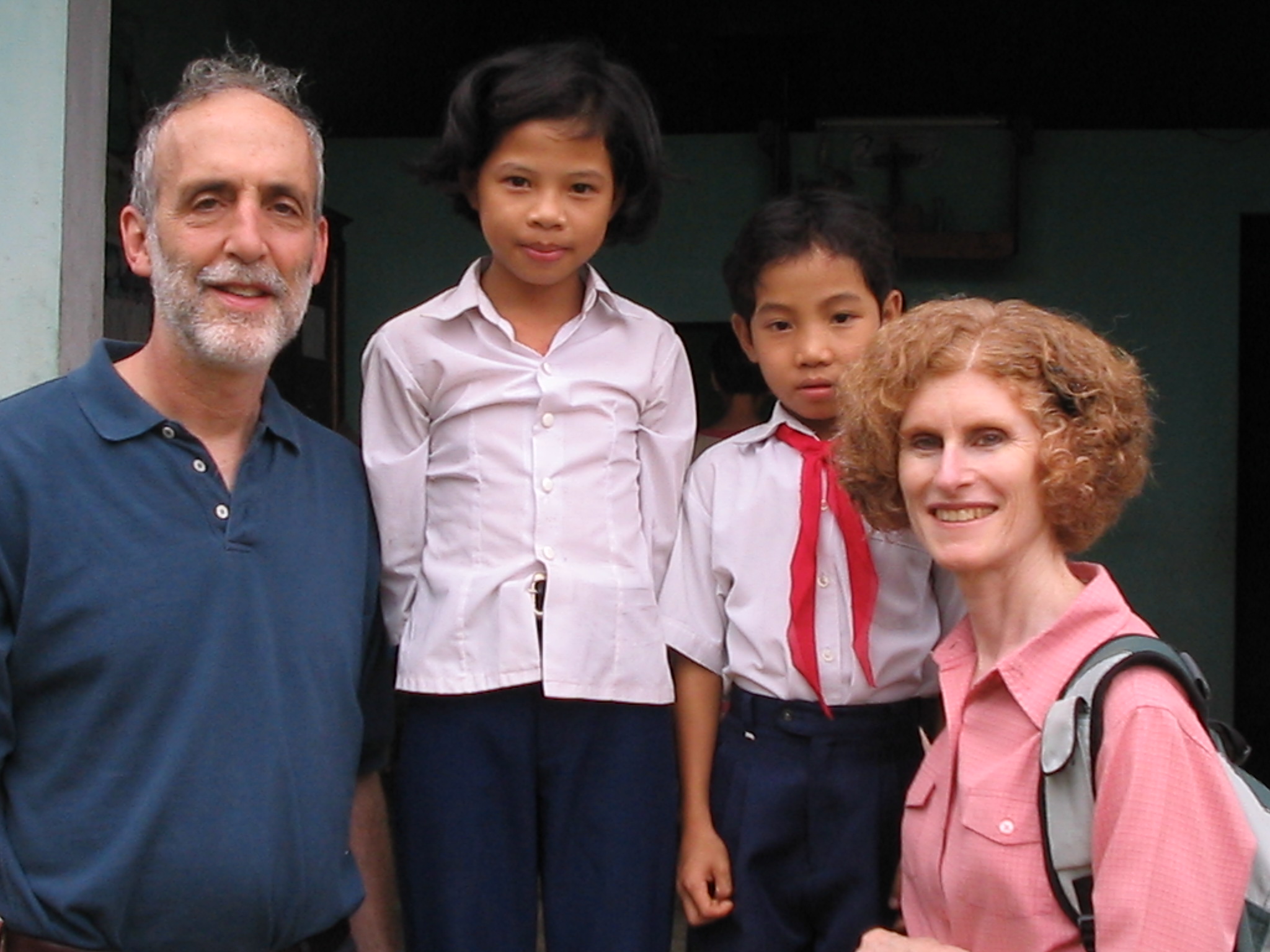 2003. It was our first visit to Vietnam and for all practical purposes our first visit to Asia. Our close friends, Barbara Guss and Gil Kemp, joined us on this trip and have been partners in this odyssey ever since. We went as tourists, with no other agenda in mind. But in the course of our trip, during which we walked through a number of rural villages, it came to our attention that in least in some of the poorer provinces a considerable number of school age children were not attending school for economic reasons. It was unclear to us at the time why, exactly, this was the case. But, regardless, we viewed it as tragic that children were not receiving the benefits of a full primary education when their lives could be so greatly enhanced by even a few years of additional schooling.
After returning to the U.S., my wife and I engaged in considerable research to determine the nature of the problem and what we could do about it. Up until that point we had never engaged in any meaningful humanitarian efforts, so this was all new to us.
We confirmed that despite its Communist form of government, a child's going to "public" school in Vietnam costs his or her family approximately $50 per year, enough to deter the very poorest kids from receiving much more than a fifth grade education ($50 is a lot in a country where the poverty line is defined as income below $120 per capita annually). The challenge for us, at that point, was to find a way to channel funds so that they reached the intended recipients with as little bureaucratic red tape and administrative costs as possible. Based on previous professional experiences, we were distrustful of large development agencies with large institutionalized bureaucracies. We were looking for an organization that was innovative, flexible, able to grow rapidly if funds were available, and close to the grassroots. We wanted to have enough ongoing involvement so as to ensure that our funds were reaching the designated beneficiaries. And we also wanted to monitor the situation on an ongoing basis so as to ensure that once a child began receiving our assistance this arrangement could continue in subsequent years.
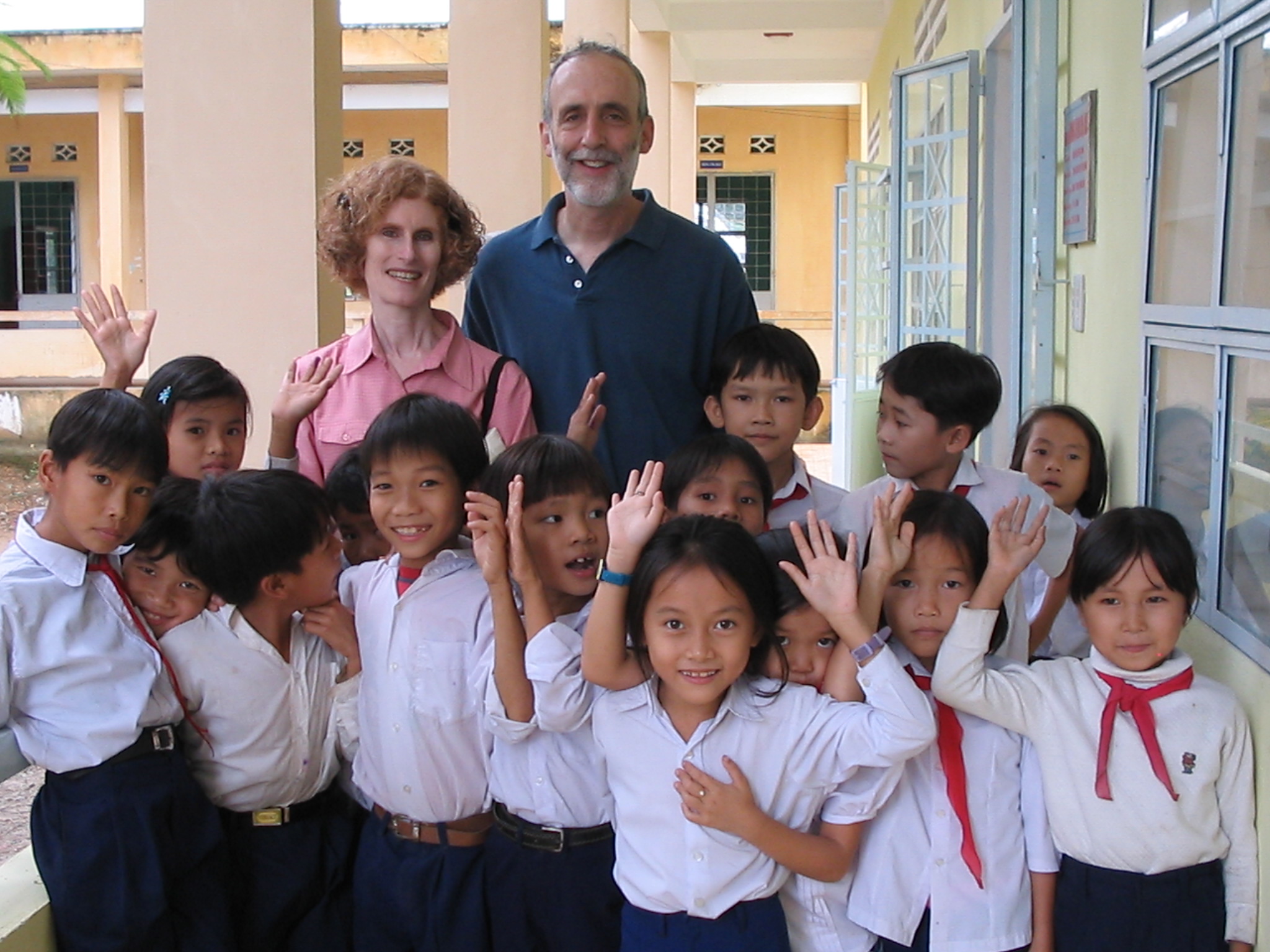 After numerous conference calls, e-mails back and forth, and some face to face meetings with different non-governmental organizations with some presence (or at least interest) in Vietnam, we narrowed down our list of prospective operating partners. Then, in March 2004, Barbara and I spent close to a month in Vietnam with five different organizations who either had-or wanted to have--scholarship programs aimed at keeping very poor children in elementary and secondary school. We spent most days visiting schools and/or spending time in very poor villages and urban areas. But we also spent time assessing each organization's capabilities within Vietnam. Both Barbara and I spent many years on Wall Street, she as an attorney and me as an equity analyst, and we insisted on performing our own due diligence in assessing an organization's strengths and weaknesses.
We decided to launch our program through the East Meets West Foundation (now renamed Thrive Networks) which was the largest American non-profit in Vietnam. The program, the Scholarship Program to Enhance Literacy and Learning (SPELL) began in September 2004 with 1,500 enrollees, all in the third, fourth, and fifth grades. In addition to our own financial contribution, funding for this program was provided by the generosity of Barbara Guss and Gil Kemp, and a few other Scarsdale couples and other close friends who took the leap with us, and who have remained as committed donors. The program has expanded, and now approximately 6,000 kids have benefited from the program (in addition, another 7,000 students have gone through a high school program which EMW developed and administered, based on our SPELL experience, but which was funded entirely by the World Bank).
The program is fairly comprehensive for our students. In addition to providing school fees and "income-in-kind" to the students (books, book bags, notebooks, school uniforms, bicycles for the children who live long distances from schools), we also provide, most importantly, extensive after-school tutoring and, in some cases, room and board. The program is also complicated, at least financially, by our pledge (and the pledges of other donors) to continue to pay for the children's school and tutoring expenses through the end of 12th grade so long as they are promoted from one grade to the next (despite the fact that the exact level of future expenses, per student, is impossible to estimate precisely). The initial selection of children is based solely on poverty criteria, not academic performance (although there are some exceptional kids in the program). Subsequently, Gil Kemp and Barbara Guss, with our participation, started the "SPELL Goes to College" component of the program which now provides college scholarship to close to 200 students, most of whom started with us in elementary school.
I am involved directly in all of the major policy decisions and changes regarding the program. I came back from my 25th trip to Vietnam in March, during which I visited students and their parents at 55 schools. My wife Barbara has joined me on many of these trips. Each of our trips involves several weeks of fieldwork, on both SPELL and several other programs we are involved in as donors and/or program initiators. The SPELL related portion of these trips including visiting numerous scholarship families and meeting officials and teachers at some of the 100-plus schools where the program has operated . We rely, day to day, on seven full-time EMW staff members who work exclusively on the program, as well as a far-flung network of Vietnamese retired teachers who volunteer their time to administer the program in their particular locales. The opportunity to transform thousands of lives with a relatively small expenditure has proven both exciting and gratifying. My work is augmented by my having joined the Board of Directors at East Meets West shortly after the scholarship program began. Gil Kemp, who had been a financial partner in this venture from the beginning, joined the Board of EMW in 2009 and now joins me on many of my trips to Vietnam.
There are three important "life lessons that we have gleaned from our experience.
First, traveling to far away places can change both your perspective and your role in the world in unexpected ways. Getting away from crowded tourist spots provides insights that would not be remotely achievable otherwise.
Second, as you are probably aware, U.S. dollars have a whole different meaning in places like Vietnam. Our finding that $50 (in 2004) could secure a child a year in school is just one example.
The third lesson is that involvement in developing country philanthropy can entail more than just writing a check. As I have conveyed, Barbara and I have been involved in every key policy decision regarding our scholarship program.
On a different front, I have been heavily involved, since its inception, in funding and designing EMW's Breath of Life program where $2,000 pays for a neonatal device, CPAPs (continuous positive airway pressure machine - -used over 30 years ago in U.S. hospitals) which can, over the course of several years, save as many as a dozen moderately premature infants from death or brain damage (we have deployed several hundred of these machines over the last five years, hopefully and probably saving at least several thousand lives). A portion of my trips to Vietnam have included visiting provincial and district hospitals in order to assess what we were doing right-and wrong-in our choice of sites for this program; we have several prominent American neonatologists who were actively involved in the program from its inception, and accompanied me on many of my hospital visits. I have actually now visited hospitals in 59 out of Vietnam's 64 provinces (by contrast, the SPELL program is concentrated in seven provinces). The Breath of Life program has now expanded to another dozen or so countries; I have been active in laying the groundwork for our efforts in Myanmar, which I have visited for each of the last three years, also visiting hospitals all over the country. Gil and Barbara gave their full endorsement to this project as well, initially as financial partners. More recently, Gil has joined me on some of the Breath of Life fact finding trips.
In regards to this last point, our experiences need not be unique. East Meets West (now Thrive Networks) very much wants "engaged donors", with the knowledge that philanthropy coupled with direct involvement will entail a stronger commitment on the part of the contributors, as well as greater program accountability and effectiveness."
Hemel did note that today the economics of sending a child to school have changed. Ten years ago it cost $50 per year to keep a third, fourth or fifth grader in school. But now, inflation and more important, the aging of the kids, has definitely changed the numerical picture. A majority of their students are now in high school, where costs can range from $75 to $1,000, depending on the students' family circumstances and their own academic interests and potential. The college program, largely made up of SPELL high school graduates who started with the program in elementary school, costs $1,000 per student per year.
Learn more about their work and find out how you can get involved. Click here for a description of the scholarship program and click here for further information of the neonatal program.